 Preview
 Send
Send Share
Share
 Details

 Download
 Similars
 X-Ray
X-Ray Diaporama
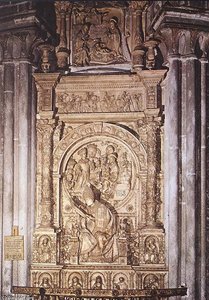
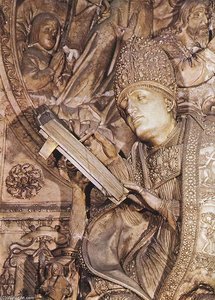
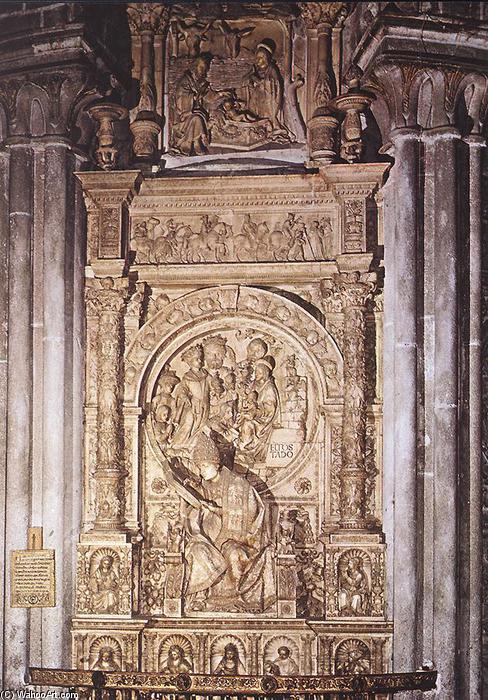
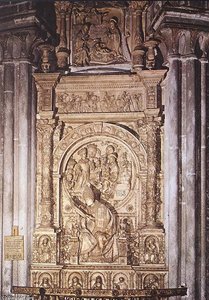
Tomb of Don Alonso de Madrigal


 Read More
Giclée / Art Print
Museum-quality giclée or canvas print with fast production and flexible finish options. ( Buy Hand Made Painting Buy Image)




































Pick from our preset sizes that match the artwork's original proportions.

You may enter your own dimensions to fit a specific frame or space. If your selected size does not match the original image's proportions, we will either crop the artwork or extend the image with a mirrored or solid-fill edge. A digital mockup will be sent for your approval before production begins.
Please note that the on-screen preview does not reflect the actual cropping or extension. Only the mockup will accurately show the final composition.
While custom sizes are available, we recommend selecting a dimension from the predefined list to preserve the original proportions.
Worldwide Delivery () in 2 weeks instead of standard 4/5 weeks. (27 August)

Free Worldwide Express Shipping

High-Quality Linen Canvas

Full Shipping Insurance

Customs Tax Refund Guarantee

True Color Matching Guarantee

60-Day Return Policy (Defects Only)

100% Money-Back Guarantee

Bulk Discount Offer
 Glass option is only available in size under 110 CM

Tomb of Don Alonso de Madrigal
Giclée / Art Print
Reproduction Size
-


Total Price
$ 63
Related Artworks









Artist Biography
Vasco de la Zarza: A Florentine Echo in Avila’s Stone
The history of the Spanish Renaissance is often written in the enduring textures of stone and alabaster, and few hands wielded such transformative grace as Vasco de la Zarza. Emerging at the turn of the 16th century, Zarza stands as a pivotal figure who bridged the gap between the austere traditions of the late Gothic and the luminous, humanistic ideals flowing from the Italian peninsula. While his precise origins remain a subject of scholarly debate—with whispers of Portuguese lineage competing against the established claim of a Toledo birth—his artistic soul was undeniably forged in the crucible of Castile. He did not merely carve figures; he breathed life into the heavy silence of cathedlam and convents, translating the complex theological and philosophical shifts of his era into tangible, emotive masterpieces.
The evolution of Zarza’s style is a journey of profound cultural synthesis. It is widely believed that in his youth, around the year 1500, he undertook a pilgrimage to Italy, likely visiting the vibrant workshops of Florence. This encounter with the groundbreaking innovations of masters like Michelangelo and Bramante fundamentally altered his artistic DNA. The influence of Domenico Fancelli is particularly palpable in his work, seen in the way Zarza mastered classical proportions and a certain dramatic narrative tension. Upon returning to Spain, he brought with him an appreciation for the human form that moved beyond mere ornamentation, seeking instead to convey deep psychological resonance through the subtle curve of a limb or the solemnity of a facial expression.
The Alabaster Masterpiece: The Tomb of Alonso Fernández de Madrigal
Nowhere is Zarza’s technical brilliance more evident than within the hallowed walls of the Ávila Cathedral. His magnum opus, the alabaster tomb of the humanist philosopher Alonso Fernández de Madrigal, completed around 1518, remains one of the most significant sculptural achievements of the Spanish Renaissance. This is not merely a funerary monument but a profound theological statement rendered in translucent stone. In a breathtaking display of skill, Zarza depicts Madrigal in peaceful repose, captured in the very act of writing upon a lectern—a poignant tribute to the subject's intellectual life.
The composition of this tomb is a masterclass in Renaissance symbolism and layered storytelling:
- The Virtues: The base of the monument serves as a foundation of moral strength, featuring meticulously sculpted representations of Faith, Prudence, Justice, and Temperance.
- The Adoration: A large, circular relief at the base showcases the Adoration of the Magi, rendered with such painstaking detail that the movement of the cavalcade feels almost palpable.
- The Evangelists: The side panels are framed by ornate covers, housing the four Evangelists in the act of writing, connecting the earthly scholar to the divine word.
- The Celestial Frieze: Above the complex narrative layers, the frieze depicts the procession of the Magi, culminating in a crowning Nativity scene that draws the viewer's gaze toward the heavens.
A Legacy Carved in Devotion
Beyond his celebrated work in Ávila, Zarza’s reach extended across the landscape of medieval Spain, leaving an indelible mark on the religious architecture of Toledo, Cuéllar, and Olmedo. His ability to secure prestigious commissions—such as the tabernacle altar for the Ávila Cathedral and the tombs for the high nobility in the monastery of San Francisco de Cuéllar—speaks to his status as a premier sculptor of his age. He was a master of the Plateresque sensibility, an era where the intricate, silversmith-like detail of the late Gothic met the structured elegance of the Renaissance.
The historical significance of Vasco de la Zarza lies in his role as a cultural conduit. Through his hands, the intellectual fervor of Humanism found a permanent home in the Spanish landscape. He taught the stone to speak of both the mortal and the divine, ensuring that even centuries after his death in 1524, his vision continues to inspire awe. His workshop also served as a cradle for future talent, notably training Juan Bautista Vázquez the Elder, thereby ensuring that the flame of the Spanish Renaissance would burn brightly for generations to come.
Vasco de la Zarza
1524 , Spain
Quick Facts
- Artistic Movement Or Style: Renaissance
- Artists Or Movements Influenced By This Artist: ['Michelangelo']
- Artists Who Influenced This Artist: ['Domenico Fancelli']
- Date Of Death: 1524
- Full Name: Vasco de la Zarza
- Nationality: Spanish
- Notable Artworks:
- Tomb of Don Alonso de Madrigal
- Tabernacle of Avila Cathedral
- Place Of Birth: Toledo, Spain