 Preview
 Send
Send Share
Share
 Details

 Download
 Similars
 X-Ray
X-Ray Diaporama
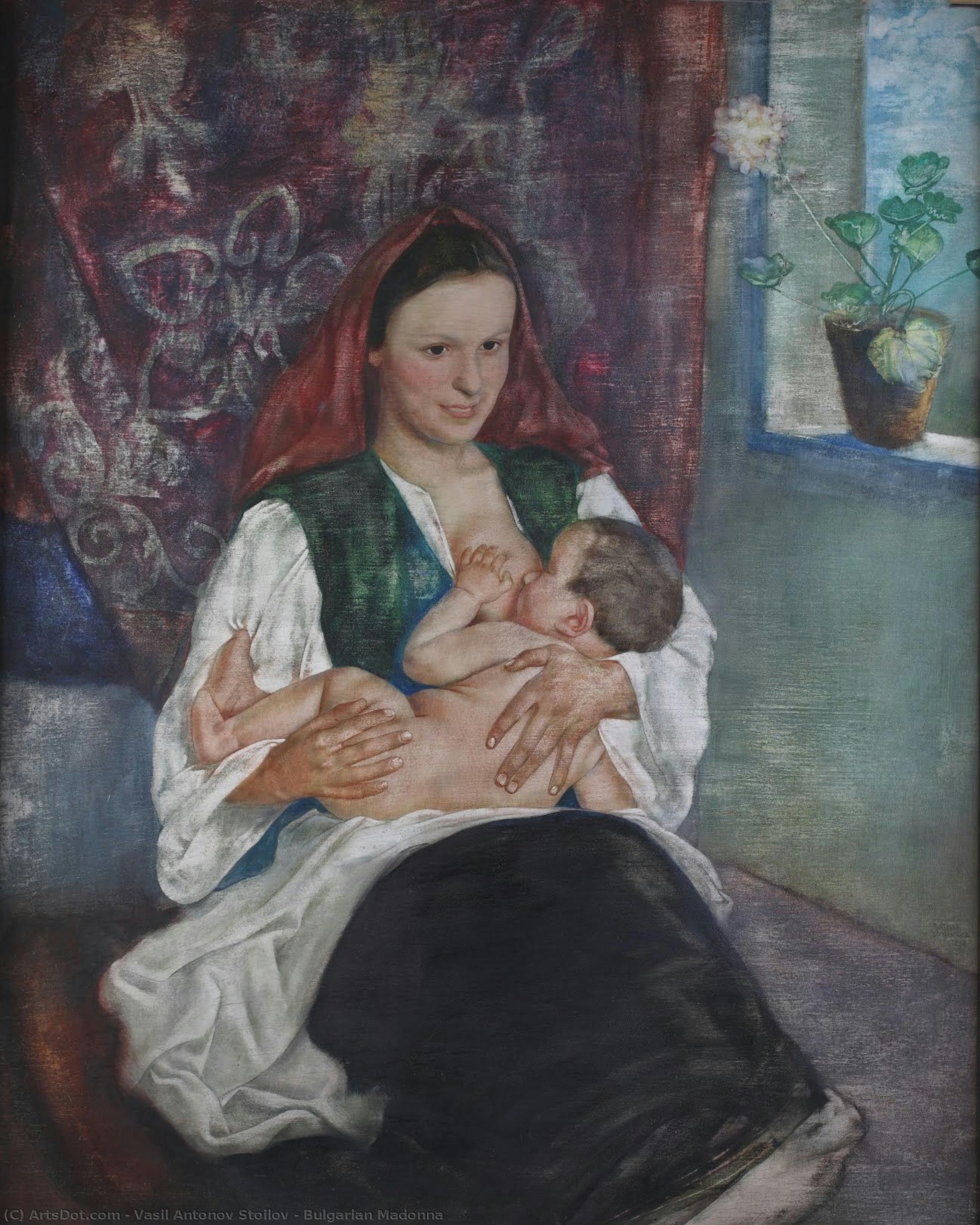
Bulgarian Madonna
 1940
1940 122.0 x 99.0 cm
 National Gallery of Bulgaria
 Read More
Giclée / Art Print
Museum-quality giclée or canvas print with fast production and flexible finish options. ( Buy Hand Made Painting Buy Image)




































Pick from our preset sizes that match the artwork's original proportions.

You may enter your own dimensions to fit a specific frame or space. If your selected size does not match the original image's proportions, we will either crop the artwork or extend the image with a mirrored or solid-fill edge. A digital mockup will be sent for your approval before production begins.
Please note that the on-screen preview does not reflect the actual cropping or extension. Only the mockup will accurately show the final composition.
While custom sizes are available, we recommend selecting a dimension from the predefined list to preserve the original proportions.
Worldwide Delivery () in 2 weeks instead of standard 4/5 weeks. (25 August)

Free Worldwide Express Shipping

High-Quality Linen Canvas

Full Shipping Insurance

Customs Tax Refund Guarantee

True Color Matching Guarantee

60-Day Return Policy (Defects Only)

100% Money-Back Guarantee

Bulk Discount Offer
 Glass option is only available in size under 110 CM

Bulgarian Madonna
Giclée / Art Print
Reproduction Size
-


Total Price
$ 63
Related Artworks








Artist Biography
Salvador Dalí: A Surrealist Visionary
Born in Figueres, Catalonia, Spain, on May 11, 1904, Salvador Dalí was more than just a painter; he was a provocateur, an iconoclast, and arguably the most recognizable figure of the Surrealist movement. His life, as unconventional as his art, was steeped in familial drama, artistic influences, and a relentless pursuit of capturing the subconscious mind on canvas. From his early years marked by a complex relationship with his mother’s illness and subsequent death, to his eventual rise to international fame, Dalí's journey is one of both brilliance and eccentricity.
His formal training began at the Real Academia de Bellas Artes de San Fernando in Madrid, where he initially studied traditional academic painting. However, it was a chance encounter with the works of Giorgio de Chirico and the burgeoning ideas of Sigmund Freud that irrevocably altered his artistic trajectory. De Chirico’s enigmatic landscapes, filled with unsettling juxtapositions and a sense of melancholy, ignited Dalí's fascination with dreamlike imagery and irrationality. Freud’s theories on psychoanalysis, particularly the exploration of the unconscious mind and its influence on human behavior, provided the theoretical framework for his artistic explorations.
Dalí quickly embraced Surrealism in the late 1920s, aligning himself with André Breton and the group's core principles. He developed a highly personal style characterized by meticulous detail, hyperrealism, and bizarre, often unsettling imagery. His paintings frequently featured melting clocks, distorted figures, ants crawling on objects, and other symbolic elements drawn from his own dreams and anxieties. The famous “Persistence of Memory” (1931), with its drooping clocks draped over a barren landscape, became an enduring symbol of Surrealism and Dalí’s unique vision.
Early Life and Influences
Salvador Domingo Felipe Jacinto Dalí i Domènech was born into a family deeply rooted in Catalan Republicanism. His father, Salvador Dalí Cusí, was a notary and a staunch advocate for Catalan independence, while his mother, Felipa Domènech Ferrés, was a devout Catholic who instilled in her son a strong sense of tradition and religious faith. This complex familial dynamic profoundly shaped Dalí’s artistic sensibilities, contributing to the tension between rationality and irrationality that permeates much of his work.
Dalí's childhood was marked by tragedy when his mother succumbed to breast cancer at the age of 16. This event had a profound impact on him, fueling a lifelong preoccupation with themes of mortality, decay, and the subconscious. He also spent time in rural Catalonia, where he developed an appreciation for the landscape and its natural beauty, which would later find expression in his paintings.
Despite his artistic inclinations, Dalí initially pursued a medical career at the University of Barcelona. However, he quickly abandoned his studies to dedicate himself fully to painting. He honed his skills under the guidance of Eduardo Torres Gullón, a prominent Spanish painter and teacher, who recognized Dalí’s exceptional talent and encouraged him to explore his own unique artistic vision.
The Surrealist Period and Artistic Development
Dalí's arrival in Paris in 1929 marked a pivotal moment in his career. He quickly became associated with the Surrealist movement, collaborating closely with André Breton and other leading artists of the time. He embraced the group’s emphasis on exploring the subconscious mind through art, employing techniques such as automatism—spontaneous drawing or writing without conscious control—to tap into his inner world.
During this period, Dalí developed a distinctive visual language characterized by meticulous detail, hyperrealism, and symbolic imagery. He frequently incorporated elements from his own dreams, fantasies, and anxieties into his paintings, creating works that were both visually stunning and psychologically unsettling. His use of symbolism—melting clocks, ants, eggs, and other recurring motifs—became instantly recognizable and contributed to the enduring fascination with his art.
Notable works from this period include “The Persistence of Memory” (1931), a seminal painting that established Dalí’s signature style; “Galatea of the Spheres” (1954), a complex allegorical work exploring themes of love, beauty, and mortality; and “Christ of Saint John of the Cross” (1951), a dramatic depiction of Christ as a skeletal figure draped in flowing robes.
Legacy and Influence
Salvador Dalí died on January 23, 1989, in Figueres, Spain, leaving behind a vast and influential body of work. His art continues to captivate audiences worldwide, inspiring artists, designers, and filmmakers alike. Dalí’s influence can be seen in countless works of art, literature, film, and popular culture.
Beyond his artistic achievements, Dalí was also a shrewd businessman and a master of self-promotion. He cultivated a deliberately eccentric persona—wearing flamboyant costumes, engaging in provocative behavior, and frequently making public appearances—which helped to solidify his image as one of the most recognizable figures of the 20th century. His museum in Figueres, the Teatro-Museo Dalí, is a testament to his artistic vision and a popular destination for art lovers from around the globe.
Dalí’s legacy extends far beyond the realm of fine art. His work has been interpreted through various lenses—psychoanalytic, philosophical, and cultural—offering insights into the complexities of the human psyche and the nature of reality itself. He remains a powerful symbol of Surrealism and a testament to the enduring power of imagination.
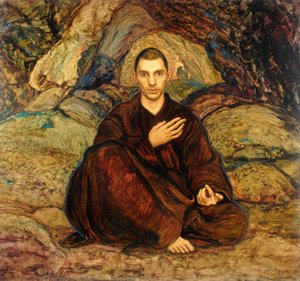
vasil antonov stoilov
1904 - 1990 , Bulgaria
Quick Facts
- Artistic Movement Or Style: Surrealism
- Artists Or Movements Influenced By This Artist:
- Picasso
- Dada
- Artists Who Influenced This Artist:
- Freud
- Cézanne
- Borglum
- Date Of Birth: May 11, 1904
- Date Of Death: January 23, 1989
- Full Name: Salvador Felipe Jacinto Dalí i Domènech
- Nationality: Spanish
- Notable Artworks:
- Persistence Memory
- Golden Age
- Christ Saint John
- Place Of Birth: Figueres, Catalonia, Spain