

 Preview
 Send
Send Share
Share
 Details

 Download
 Similars
 X-Ray
X-Ray Diaporama
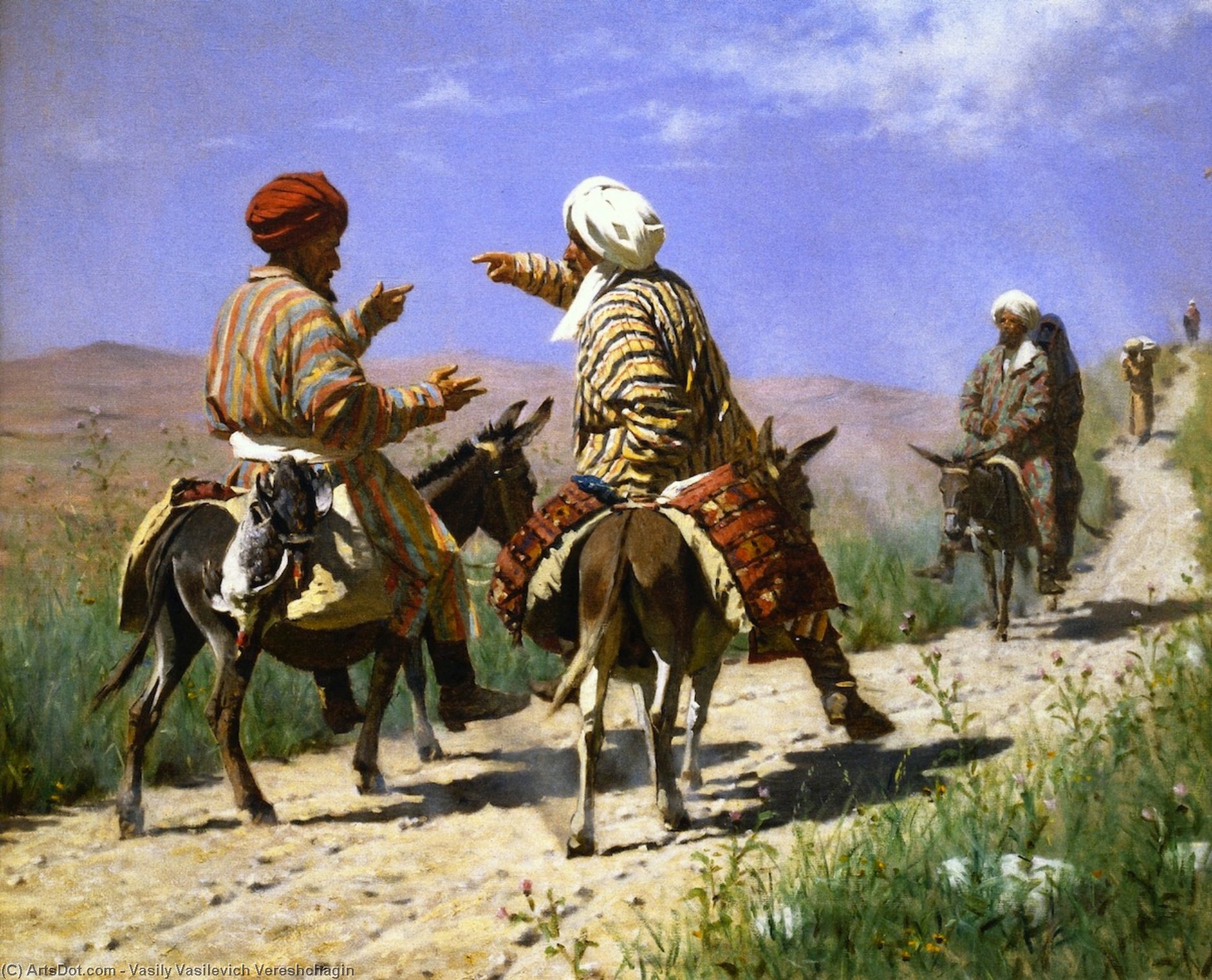
Mullah Rahmin and Mullah Kerim Quarelling on the Way to the Bazaar


 Read More
Purchase a high-resolution, enhanced digital image, far superior to the online preview.
Each file is meticulously prepared by our in-house specialists using advanced tools and expert manual retouching. We ensure every image has exceptional clarity, precise color accuracy, and fine detail.
The final file is delivered via email within 72 hours, optimized for immediate use in professional, editorial, and print environments. This is the same quality trusted by top-tier design studios, publishers, and galleries.
Digital Image
Download a high-resolution file for personal display, printing, and creative projects. ( Buy Print Buy Hand Made Painting)
Included in Every Digital Image Order
Expert Digital Delivery, Guaranteed
When you choose ArtsDot.com, you're not just getting an image - you're receiving a professionally enhanced digital artwork, crafted with precision and backed by a satisfaction guarantee. Here's everything that comes with your order, automatically:

Fast Email Delivery
Your high-resolution digital image file will be emailed to you within 72 hours of ordering - ready for immediate use.

AI-Enhanced Digital File
Your artwork is professionally optimized using advanced AI tools and manual editing, ensuring maximum detail, clarity, and color accuracy.

Free Lifetime Re-Delivery
Accidentally deleted or lost your file? No worries - we'll resend it to you anytime, free of charge.

No Import Fees - Ever
Enjoy your artwork instantly with zero customs, duties, or delivery fees - digital downloads are always tax-free.

Color Accuracy Guarantee
We ensure your digital image reflects the original colors as closely as possible using professional tools and color management.

60-Day Satisfaction Guarantee
If you're not satisfied with your digital image, we'll revise it or refund 100% within 60 days - no questions asked.

100% Money-Back Guarantee
Not satisfied? Get a full refund within 60 days of receiving your digital file - no questions asked.

Bulk Order Discounts
Buy 3 images, save 10% - Buy 5, save 15% - Buy 10+, save 20%. Great for creative projects, galleries, and agencies.
Collectible Description
A Journey Through Conflict and Conversation
To stand before Mullah Rahmin and Mullah Kerim Quarelling on the Way to the Bazaar is to be instantly transported to a sun-drenched, dusty crossroads of history. Vasily Vasilevich Vereshchagin captured not just a scene, but a moment suspended in time—a vibrant tableau vivant unfolding under the vast Russian sky. The painting draws the viewer into the heart of a heated exchange between two figures mounted on horseback. One man gestures emphatically, his words seemingly charged with conviction, while the other listens, perhaps arguing a point that will not easily yield. This is more than a mere depiction of travel; it is an intimate study in human discourse, rendered with the dramatic flair characteristic of Vereshchagin’s masterful realism.
Mastery of Realism and Brushwork
Vereshchagin, a titan of the Peredvizhniki movement, never simply painted what he saw; he imbued his canvases with the very spirit of life. His technique here is breathtaking in its detail yet fluid in its execution. Observe the interplay between the bold brushstrokes that define the musculature of the horses and the delicate rendering of the desert landscape stretching out behind them. The artist’s genius lies in how he uses light and shadow—the way the harsh midday sun catches the dust motes or deepens the folds of a traveler's robe—to give every element palpable dimension. It is an oil on canvas that feels alive, suggesting the grit underfoot and the heat radiating from the arid earth.
The Tapestry of Daily Life and Conflict
Beyond the central quarrel, Vereshchagin populates this scene with a rich tapestry of supporting life. Donkeys laden with goods trudge along the dirt road, while several other figures populate the periphery—some standing watch, others simply passing through. These background elements are crucial; they ground the dramatic confrontation in the reality of daily existence. They whisper tales of commerce, migration, and the relentless rhythm of life continuing regardless of the passionate dispute unfolding between the two central men. This juxtaposition—the grand drama against the mundane backdrop—is what gives the piece its profound resonance.
Symbolism of the Crossroads
The setting itself, on a dusty road leading toward an unseen bazaar, carries potent symbolism. A crossroads in art often represents a point of decision, a juncture where paths diverge and destinies are shaped by words spoken or ignored. The quarrel between Mullah Rahmin and Mullah Kerim thus becomes allegorical—a microcosm of ideological clashes, differing viewpoints, or personal struggles that define the human condition. It invites the collector to contemplate their own crossroads, finding in the painting a mirror for contemplation.
Bringing History Home
Owning a reproduction of this masterpiece is not merely acquiring art; it is curating a piece of Russian cultural history. For those who appreciate the narrative power of academic realism combined with emotional depth, this work offers an unparalleled focal point for any sophisticated interior design scheme or private gallery collection. It speaks to the enduring human capacity for both passionate debate and quiet endurance under the vast expanse of time.
Related Artworks

Artist Biography
A Chronicler of Conflict: The Soul of Vasily Vereshchagin
To gaze upon a canvas by Vasily Vasilievich Vereshchagin is to step directly into the heat, dust, and harrowing reality of the nineteenth century’s most turbulent frontiers. He was far more than a mere painter; he was a witness, a traveler, and a profound chronicler of human suffering. Born in 1842 in Cherepovets, Russia, Vereshchagin possessed a unique lineage that blended the scientific with the martial. With a father who was a geologist and a family steeped in military tradition, his early life instilled in him an insatiable curiosity for the natural world and the raw mechanics of exploration. This dual fascination would later define his artistic identity, allowing him to approach the battlefield not with the romanticized lens of a poet, but with the precise, unflinching eye of a man who understood both anatomy and the brutal geography of war.
His formal education at the Imperial Academy of Arts provided him with the technical mastery required for his monumental works, yet it was his departure from the studio that truly forged his genius. Influenced by the Peredvizhniki movement—the "Wanderers" who sought to bring art to the people and depict the unvarnable truth of Russian life—Vereshchagin rejected the idealized aesthetics of his era. Instead, he sought out the front lines. During the Russo-Turkish War of 1877–1878, serving as a medic, he experienced the visceral horrors of siege warfare firsthand. This period transformed his brushwork; his paintings ceased to be mere compositions and became profound moral commentaries on the senselessness of violence. In masterpieces such as The Apotheosis of War, he stripped away the glory of conquest to reveal the grim, silent aftermath of carnage, leaving the viewer to confront the heavy cost of imperial ambition.
The Orientalist Vision and the Beauty of the East
While history often remembers him for his depictions of battle, Vereshchagin’s oeuvre is equally defined by his breathtaking explorations of Central Asia. His travels through Turkestan and Samarkand allowed him to capture an era and a landscape that were rapidly changing under the weight of empire. He possessed a rare ability to balance the monumental with the intimate, rendering the architectural grandeur of sites like the Shah-i-Zinda Mausoleum or the Sher-Dor Madrassah with a vibrant, luminous palette. In these works, the artist’s scientific training shines through; his attention to the intricate tilework and the specific quality of desert light creates an immersive experience that transcends simple landscape painting.
Beyond the architecture, Vereshchagin found profound beauty in the daily rhythms of Eastern life. His scenes are often populated by figures caught in moments of quiet dignity or intense drama, such as the poignant Two Falcons or the lively Mullah Rahmin and Mullah Kerim Quarelling on the Way to the Bazaar. These works demonstrate his mastery of Realism, using warm tones and meticulous detail to evoke a sense of atmosphere that is both exotic and deeply human. He did not merely paint "the Orient" as an abstract concept; he painted people, textures, and light with a level of ethnographic accuracy that made his work feel like a window into another world.
A Legacy of Truth and Subversion
The historical significance of Vasily Vereshchagin lies in his refusal to look away. His art was often controversial, bordering on subversive; the graphic nature of his depictions of death and destruction led many of his most powerful works to be suppressed or withheld from public exhibition during his lifetime. He challenged the prevailing notion that war should be depicted as a heroic endeavor, instead presenting it as a tragedy of human error and loss. This commitment to truth-telling placed him at the forefront of a movement that redefined the purpose of Russian art, moving it away from aristocratic decoration toward social and political engagement.
Today, Vereshchagin’s legacy endures through his ability to evoke empathy across generations. His work remains a vital touchstone for anyone seeking to understand the complexities of 19th-century history, the intersection of art and journalism, and the enduring human struggle within the machinery of war. He leaves behind a body of work that serves as both a historical archive and an emotional testament, reminding us that the most powerful art is often that which dares to confront the darkest corners of our shared experience.
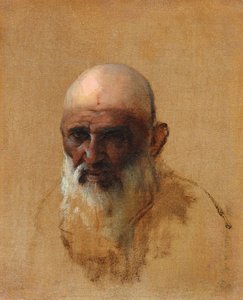
vasily vasilevich vereshchagin
1842 - 1904 , Russia
Quick Facts
- Artistic Movement Or Style: Peredvizhniki
- Artists Or Movements Influenced By This Artist: ['Realism']
- Artists Who Influenced This Artist:
- Ivan Kramskoi
- Nikolai Dmitrievich Dmitriev
- Date Of Birth: 1842
- Full Name: Vasily Vasilievich Vereshchagin
- Nationality: Russian
- Notable Artworks:
- The Apotheosis
- Inside the Tent of a Rich Kirghiz
- Politicians in an Opium Den
- Place Of Birth: Cherepovets, Russia

