 Preview
 Send
Send Share
Share
 Details

 Download
 Similars
 X-Ray
X-Ray Diaporama
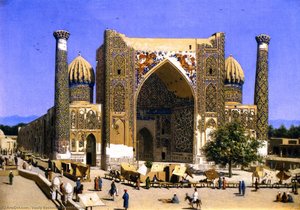
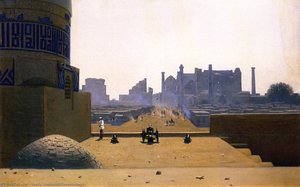
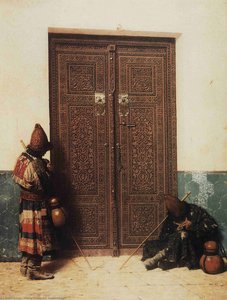
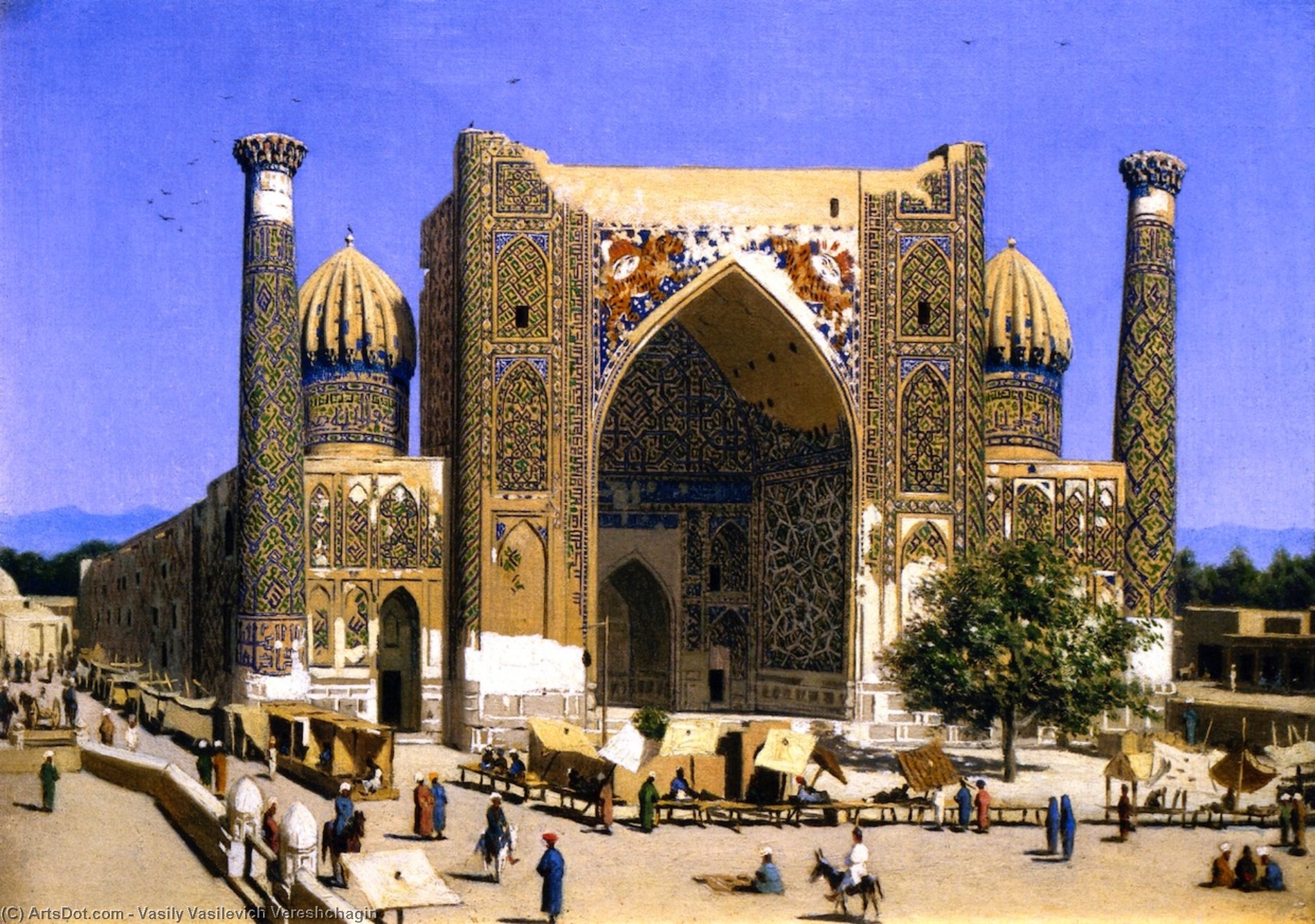
Sher-Dor Madrassah on the Registan Square in Samarkand


 Read More
Giclée / Art Print
Museum-quality giclée or canvas print with fast production and flexible finish options. ( Buy Hand Made Painting Buy Image)




P118B $10

P118H $10

P118W $10

P438Z $10

P508JH $12

P508YH $12

P805H $10

P805Z $10

P919BZ $10

P919G $10

P919XJ $10

P959ZH $10

P968JZ $12

W106C $8

W218G $10

W218JH $8

W218Y $10

W307PJ $10

W316G $10

W316PJ $8

W316Y $10

W398PJ $8

W4111J $10

W500HY $15

W500JH $15

W692G $12

W849H $8

W940BG $15

W953PJ $8




Pick from our preset sizes that match the artwork's original proportions.

You may enter your own dimensions to fit a specific frame or space. If your selected size does not match the original image's proportions, we will either crop the artwork or extend the image with a mirrored or solid-fill edge. A digital mockup will be sent for your approval before production begins.
Please note that the on-screen preview does not reflect the actual cropping or extension. Only the mockup will accurately show the final composition.
While custom sizes are available, we recommend selecting a dimension from the predefined list to preserve the original proportions.
Worldwide Delivery () in 2 weeks instead of standard 4/5 weeks. (25 August)

Free Worldwide Express Shipping

High-Quality Linen Canvas

Full Shipping Insurance

Customs Tax Refund Guarantee

True Color Matching Guarantee

60-Day Return Policy (Defects Only)

100% Money-Back Guarantee

Bulk Discount Offer
 Glass option is only available in size under 110 CM

Sher-Dor Madrassah on the Registan Square in Samarkand
Giclée / Art Print
Reproduction Size
-


Total Price
$ 63
Collectible Description
A Vision of Central Asian Splendor
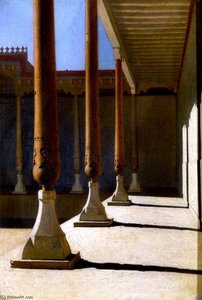
To gaze upon this depiction of the Sher-Dor Madrassah on the Registan Square in Samarkand is to be transported across continents and centuries. It is not merely a painting; it is a vibrant echo of history, rendered with the masterful touch of Vasily Vasilevich Vereshchagin. The scene explodes with color and life, capturing the monumental beauty of the madrasah's architecture—its intricate facade adorned with dazzling blue and gold decorations—while simultaneously immersing the viewer in the pulse of daily life that once animated this legendary square. One can almost hear the murmur of conversations and feel the warmth of the Central Asian sun reflected off the tiled domes.
Mastery in Oil on Panel
Vereshchagin’s choice of oil on panel was crucial to achieving the painting's remarkable depth and textural richness. The medium allows for an almost tangible quality, enabling the artist to layer details—from the minute patterns on the blue tiles to the folds of the passersby's garments. Observe the composition: the majestic towers anchor the scene, providing a breathtaking backdrop against which the human element plays out. The inclusion of figures meandering through the square, alongside the dynamic presence of the horse near the right edge, injects a palpable sense of movement and narrative energy into what is otherwise an architectural portrait. It speaks to Vereshchagin's unparalleled ability to blend grand historical subject matter with intimate, lived-in detail.
The Spirit of Orientalism and Realism
As a key figure in the Peredvizhniki movement, Vereshchagin was renowned for his commitment to realism, yet his fascination with Central Asia imbued this work with the romanticism often associated with Orientalist art. His travels served as both inspiration and subject matter, allowing him to document cultures that were simultaneously exotic and deeply rooted in tradition. The Sher-Dor Madrassah stands as a testament to this confluence: it is scientifically observed—the architecture rendered faithfully—yet emotionally charged, conveying the very soul of Samarkand. It invites contemplation on cultural exchange, the passage of time, and the enduring power of human endeavor set against magnificent stone.
Bringing the Exotic Home
For those who seek to infuse a space with the drama and romance of global history, this reproduction offers an unparalleled focal point. The vivid palette—dominated by deep lapis blues, burnished golds, and earthy tones—provides instant depth to any room. Whether displayed in a grand hall or a richly decorated study, the artwork acts as a window to a storied past. Owning a piece inspired by Vereshchagin’s vision allows one not just to decorate, but to curate an atmosphere of cultured adventure, making it a treasured acquisition for collectors and designers alike.
Related Artworks
Artist Biography
A Chronicler of Conflict: The Soul of Vasily Vereshchagin
To gaze upon a canvas by Vasily Vasilievich Vereshchagin is to step directly into the heat, dust, and harrowing reality of the nineteenth century’s most turbulent frontiers. He was far more than a mere painter; he was a witness, a traveler, and a profound chronicler of human suffering. Born in 1842 in Cherepovets, Russia, Vereshchagin possessed a unique lineage that blended the scientific with the martial. With a father who was a geologist and a family steeped in military tradition, his early life instilled in him an insatiable curiosity for the natural world and the raw mechanics of exploration. This dual fascination would later define his artistic identity, allowing him to approach the battlefield not with the romanticized lens of a poet, but with the precise, unflinching eye of a man who understood both anatomy and the brutal geography of war.
His formal education at the Imperial Academy of Arts provided him with the technical mastery required for his monumental works, yet it was his departure from the studio that truly forged his genius. Influenced by the Peredvizhniki movement—the "Wanderers" who sought to bring art to the people and depict the unvarnable truth of Russian life—Vereshchagin rejected the idealized aesthetics of his era. Instead, he sought out the front lines. During the Russo-Turkish War of 1877–1878, serving as a medic, he experienced the visceral horrors of siege warfare firsthand. This period transformed his brushwork; his paintings ceased to be mere compositions and became profound moral commentaries on the senselessness of violence. In masterpieces such as The Apotheosis of War, he stripped away the glory of conquest to reveal the grim, silent aftermath of carnage, leaving the viewer to confront the heavy cost of imperial ambition.
The Orientalist Vision and the Beauty of the East
While history often remembers him for his depictions of battle, Vereshchagin’s oeuvre is equally defined by his breathtaking explorations of Central Asia. His travels through Turkestan and Samarkand allowed him to capture an era and a landscape that were rapidly changing under the weight of empire. He possessed a rare ability to balance the monumental with the intimate, rendering the architectural grandeur of sites like the Shah-i-Zinda Mausoleum or the Sher-Dor Madrassah with a vibrant, luminous palette. In these works, the artist’s scientific training shines through; his attention to the intricate tilework and the specific quality of desert light creates an immersive experience that transcends simple landscape painting.
Beyond the architecture, Vereshchagin found profound beauty in the daily rhythms of Eastern life. His scenes are often populated by figures caught in moments of quiet dignity or intense drama, such as the poignant Two Falcons or the lively Mullah Rahmin and Mullah Kerim Quarelling on the Way to the Bazaar. These works demonstrate his mastery of Realism, using warm tones and meticulous detail to evoke a sense of atmosphere that is both exotic and deeply human. He did not merely paint "the Orient" as an abstract concept; he painted people, textures, and light with a level of ethnographic accuracy that made his work feel like a window into another world.
A Legacy of Truth and Subversion
The historical significance of Vasily Vereshchagin lies in his refusal to look away. His art was often controversial, bordering on subversive; the graphic nature of his depictions of death and destruction led many of his most powerful works to be suppressed or withheld from public exhibition during his lifetime. He challenged the prevailing notion that war should be depicted as a heroic endeavor, instead presenting it as a tragedy of human error and loss. This commitment to truth-telling placed him at the forefront of a movement that redefined the purpose of Russian art, moving it away from aristocratic decoration toward social and political engagement.
Today, Vereshchagin’s legacy endures through his ability to evoke empathy across generations. His work remains a vital touchstone for anyone seeking to understand the complexities of 19th-century history, the intersection of art and journalism, and the enduring human struggle within the machinery of war. He leaves behind a body of work that serves as both a historical archive and an emotional testament, reminding us that the most powerful art is often that which dares to confront the darkest corners of our shared experience.
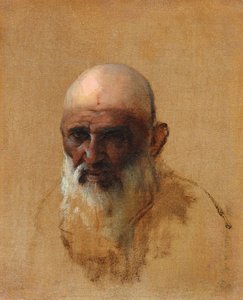
vasily vasilevich vereshchagin
1842 - 1904 , Russia
Quick Facts
- Artistic Movement Or Style: Peredvizhniki
- Artists Or Movements Influenced By This Artist: ['Realism']
- Artists Who Influenced This Artist:
- Ivan Kramskoi
- Nikolai Dmitrievich Dmitriev
- Date Of Birth: 1842
- Full Name: Vasily Vasilievich Vereshchagin
- Nationality: Russian
- Notable Artworks:
- The Apotheosis
- Inside the Tent of a Rich Kirghiz
- Politicians in an Opium Den
- Place Of Birth: Cherepovets, Russia
Related Articles
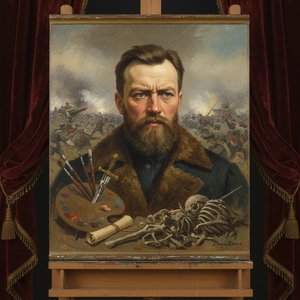
Vasily Vereshchagin: Realism, War & Subversion in 19th-Century Russian Painting
Explore the powerful realism of Vasily Vereshchagin's war paintings & Central Asian scenes. Discover how this Russian master challenged artistic conventions and offered a brutal, honest depiction of 19th-century conflict. Learn about his legacy for discerning collectors.
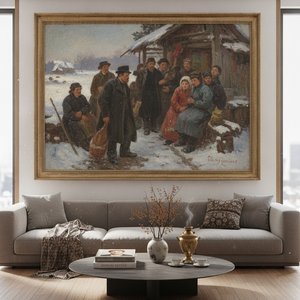
Discover Russian Realism: Soulful Masterpieces and the Timeless Spirit of the Peredvizhniki for Your Modern Home
Elevate your home with the soulful beauty of Russian Realism. Discover exquisite hand-painted reproductions of Peredvizhniki masterpieces, from lyrical landscapes to profound portraits, curated to bring historical depth and timeless elegance to your modern interior design.
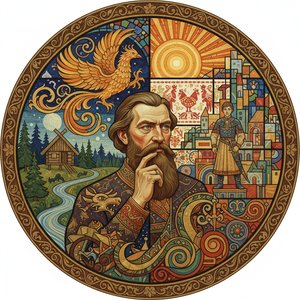
Ivan Bilibin: A Synthesis of Folklore, Modernism & National Identity in Russian Illustration
Explore the enchanting world of Ivan Bilibin, a master Russian illustrator who synthesized folklore, Art Nouveau & national identity. Discover his iconic fairy tale illustrations and legacy with ArtsDot.
Romantic Realism's Finest: 10 Masterpieces for Your Home | ArtsDot
Explore 10 defining masterpieces of Romantic Realism! Discover Courbet, Millet & Daumier's powerful paintings—capturing emotion and social realities. Find museum-quality reproductions for your home at ArtsDot.com.
Vladimir Makovsky: Realism, Social Commentary & Russian Life in Late 19th-Century Painting
Explore the captivating world of Vladimir Makovsky, a leading Russian realist painter. Discover his insightful depictions of 19th-century life, social commentary & legacy with ArtsDot.