 Preview
 Send
Send Share
Share
 Details

 Download
 Similars
 X-Ray
X-Ray Diaporama
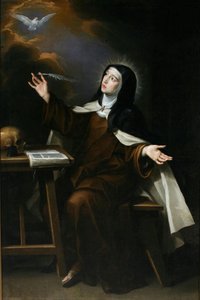
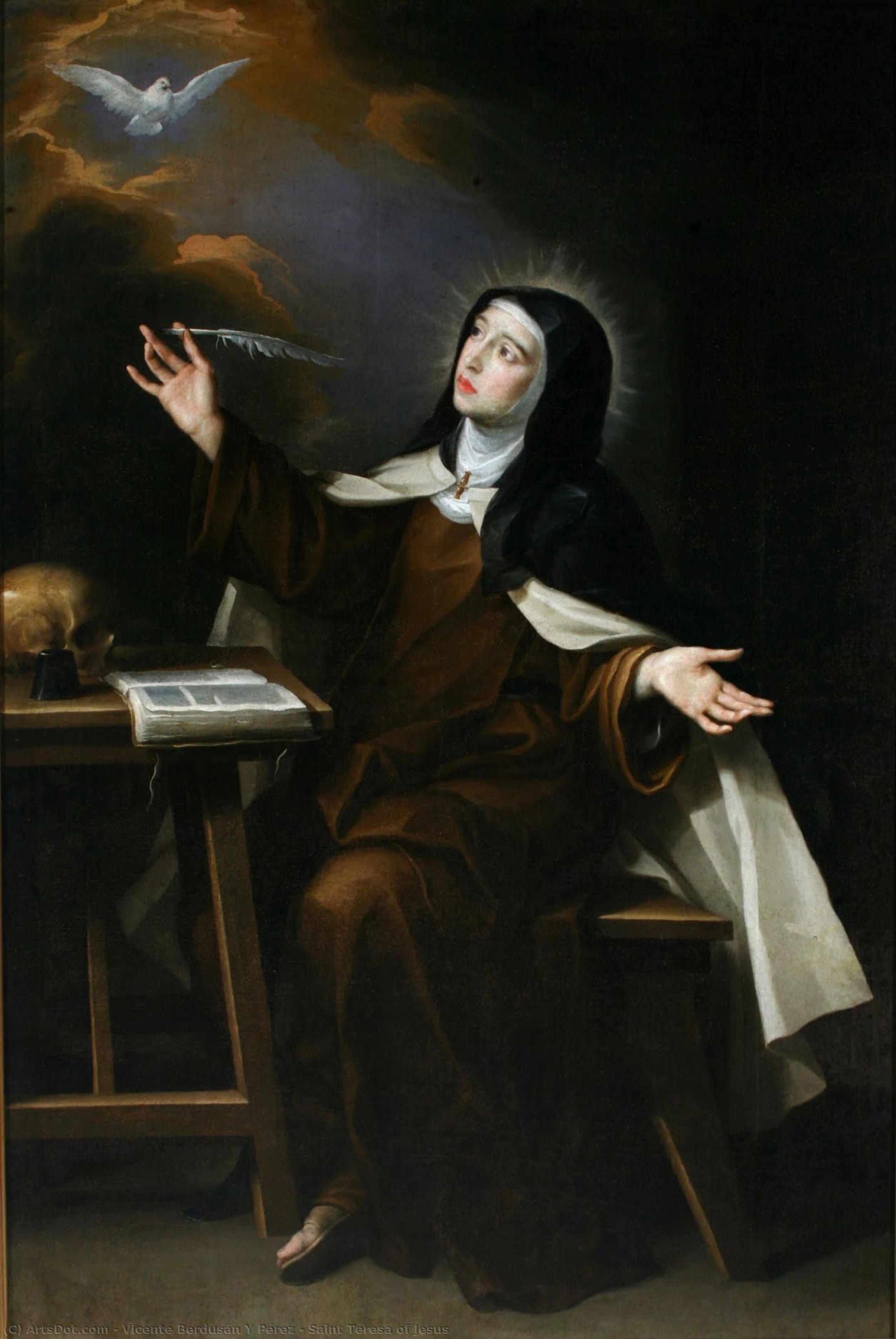
Saint Teresa of Jesus
 126.0 x 184.0 cm
 Museo de Huesca
 Read More
Giclée / Art Print
Museum-quality giclée or canvas print with fast production and flexible finish options. ( Buy Hand Made Painting Buy Image)




































Pick from our preset sizes that match the artwork's original proportions.

You may enter your own dimensions to fit a specific frame or space. If your selected size does not match the original image's proportions, we will either crop the artwork or extend the image with a mirrored or solid-fill edge. A digital mockup will be sent for your approval before production begins.
Please note that the on-screen preview does not reflect the actual cropping or extension. Only the mockup will accurately show the final composition.
While custom sizes are available, we recommend selecting a dimension from the predefined list to preserve the original proportions.
Worldwide Delivery () in 2 weeks instead of standard 4/5 weeks. (30 August)

Free Worldwide Express Shipping

High-Quality Linen Canvas

Full Shipping Insurance

Customs Tax Refund Guarantee

True Color Matching Guarantee

60-Day Return Policy (Defects Only)

100% Money-Back Guarantee

Bulk Discount Offer
 Glass option is only available in size under 110 CM

Saint Teresa of Jesus
Giclée / Art Print
Reproduction Size
-


Total Price
$ 63
Related Artworks








Artist Biography
A Life Dedicated to Religious Vision: Vicente Berdusán y Pérez
Vicente Berdusán y Pérez, born in Pamplona, Spain, in 1768, emerged as a significant figure within the Spanish artistic landscape of the late 18th and early 19th centuries. While not achieving the widespread renown of his contemporary, Francisco Goya, Berdusán carved out a distinguished career dedicated primarily to religious art, leaving behind a legacy deeply rooted in devotional expression and technical skill. His journey began under the tutelage of Francisco Bayeu, a highly respected painter who also served as a mentor to Goya himself, establishing a crucial link within the artistic circles of the period.
Formative Years and Artistic Development
Bayeu’s influence on Berdusán was profound. The elder master instilled in his pupil a strong foundation in academic principles, emphasizing precise draftsmanship and a refined understanding of composition. However, Berdusán wasn't merely an imitator; he developed a distinctive style characterized by a delicate sensitivity to light and shadow, and a palpable emotionality within his depictions of sacred subjects. His early works reveal a commitment to the Baroque tradition, yet tempered with a growing Neoclassical restraint – a common trajectory for Spanish artists navigating the shifting aesthetic currents of the time. The emphasis on clarity and narrative storytelling, hallmarks of Bayeu’s approach, are evident in Berdusán's initial paintings, but he soon infused these qualities with his own unique brand of spiritual intensity.
Exhibition and Academic Recognition
Berdusán actively sought recognition within the established art world. His works were submitted to the prestigious Royal Academy of San Fernando in Madrid, a testament to his ambition and confidence in his artistic abilities. More significantly, he secured a position as a professor of drawing at the Royal Academy of Fine Arts of San Luis in Zaragoza, solidifying his status as an esteemed educator and contributing to the training of future generations of Spanish artists. This appointment speaks volumes about his technical prowess and pedagogical skills; it wasn’t simply talent that earned him this role, but a demonstrated ability to impart knowledge and foster artistic growth in others.
The Legacy of 'Saint Teresa of Jesus' and Beyond
While Berdusán produced a body of work encompassing various religious themes, he is particularly remembered for his depictions of ‘Saint Teresa of Jesus’. These paintings are not merely representations of the saint’s life; they are imbued with a profound sense of mystical experience. Berdusán masterfully captured the fervor and ecstasy of Saint Teresa's visions, utilizing dramatic lighting and expressive gestures to convey the intensity of her spiritual encounters. Beyond ‘Saint Teresa’, his oeuvre includes numerous altarpieces and devotional works commissioned by churches and private patrons throughout Aragon and Navarre. His paintings often feature a rich palette, detailed rendering of fabrics and textures, and a careful attention to anatomical accuracy – qualities that appealed to the religious sensibilities of his clientele.
Historical Significance and Enduring Appeal
Vicente Berdusán y Pérez’s significance lies in his dedication to preserving and revitalizing the tradition of Spanish religious painting during a period of significant social and political upheaval. He died in Zaragoza in 1836, leaving behind a legacy that continues to resonate with art historians and enthusiasts alike. His work offers valuable insights into the devotional practices and artistic tastes of late 18th-century Spain. While overshadowed by some of his more famous contemporaries, Berdusán’s paintings stand as compelling examples of Spanish Baroque artistry, characterized by their emotional depth, technical skill, and unwavering commitment to religious expression. His influence can be seen in the works of later artists who followed in his footsteps, ensuring that his artistic vision continues to inspire and captivate audiences today.
vicente berdusán y pérez
1768 - 1836 , Spain
Quick Facts
- Artistic Movement Or Style: Religious Art, Baroque
- Artists Who Influenced This Artist: ['Francisco Bayeu']
- Date Of Birth: 1768
- Date Of Death: 1836
- Full Name: Vicente Berdusán y Pérez
- Nationality: Spanish
- Notable Artworks: ['Saint Teresa of Jesus']
- Place Of Birth: Pamplona, Spain