

 Preview
 Send
Send Share
Share
 Details

 Download
 Similars
 X-Ray
X-Ray Diaporama
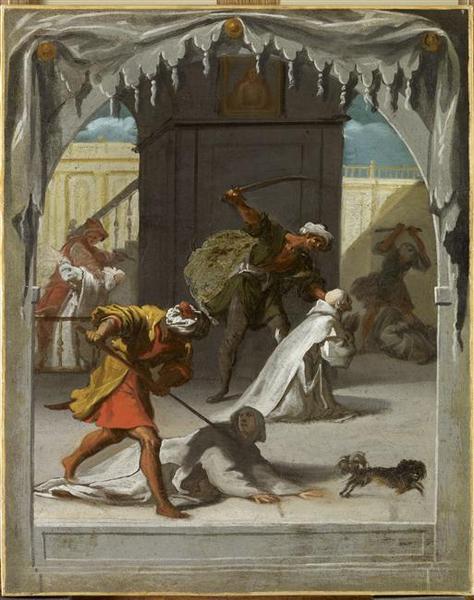
Martyre des chartreux d'Allemagne, jadis intitulé Martyre des chartreux à Bourg Fontaine


 Read More
Purchase a high-resolution, enhanced digital image, far superior to the online preview.
Each file is meticulously prepared by our in-house specialists using advanced tools and expert manual retouching. We ensure every image has exceptional clarity, precise color accuracy, and fine detail.
The final file is delivered via email within 72 hours, optimized for immediate use in professional, editorial, and print environments. This is the same quality trusted by top-tier design studios, publishers, and galleries.
Digital Image
Download a high-resolution file for personal display, printing, and creative projects. ( Buy Print Buy Hand Made Painting)
Included in Every Digital Image Order
Expert Digital Delivery, Guaranteed
When you choose ArtsDot.com, you're not just getting an image - you're receiving a professionally enhanced digital artwork, crafted with precision and backed by a satisfaction guarantee. Here's everything that comes with your order, automatically:

Fast Email Delivery
Your high-resolution digital image file will be emailed to you within 72 hours of ordering - ready for immediate use.

AI-Enhanced Digital File
Your artwork is professionally optimized using advanced AI tools and manual editing, ensuring maximum detail, clarity, and color accuracy.

Free Lifetime Re-Delivery
Accidentally deleted or lost your file? No worries - we'll resend it to you anytime, free of charge.

No Import Fees - Ever
Enjoy your artwork instantly with zero customs, duties, or delivery fees - digital downloads are always tax-free.

Color Accuracy Guarantee
We ensure your digital image reflects the original colors as closely as possible using professional tools and color management.

60-Day Satisfaction Guarantee
If you're not satisfied with your digital image, we'll revise it or refund 100% within 60 days - no questions asked.

100% Money-Back Guarantee
Not satisfied? Get a full refund within 60 days of receiving your digital file - no questions asked.

Bulk Order Discounts
Buy 3 images, save 10% - Buy 5, save 15% - Buy 10+, save 20%. Great for creative projects, galleries, and agencies.
Collectible Description
The Agony Within Stone: Vicente Carducho’s “Martyre des Chartreux d'Allemagne”
Vicente Carducho’s "Martyre des Chartreux d'Allemagne, jadis intitulé Martyre des Chartreux à Bourg-Fontaine" is not merely a depiction of historical violence; it’s a profoundly moving tableau of suffering, faith tested, and the brutal realities of religious conflict. Painted in 1626-1632 during the height of the Spanish Baroque, this monumental work housed within the Louvre Museum offers a visceral experience that transcends its painted surface, inviting contemplation on themes of martyrdom, injustice, and the precarious nature of belief.
The scene unfolds within a dimly lit chamber, an architectural device immediately suggestive of confinement and despair. An arched doorway hints at another space, perhaps representing purgatory or the afterlife, while the muted palette—dominated by deep browns, ochres, and somber blues—reinforces this atmosphere of gloom. Carducho masterfully employs chiaroscuro, a technique perfected during the Baroque era, to sculpt dramatic contrasts between light and shadow. This isn’t simply about illumination; it's about highlighting the anguish etched on the faces of the monks and the violence perpetrated against them. The artist’s attention to detail is remarkable – from the meticulously rendered folds of their robes to the glint of steel in the attackers’ swords, every element contributes to a sense of immediacy and realism.
A Chronicle of Suffering: Historical Context and Narrative
The painting depicts a harrowing event rooted in 16th-century German history. The “Martyre des Chartreux” refers to the brutal persecution of Carthusian monks in the city of Rodemunda, near Cologne, in 1573. These monks, known for their piety and resistance to Protestantism, were subjected to a horrific massacre by local soldiers who had been paid to carry out the deed. Carducho’s painting serves as a visual memorial to this tragedy, preserving a crucial moment of religious intolerance and human cruelty.
The composition is carefully structured to amplify the drama. The central group of monks—kneeling in prayer, being attacked, or desperately defending themselves—forms a vortex of suffering. Note the stark contrast between their vulnerability and the aggression of the attackers. A dog lies prone on the floor, a symbol of helplessness and despair mirroring the plight of the monks. The scene is not celebratory; it’s deliberately unsettling, forcing the viewer to confront the uncomfortable realities of violence and faith.
Symbolism and Emotional Resonance
Beyond its historical narrative, “Martyre des Chartreux” is rich in symbolic meaning. The arches framing the scene can be interpreted as portals—representing both earthly suffering and spiritual transcendence. The light filtering through the window suggests a glimmer of hope amidst the darkness, but it’s a fragile light, barely penetrating the gloom. The monks themselves embody resilience and unwavering faith, even in the face of imminent death. Their postures – some pleading, others defiant – speak volumes about their inner struggles.
Carducho's use of color is particularly significant. The somber tones evoke a sense of mourning and lamentation, while the stark contrasts between light and shadow heighten the emotional intensity of the scene. The painting’s power lies not just in its depiction of violence but in its ability to convey the profound psychological impact of suffering on the human spirit.
A Legacy of Baroque Drama
“Martyre des Chartreux d'Allemagne” stands as a testament to Vicente Carducho’s skill and artistic vision. It exemplifies the dramatic intensity and emotional depth characteristic of Spanish Baroque painting, while simultaneously offering a poignant reflection on religious conflict and human suffering. Reproductions of this powerful work continue to resonate with audiences today, reminding us of the importance of remembering historical injustices and honoring the enduring spirit of those who faced persecution for their beliefs. Its legacy endures as a masterpiece of Baroque art, inviting viewers to contemplate the complexities of faith, violence, and the enduring human condition.
Related Artworks
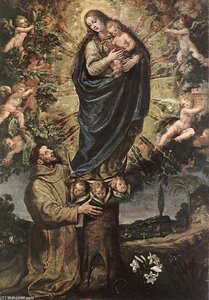
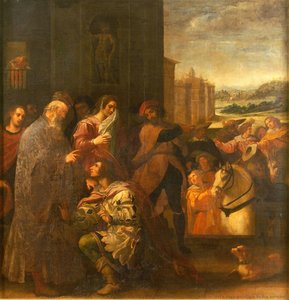
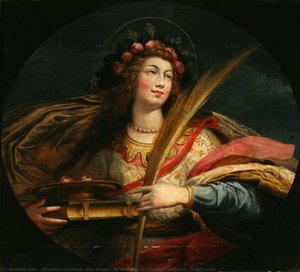
Artist Biography
Vicente Carducho (1576-1638): A Leading Figure of Spanish Baroque
Vincenzo Carducci, more commonly known as Vicente Carducho, was a pivotal Italian painter who significantly shaped the landscape of 17th-century Spanish art. Born in Florence, Italy, in 1576, he died in Madrid, Spain, in 1638. His career spanned both Italy and Spain, ultimately establishing him as a leading figure within the Spanish Baroque movement.
Early Life and Training
- Origins: Carducho was born in Florence, Italy, amidst a vibrant artistic environment.
- Family Influence: He received his initial training from his brother, Bartolomeo Carduccio, also a painter. This familial connection proved crucial to his early development.
- Move to Spain: Following his brother, Vicente relocated to Madrid as a young man, initially working in Valladolid before gaining commissions at the Escorial under Philip II of Spain.
- Early Commissions: He assisted his brother with painting projects for Philip II and later contributed to the decoration of the newly rebuilt Palacio del Pardo during the reign of Philip III. A notable early work was a history of Achilles painted there.
Development as an Artist & Major Achievements
- Monastery Frescoes: A significant turning point in his career came with a four-year commission from the monks of the Chartreuse of El Paular to decorate their monastery. This resulted in 54 large canvases depicting historical figures, divided between the lives of St. Bruno (27) and martyrs (27).
- Royal Patronage: Carducho enjoyed considerable patronage from Philip IV, producing some of his best-known works for the Prado. These paintings showcased his mastery of dramatic composition and religious themes.
- Teaching & Influence: For many years, Carducho served as a teacher in Madrid, nurturing a new generation of Spanish artists. His pupils included Giovanni Ricci, Pedro Obregon, Vela, and Francisco Collantes – all prominent figures in the 17th-century Spanish school.
- Theoretical Writings: He authored "De las excelencias de la pintura," or "Dialogues on Painting," a treatise published in 1633. Written as a dialogue between a master and apprentice, it reflects the piety of the Spanish realm and offers insights into his artistic philosophy.
Artistic Style & Influences
- Baroque Characteristics: Carducho’s style is firmly rooted in the Baroque period, characterized by dramatic lighting, dynamic compositions, and a focus on emotional intensity.
- Classical Tradition: His treatise demonstrates an engagement with classical artistic theory and dialogue form.
- Critique of Caravaggio: Notably, Carducho was a vocal critic of Caravaggio and his followers, whom he accused of lacking discipline and relying too heavily on naturalism without sufficient study or preparation. He viewed their approach as potentially detrimental to the future of painting. His criticism extended to Michelangelo's style, which he deemed overly reliant on superficial copying of nature.
- Influences: While critical of Caravaggio, Carducho’s work also reflects influences from earlier Italian masters and a distinctly Spanish sensibility.
Historical Significance
Vicente Carducho holds a significant place in the history of Spanish art. He was instrumental in establishing a distinct Spanish Baroque style, blending Italian techniques with local traditions. His role as a teacher ensured that his artistic principles were passed on to subsequent generations. While his critiques of Caravaggio reveal a conservative perspective, his contributions to religious painting and his theoretical writings provide valuable insights into the artistic debates of his time. Carducho's legacy lies in his ability to synthesize diverse influences into a uniquely Spanish Baroque aesthetic.
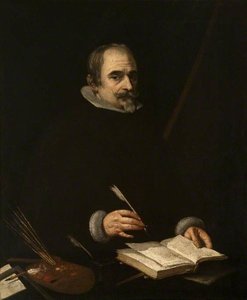
Vicente Carducho
1576 - 1638 , Italy
Quick Facts
- Artistic Movement Or Style: Spanish Baroque
- Artists Or Movements Influenced By This Artist:
- Giovanni Ricci
- Pedro Obregon
- Artists Who Influenced This Artist:
- Michelangelo
- Caravaggio
- Date Of Birth: 1576
- Date Of Death: 1638
- Full Name: Vicente Carducho
- Nationality: Italian/Spanish
- Notable Artworks:
- History of Achilles
- Saint Lucia
- Meeting Saint Bruno
- Place Of Birth: Florence, Italy

