 Preview
 Send
Send Share
Share
 Details

 Download
 Similars
 X-Ray
X-Ray Diaporama
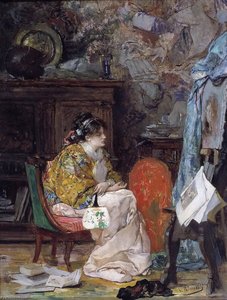
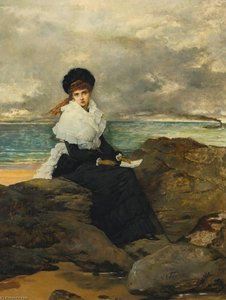
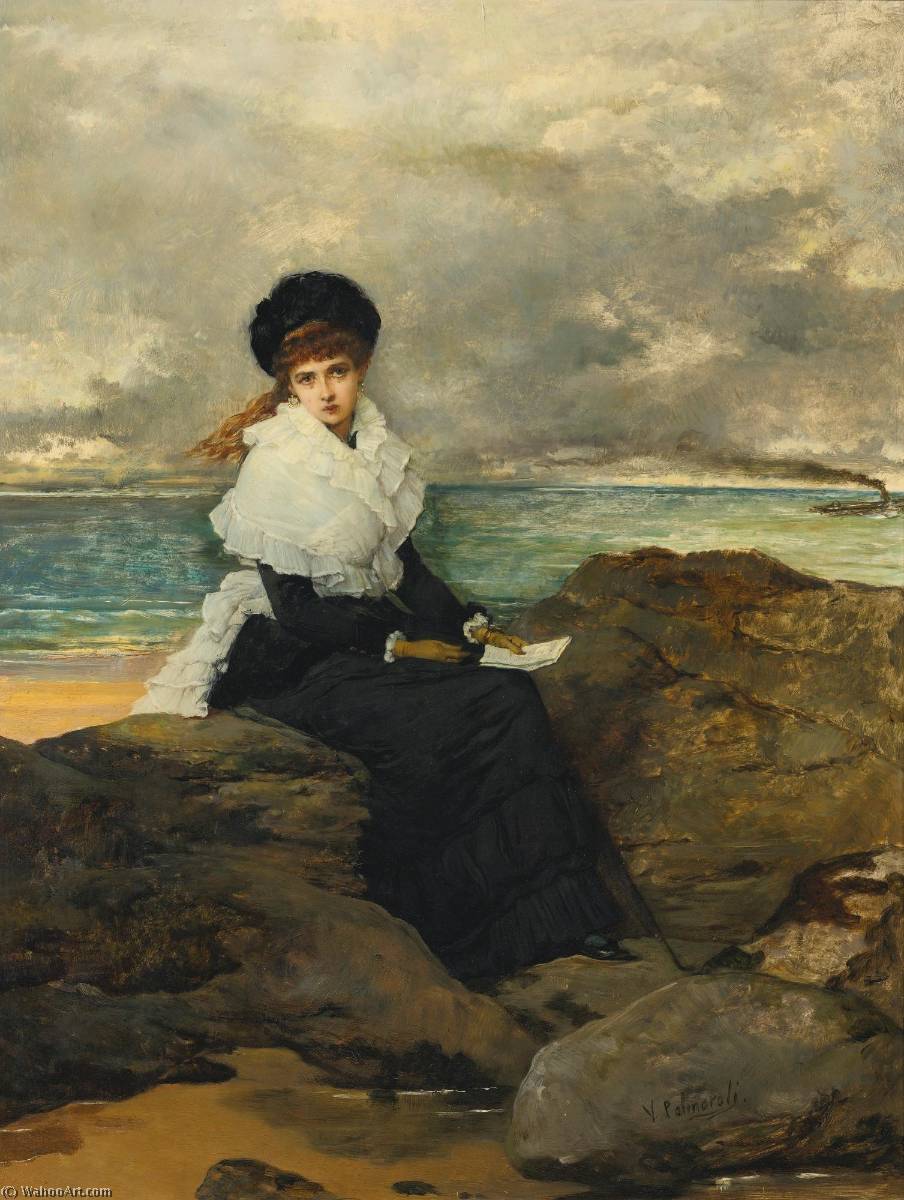
The Letter
 66.0 x 50.0 cm
 Read More
Hand Made Oil Reproduction
Hand-painted oil on canvas in your size and frame, made to order by our artists. ( Buy Print Buy Image)




































Pick from our preset sizes that match the artwork's original proportions.

You may enter your own dimensions to fit a specific frame or space. If your selected size does not match the original image's proportions, we will either crop the artwork or extend the painting with additional hand-painted elements. A digital mockup will be sent for your approval before production begins.
Please note that the on-screen preview does not reflect the actual cropping or extension. Only the mockup will accurately show the final composition.
While custom sizes are available, we recommend selecting a dimension from the predefined list to preserve the original proportions.
After order, ArtsDot.com team will email client for instructions and provide a mockup preview
Worldwide Delivery () in 3/4 weeks instead of standard 5 weeks. (17 August). No compromise on quality.

Free Worldwide Express Shipping

High-Quality Linen Canvas

Full Shipping Insurance

Customs Tax Refund Guarantee

True Color Matching Guarantee

60-Day Return Policy (Defects Only)

100% Money-Back Guarantee

Bulk Discount Offer
 Glass option is only available in size under 110 CM

The Letter
Reproduction Medium
Reproduction Size
-


Total Price
$ 263
Related Artworks

Artist Biography
James McNeill Whistler: A Symphony of Light and Shadow
Born in Lowell, Massachusetts, in 1834, James Abbott McNeill Whistler’s artistic journey was a transatlantic odyssey, shaped by diverse influences and culminating in a uniquely evocative style. His early life, marked by a brief sojourn in Russia with his father, a civil engineer working on the railway to Moscow, instilled in him a deep appreciation for both European and Russian artistic traditions. This exposure, combined with a rigorous education at West Point – an experience he ultimately found unfulfilling – laid the groundwork for a career dedicated to pursuing his own artistic vision rather than adhering to prescribed military standards.
Whistler’s formal training began in Paris, a pivotal moment that propelled him far ahead of his American contemporaries who were then embarking on similar journeys. He enrolled at the École des Beaux-Arts, immersing himself in the academic traditions of Gustave Courbet and Henri Fantin-Latour, yet quickly recognizing that these established methods wouldn't satisfy his artistic hunger. Instead, he sought inspiration from a broader range of sources – Dutch Baroque masters like Rembrandt and Vermeer, Spanish painters such as Velázquez, and contemporary French artists experimenting with new approaches to light and color. This eclectic approach, coupled with his own keen observation and sensitivity, would ultimately define the distinctive character of his work.
The Pursuit of “Art for Art’s Sake”
Returning to America briefly before settling permanently in England in 1859, Whistler quickly established himself as a figure of considerable artistic distinction. He rejected the prevailing Victorian emphasis on moralistic subject matter and sentimental narratives, instead championing the principle of "art for art's sake"—the idea that art should exist solely for its aesthetic value, independent of any didactic or narrative purpose. This radical stance challenged conventional notions of what constituted “good” art and positioned Whistler as a leading voice in the burgeoning Aesthetic movement.
Whistler’s artistic philosophy extended beyond his subject matter to encompass his approach to composition and color. He believed that paintings should resemble musical scores, prioritizing tonal harmony and visual resonance over literal representation. This concept is vividly illustrated in works like *Nocturne in Black and Gold, the Falling Rocket* (1872), where he sought to capture not just a scene but an atmosphere—a fleeting moment of light and shadow imbued with emotional depth. His use of muted colors, often applied in thin washes, created a luminous effect that evoked the subtle nuances of twilight or moonlight.
Key Works and Innovations
Whistler’s oeuvre encompasses a diverse range of subjects, including portraits, landscapes, and interiors. However, he is perhaps most renowned for his evocative depictions of London at night—the “nocturnes”—which became his signature style. *Arrangement in Grey and Black No. 1*, commonly known as *Whistler’s Mother* (1871), remains arguably his most famous work, a deceptively simple portrait that has been endlessly interpreted and parodied. The painting's enduring appeal lies not only in its technical mastery but also in its poignant portrayal of maternal love and the quiet dignity of everyday life.
Beyond *Whistler’s Mother*, other notable works include *The Thames at Sunset* (1874), a masterful study of light and color, and *Portrait of Chester Wilmot* (1875), a striking example of his ability to capture the essence of his subjects through subtle gestures and expressions. Whistler also made significant contributions to printmaking, producing exquisite etchings and lithographs that further explored his fascination with tonal harmony and visual resonance.
Legacy and Influence
James McNeill Whistler’s impact on the art world was profound and far-reaching. He challenged conventional artistic values, championed the principle of “art for art's sake,” and influenced a generation of artists who sought to break free from academic constraints and explore new forms of expression. His aesthetic theories—his emphasis on tonal harmony, his rejection of narrative subject matter, and his belief in the independent value of art—continue to resonate today.
Furthermore, Whistler’s association with prominent figures such as Oscar Wilde and William Morris cemented his position as a key figure in the Aesthetic movement. His work helped to shape the broader cultural landscape of late 19th-century England, contributing to a shift away from Victorian moralism towards a more individualistic and expressive sensibility. James McNeill Whistler remains a significant artist whose innovative approach to painting continues to inspire and captivate audiences worldwide.
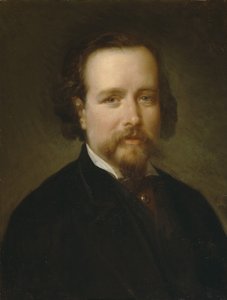
vicente palmaroli y gonzalez
1834 - 1896
Quick Facts
- Artistic Movement Or Style: Aestheticism, Tonalism
- Artists Or Movements Influenced By This Artist:
- Aesthetic Movement
- Impressionism
- Artists Who Influenced This Artist:
- Rembrandt
- Vermeer
- Velázquez
- Date Of Birth: July 10, 1834
- Date Of Death: July 17, 1903
- Full Name: James Abbott McNeill Whistler
- Nationality: American-British
- Notable Artworks:
- Arrangement in Grey and Black No. 1
- Whistler’s Mother
- Nocturne in Black and Gold
- Place Of Birth: Lowell, Massachusetts, USA