 Preview
 Send
Send Share
Share
 Details

 Download
 Similars
 X-Ray
X-Ray Diaporama
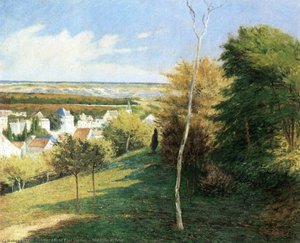
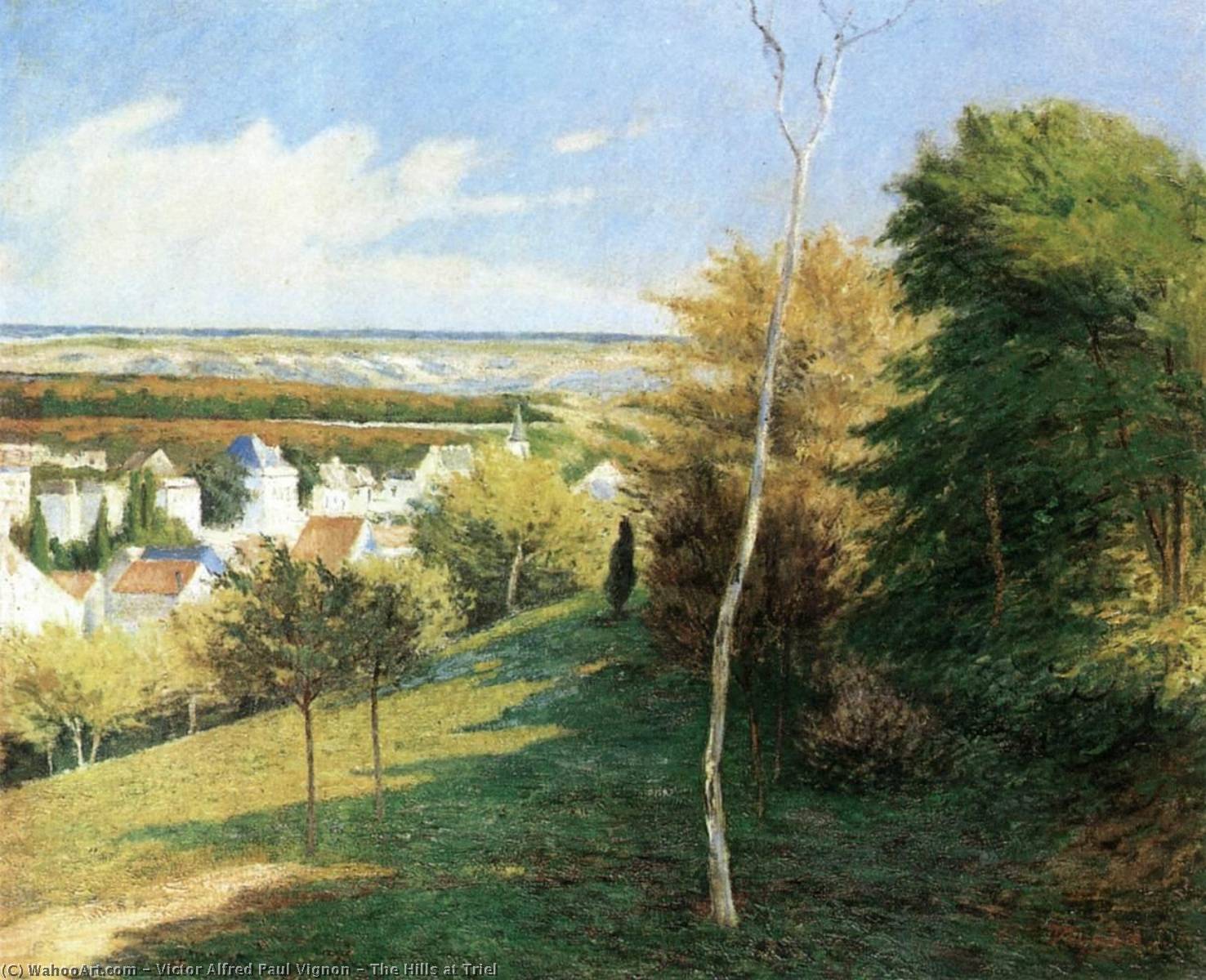
The Hills at Triel
 1881
1881 46.0 x 55.0 cm
 Read More
Hand Made Oil Reproduction
Hand-painted oil on canvas in your size and frame, made to order by our artists. ( Buy Print Buy Image)




































Pick from our preset sizes that match the artwork's original proportions.

You may enter your own dimensions to fit a specific frame or space. If your selected size does not match the original image's proportions, we will either crop the artwork or extend the painting with additional hand-painted elements. A digital mockup will be sent for your approval before production begins.
Please note that the on-screen preview does not reflect the actual cropping or extension. Only the mockup will accurately show the final composition.
While custom sizes are available, we recommend selecting a dimension from the predefined list to preserve the original proportions.
After order, ArtsDot.com team will email client for instructions and provide a mockup preview
Worldwide Delivery () in 3/4 weeks instead of standard 5 weeks. (25 August). No compromise on quality.

Free Worldwide Express Shipping

High-Quality Linen Canvas

Full Shipping Insurance

Customs Tax Refund Guarantee

True Color Matching Guarantee

60-Day Return Policy (Defects Only)

100% Money-Back Guarantee

Bulk Discount Offer
 Glass option is only available in size under 110 CM

The Hills at Triel
Reproduction Medium
Reproduction Size
-


Total Price
$ 263
Related Artworks








Artist Biography
Victor Alfred Paul Vignon: A Quiet Master of Impressionist Landscape
Victor Alfred Paul Vignon (1847 – 1909) remains a somewhat overlooked figure within the broader landscape of French Impressionism, overshadowed by luminaries like Monet and Renoir. Yet, his distinctive approach to capturing the subtleties of rural France—characterized by luminous color palettes and delicately rendered forms—offers a valuable counterpoint to the more flamboyant expressions of his contemporaries. Born into a family steeped in artistic tradition – his mother, Marie-Noémi Cadiot, was herself a sculptor who adopted the pseudonym “Claude Vignon” after a character from Balzac’s *Béatrix* – Vignon possessed an early exposure to art and its transformative power. This formative influence would shape his lifelong dedication to painting and solidify his place as one of the last surviving Impressionists.Early Training and Influences
Vignon's artistic education began under the tutelage of Camille Corot, a pivotal figure in establishing Impressionism’s core tenets. Corot instilled in Vignon a profound respect for observation and a commitment to portraying nature with uncompromising honesty. Furthermore, he studied alongside Adolphe Félix Cals, whose meticulous technique honed Vignon’s skills in capturing atmospheric effects—a crucial element distinguishing Impressionist art from academic painting. These formative relationships established the bedrock of Vignon's artistic vision: an unwavering focus on depicting the natural world with sensitivity and precision.The Rural Landscape Revisited
Vignon’s artistic output primarily revolved around landscapes, particularly those found in the Val-d'Oise region near Paris. Unlike many Impressionists who flocked to Montmartre and focused on urban scenes, Vignon deliberately sought solace and inspiration in the tranquil countryside—a decision that profoundly impacted his aesthetic sensibilities. He meticulously documented the changing seasons, capturing the ephemeral beauty of spring blossoms, the golden hues of autumn foliage, and the misty mornings of winter landscapes. His canvases are imbued with a palpable sense of stillness and contemplation, reflecting Vignon’s belief that true artistic expression resided in conveying profound emotional resonance through subtle visual cues.Collaboration and Recognition
Vignon's artistic journey intersected with several influential figures who championed his work during its formative years. Notably, he collaborated closely with Camille Pissarro and his circle in Auvers-sur-Oise, where Vincent van Gogh briefly resided. This association fostered a stimulating exchange of ideas and techniques—a testament to the collaborative spirit that characterized Impressionism’s heyday. However, Vignon's artistic reputation faced considerable challenges during the 1890s when critics like Roger Marx and Félix Fénéon questioned his stylistic integrity, asserting that many of his paintings lacked the spontaneity deemed essential for Impressionist art. Despite these dissenting voices, Vignon persevered, securing patronage from Dr. Georges Viau, who recognized his artistic merit and facilitated exhibitions showcasing his oeuvre.A Retrospective Legacy
Following Vignon’s death in 1909, Pierre Auguste Renoir and Julie Manet-Rouart organized a poignant retrospective that reaffirmed his significance within the Impressionist canon. This exhibition underscored Vignon's enduring contribution to capturing the essence of rural France—a legacy celebrated by art historians who continue to appreciate his understated elegance and profound connection to nature’s rhythms. His paintings, now housed in museums across Europe and America, stand as a testament to the quiet beauty he tirelessly pursued on canvas, securing him a deserved place among the most respected masters of Impressionist landscape painting.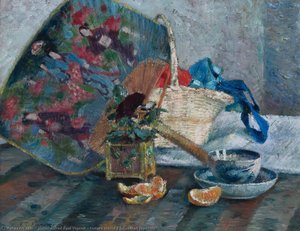
victor alfred paul vignon
1847 - 1909
Quick Facts
- Artistic Movement Or Style: Impressionism
- Artists Or Movements Influenced By This Artist: ['Vincent van Gogh']
- Artists Who Influenced This Artist:
- Camille Corot
- Adolphe Félix Cals
- Date Of Birth: 1847
- Date Of Death: 1909
- Full Name: Victor Alfred Paul Vignon
- Nationality: French
- Notable Artworks:
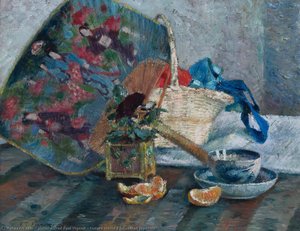
- Nature morte à l'Éventail Japonais
- The Hills at Triel
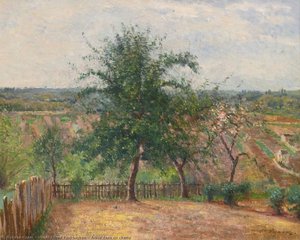
- Arbor dans un champ
- Place Of Birth: Paris, France