 Preview
 Send
Send Share
Share
 Details

 Download
 Similars
 X-Ray
X-Ray Diaporama
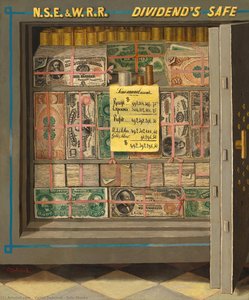
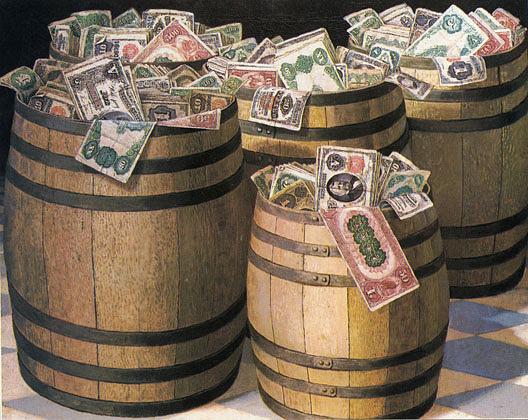
Barrels of Money, (painting)
 Read More
Hand Made Oil Reproduction
Hand-painted oil on canvas in your size and frame, made to order by our artists. ( Buy Print Buy Image)




































Pick from our preset sizes that match the artwork's original proportions.

You may enter your own dimensions to fit a specific frame or space. If your selected size does not match the original image's proportions, we will either crop the artwork or extend the painting with additional hand-painted elements. A digital mockup will be sent for your approval before production begins.
Please note that the on-screen preview does not reflect the actual cropping or extension. Only the mockup will accurately show the final composition.
While custom sizes are available, we recommend selecting a dimension from the predefined list to preserve the original proportions.
After order, ArtsDot.com team will email client for instructions and provide a mockup preview
Worldwide Delivery () in 3/4 weeks instead of standard 5 weeks. (27 August). No compromise on quality.

Free Worldwide Express Shipping

High-Quality Linen Canvas

Full Shipping Insurance

Customs Tax Refund Guarantee

True Color Matching Guarantee

60-Day Return Policy (Defects Only)

100% Money-Back Guarantee

Bulk Discount Offer
 Glass option is only available in size under 110 CM

Barrels of Money, (painting)
Reproduction Medium
Reproduction Size
-


Total Price
$ 263
Related Artworks







Artist Biography
A Life Forged in Conflict and Currency: The Story of Victor Dubreuil
Victor Dubreuil, born Marie Victor Théodore Dubreuil on November 8th, 1842, in Ayron near Poitiers, France, led a life as compelling and layered as the trompe l'oeil masterpieces he would become known for. His early years were marked by upheaval; rather than a conventional artistic upbringing, Dubreuil’s initial path was one of military service. He fought in both the Second Franco-Mexican War and the Franco-Prussian War, experiences that undoubtedly instilled within him a sense of realism—a stark observation of the world's complexities—that would later permeate his art. However, war did not define his destiny; it merely served as a prelude to a more unconventional journey. Following his military service, Dubreuil briefly entered the financial world, working as a bank director in Paris. This foray into banking proved short-lived, however, overshadowed by scandal and accusations of embezzlement that ultimately led him to seek refuge across the Atlantic, immigrating to the United States in 1882. He would become a naturalized citizen in 1888.From Agitator to Artist: A Self-Taught Vision
The transition from disgraced financier to celebrated artist is one of the most fascinating aspects of Dubreuil’s biography. In America, he embarked on a path of self-education, dedicating himself to painting with an almost obsessive fervor. He wasn't formally trained; instead, he honed his skills through relentless practice and observation. It was during this period that he discovered his unique niche: the hyperrealistic depiction of money. This choice wasn’t merely aesthetic; it reflected a complex relationship with wealth, power, and societal values—themes deeply rooted in his past experiences. He established studios first at 196 7th Avenue, then later at 110 West 44th Street in Manhattan between 1895 and 1896. His style quickly drew comparisons to that of William Michael Harnett, a master of still life known for his meticulous detail, though Dubreuil developed a distinct voice within the genre. He became something of an anomaly—a self-made artist whose work spoke volumes about the American experience through the lens of its most tangible symbol: currency.The Allure of Illusion: Trompe l'Oeil and Social Commentary
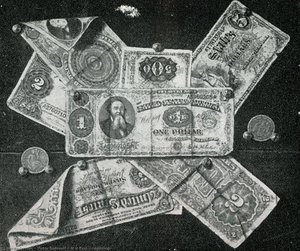
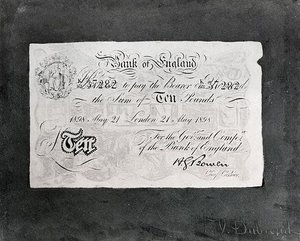
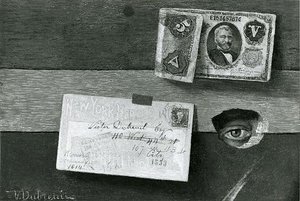
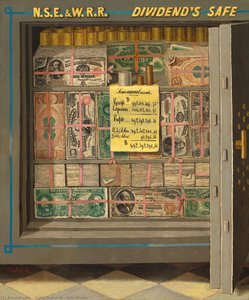
Dubreuil’s paintings are immediately striking for their deceptive realism. His trompe l'oeil technique—meaning “deceive the eye”—creates an illusion so convincing that viewers often mistake his canvases for actual objects. Barrels of Money, Safe Money, and American Paper Currency are prime examples, showcasing stacks of bills, coins overflowing from containers, or notes seemingly tacked to a wooden surface with uncanny precision. But Dubreuil’s work is more than just technical virtuosity; it's imbued with subtle social commentary. The abundance of money depicted often feels excessive, even unsettling, hinting at the anxieties and inequalities inherent in capitalist society. Money to Burn, for instance, carries a particularly poignant message about wastefulness and the ephemeral nature of wealth. His paintings weren’t simply celebrations of prosperity; they were critical examinations of its consequences.A Legacy of Realism: Dubreuil's Place in Art History
While not as widely recognized as some of his contemporaries, Victor Dubreuil occupies a significant place within 19th-century American art. His work reflects the growing fascination with realism and the desire to capture everyday life with unprecedented accuracy. He stands alongside artists like Harnett and John Frederick Peto in their dedication to still life, but Dubreuil’s focus on currency sets him apart.- His paintings offer a unique glimpse into the economic anxieties of the Gilded Age.
- He masterfully blended technical skill with social observation.
- Dubreuil's self-taught journey is an inspiring testament to the power of artistic determination.
victor dubreuil
1846 - 1946
Quick Facts
- Artistic Movement Or Style: Hartnett School
- Artists Who Influenced This Artist: ['William Michael Harnett']
- Date Of Birth: November 8, 1842
- Full Name: Marie Victor Théodore Dubreuil
- Nationality: French
- Notable Artworks:
- American Paper Currency
- Barrels of Money
- The Cross of Gold
- Place Of Birth: Ayron, France