 Preview
 Send
Send Share
Share
 Details

 Download
 Similars
 X-Ray
X-Ray Diaporama
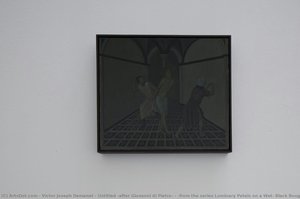
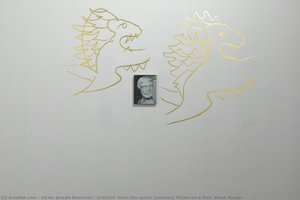
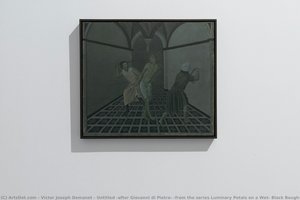
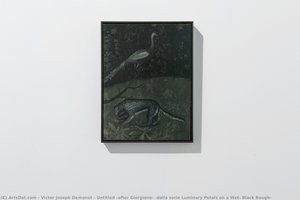
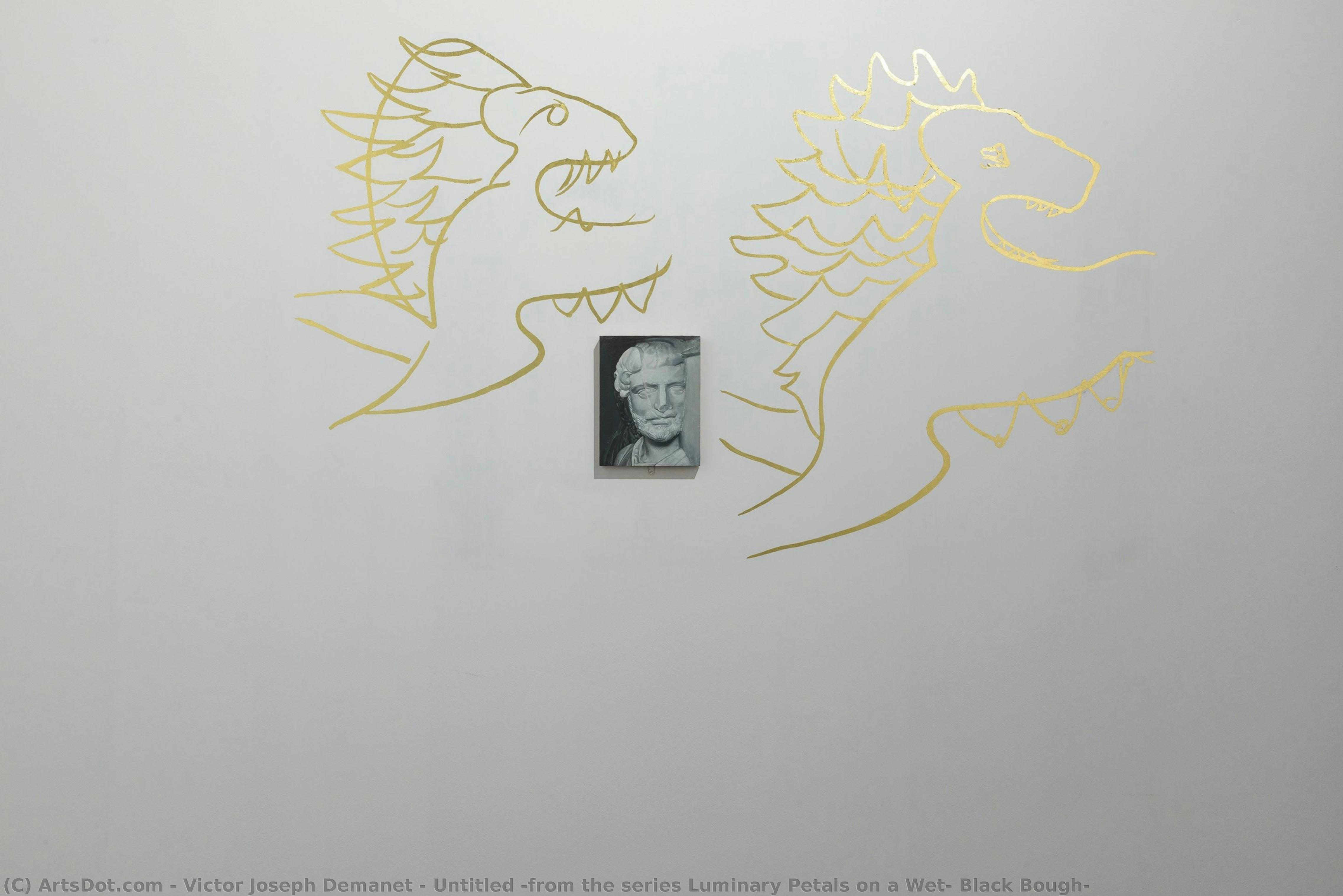
Untitled (from the series Luminary Petals on a Wet, Black Bough)


 Read More
Hand Made Oil Reproduction
Hand-painted oil on canvas in your size and frame, made to order by our artists. ( Buy Print Buy Image)




































Pick from our preset sizes that match the artwork's original proportions.

You may enter your own dimensions to fit a specific frame or space. If your selected size does not match the original image's proportions, we will either crop the artwork or extend the painting with additional hand-painted elements. A digital mockup will be sent for your approval before production begins.
Please note that the on-screen preview does not reflect the actual cropping or extension. Only the mockup will accurately show the final composition.
While custom sizes are available, we recommend selecting a dimension from the predefined list to preserve the original proportions.
After order, ArtsDot.com team will email client for instructions and provide a mockup preview
Worldwide Delivery () in 3/4 weeks instead of standard 5 weeks. (22 August). No compromise on quality.

Free Worldwide Express Shipping

High-Quality Linen Canvas

Full Shipping Insurance

Customs Tax Refund Guarantee

True Color Matching Guarantee

60-Day Return Policy (Defects Only)

100% Money-Back Guarantee

Bulk Discount Offer
 Glass option is only available in size under 110 CM

Untitled (from the series Luminary Petals on a Wet, Black Bough)
Reproduction Medium
Reproduction Size
-


Total Price
$ 263
Artwork Description
Related Artworks
Artist Biography
A Life Sculpted in Bronze: The Story of Victor Demanet
Victor Joseph Ghislain Demanet, born February 3rd, 1895, in the Belgian town of Givet near Namur, was an artist whose life and work were deeply intertwined with the artistic currents of his time. Though initially destined to follow in his parents’ footsteps as an antique dealer, a burgeoning passion for sculpture led him down a different path—one that would see him exhibit at prestigious salons, compete on the Olympic stage, and leave behind a legacy of dynamic, emotionally resonant works. Demanet's early education included studies at the Academy of Fine Arts in Namur, but it was a sojourn to Paris in 1921 that proved pivotal. Immersed in the city’s vibrant art scene, he found inspiration in the sculptures of masters like Rude, Carpeaux, and Rodin, solidifying his commitment to three-dimensional form. He returned to Belgium, settling first in Namur before ultimately establishing himself in Brussels in 1926—a move that would mark a significant period of artistic productivity.Influences and Artistic Development
Demant’s formative years were significantly shaped by Constantin Meunier, the Belgian realist painter and sculptor known for his depictions of working-class life. Meunier's focus on social themes resonated deeply with Demanet, influencing his early exploration of human labor and strength in sculpture. This initial direction was tempered by a fascination with classical forms and the expressive power of Romantic sculpture encountered during his time in Paris. He skillfully blended these influences, creating works that were both grounded in reality and imbued with a sense of dramatic energy. His participation in the Salon des Artistes Français—where he became a member after receiving recognition for his bust of Bonaparte in 1923—provided crucial exposure and validation. This period saw him establish himself as a talented portraitist, undertaking numerous public commissions while simultaneously pursuing more personal artistic endeavors.Olympic Aspirations and Public Recognition
A unique facet of Demanet’s career was his involvement in the Olympic Games art competitions. He submitted works to the games in 1924, 1932, and 1936—a testament to his ambition and the growing recognition of sculpture as a legitimate form of artistic expression within the broader cultural context of the era. While specific details regarding his submissions vary, these entries demonstrate his commitment to representing athletic ideals through sculptural form. Beyond the Olympics, Demanet’s talent was acknowledged with appointments as a Knight of the Leopold Order in 1937 and an Officer in 1961, further solidifying his standing within Belgian society. He also received the honor of being named a Knight of the Legion of Honor in 1947.The Legacy of ‘Luminary Petals’ and Beyond
Demant is perhaps best known for his series of sculptures titled “Luminary Petals on a Wet, Black Bough.” These works—often rendered in bronze with delicate gold outlines—are characterized by their abstract floral forms and evocative titles. They possess a unique quality, suggesting both fragility and resilience, capturing a fleeting moment of beauty amidst darkness. Beyond this signature series, Demanet produced numerous large-scale sculptures depicting physical work and powerful movement, as well as over one hundred medals honoring public and private figures. His statue of King Leopold II in Namur stands as a prominent example of his skill in monumental sculpture.A Lasting Impression
Victor Demanet passed away on February 7th, 1964, in Ixelles, Brussels, leaving behind a body of work that reflects the artistic sensibilities of the early to mid-20th century. His sculptures—blending realism with dramatic flair and abstract beauty—continue to captivate audiences today. He was an artist who successfully navigated the demands of public commissions while pursuing his own unique vision, creating works that celebrate both human strength and the ephemeral nature of beauty. Demanet’s legacy lies not only in the enduring quality of his sculptures but also in his ability to capture a sense of emotion and movement within the solid form of bronze—a testament to his skill as a sculptor and his deep understanding of the human spirit.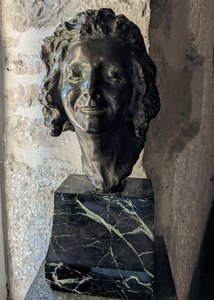
victor joseph demanet
1895 - 1964 , Belgium
Quick Facts
- Artistic Movement Or Style: Art Deco, Social Art
- Artists Who Influenced This Artist:
- Constantin Meunier
- Rodin
- Rude
- Carpeaux
- Date Of Birth: February 3, 1895
- Date Of Death: February 7, 1964
- Full Name: Victor Joseph Demanet
- Nationality: Belgian
- Notable Artworks:
- Luminary Petals series
- Hercules
- Olympic works
- Place Of Birth: Brussels, Belgium