

 Preview
 Send
Send Share
Share
 Details

 Download
 Similars
 X-Ray
X-Ray Diaporama
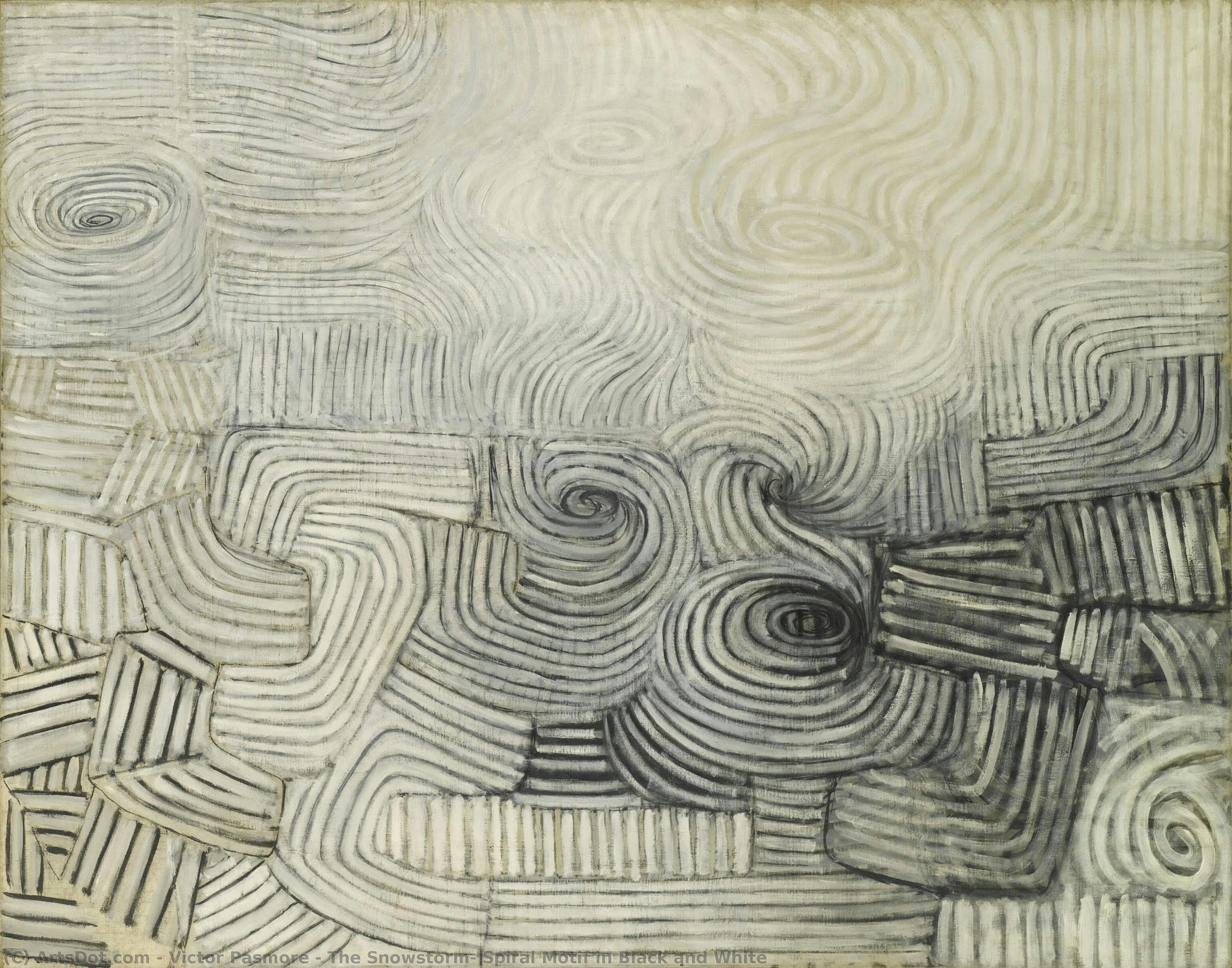
The Snowstorm: Spiral Motif in Black and White
 Oil On Canvas
- WallArt
- Geometric Abstraction
 1951
1951- Modern
 119.0 x 152.0 cm
 Arts Council Collection
 Read More
Purchase a high-resolution, enhanced digital image, far superior to the online preview.
Each file is meticulously prepared by our in-house specialists using advanced tools and expert manual retouching. We ensure every image has exceptional clarity, precise color accuracy, and fine detail.
The final file is delivered via email within 72 hours, optimized for immediate use in professional, editorial, and print environments. This is the same quality trusted by top-tier design studios, publishers, and galleries.
Digital Image
Download a high-resolution file for personal display, printing, and creative projects. ( Buy Print Buy Hand Made Painting)
Included in Every Digital Image Order
Expert Digital Delivery, Guaranteed
When you choose ArtsDot.com, you're not just getting an image - you're receiving a professionally enhanced digital artwork, crafted with precision and backed by a satisfaction guarantee. Here's everything that comes with your order, automatically:

Fast Email Delivery
Your high-resolution digital image file will be emailed to you within 72 hours of ordering - ready for immediate use.

AI-Enhanced Digital File
Your artwork is professionally optimized using advanced AI tools and manual editing, ensuring maximum detail, clarity, and color accuracy.

Free Lifetime Re-Delivery
Accidentally deleted or lost your file? No worries - we'll resend it to you anytime, free of charge.

No Import Fees - Ever
Enjoy your artwork instantly with zero customs, duties, or delivery fees - digital downloads are always tax-free.

Color Accuracy Guarantee
We ensure your digital image reflects the original colors as closely as possible using professional tools and color management.

60-Day Satisfaction Guarantee
If you're not satisfied with your digital image, we'll revise it or refund 100% within 60 days - no questions asked.

100% Money-Back Guarantee
Not satisfied? Get a full refund within 60 days of receiving your digital file - no questions asked.

Bulk Order Discounts
Buy 3 images, save 10% - Buy 5, save 15% - Buy 10+, save 20%. Great for creative projects, galleries, and agencies.
Collectible Description
A Dance of Monochrome: The Essence of Pasmore’s Storm
In the captivating realm of mid-century abstraction, few works command the eye with such rhythmic intensity as Victor Pasmore’s "The Snowstorm: Spiral Motif in Black and White." This masterpiece serves as a profound window into the artist's transformative journey, capturing that precise moment where the boundaries between the tangible world and pure geometric form begin to dissolve. At first glance, the viewer is swept up in a whirlwind of motion; the canvas breathes with the energy of a natural phenomenon, evoking the chilling swirl of a winter gale or the churning depths of a turbulent sea. Yet, beneath this surface-level drama lies a meticulously structured universe, where every curve and line is orchestrated to guide the eye through a complex, hypnotic dance of light and shadow.
The composition is a masterclass in balance and tension. A definitive horizontal line bisects the canvas, acting as a grounding horizon that suggests a landscape divided, much like the atmospheric studies of J.M.W. Turner or the delicate wave prints of Hokusai. Within this framework, Pasmore employs the golden section to anchor a magnificent spiral in the lower right, while a secondary, more ethereal spiral sits at the very heart of the work. These swirling motifs are not merely decorative; they are the pulse of the painting. Through the use of concentric circles and varying line weights, Pasmore creates an illusion of profound depth, inviting the collector to peer into a receding space that feels both infinite and intimately contained.
The Alchemy of Line and Light
Technically, the work is a triumph of monochromatic precision. By stripping away the distraction of color, Pasmore forces us to confront the raw power of form and texture. The palette—a sophisticated arrangement of black, white, and nuanced grays—emphasizes the structural integrity of the piece. There is an incredible tactile quality achieved through the density of the linework; where lines cluster tightly, the canvas feels heavy, dark, and shadowed, whereas more open areas suggest a lightness, almost as if the snow is thinning to reveal a pale sky. This interplay of density creates a rhythmic visual pulse that mimics the unpredictable nature of a storm.
For the discerning interior designer or art enthusiast, this piece offers a unique versatility. Its geometric abstraction lends itself to modern, minimalist, or even industrial aesthetics, providing a sophisticated focal point that does not overwhelm but rather elevates the surrounding space. The artwork does not merely imitate a snowstorm; it recreates its very essence through "relation to natural forms," as Pasmore himself intended. It is an art of "real and actual" beauty, offering a sense of calm introspection through its grayscale serenity, even while its swirling patterns evoke the primal energy of chaos.
A Legacy of Abstract Innovation
To possess a reproduction of this work is to hold a piece of British art history. Victor Pasmore was a pioneer who dared to move away from the lyrical figurativism of his early career toward the bold, constructivist language of abstraction. This painting stands as a testament to that courageous transition—a bridge between the recognizable world and the limitless possibilities of the abstract mind. It is an evocative, intellectual, and deeply emotional work that continues to resonate with anyone moved by the intersection of nature's power and human geometric precision.
Related Artworks

Artist Biography
Victor Pasmore: A Pioneer of British Abstraction
Early Life and Education
- Edwin John Victor Pasmore was born on December 3, 1908, in Chelsham, Surrey.
- He received his early education at Summer Fields School in Oxford and Harrow in West London.
- A turning point came with the death of his father in 1927, forcing him to take an administrative position at the London County Council.
- He pursued painting part-time at the Central School of Art and became associated with the Euston Road School.
Figurative Beginnings and Wartime Experiences
- Initially, Pasmore experimented with abstraction but later adopted a lyrical figurative style.
- His early works often depicted views of the River Thames from Hammersmith, reminiscent of J.M.W. Turner and James McNeill Whistler.
- A strong moral stance: During World War II, Pasmore was a conscientious objector.
- After being refused recognition by his local tribunal, he was called up for military service in 1942. He refused orders and was court-martialed, receiving a 123-day prison sentence.
- He successfully appealed this decision and gained unconditional exemption from military service.
The Shift to Abstraction
- Pasmore’s breakthrough into abstract art occurred around 1947, profoundly influenced by Piet Mondrian and Paul Klee.
- He was inspired by their writings on nature and the creation of dynamic harmony in art, believing it foreshadowed a future societal harmony.
- Key Influences: He also drew inspiration from Ben Nicholson and other artists associated with Circle.
- His abstract work often involved collage and construction of reliefs, pioneering the use of new materials and sometimes reaching large architectural scales.
Major Achievements and Architectural Integration
- Revolutionary Impact: Herbert Read described Pasmore’s new style as “the most revolutionary event in post-war British art.”
- In 1950, he was commissioned to create an abstract mural for a bus depot in Kingston upon Thames.
- He contributed a mural to the Festival of Britain in 1951, showcasing several British constructivists.
- The Apollo Pavilion: In 1955, he became Consulting Director of Architectural Design for Peterlee Development Corporation. The centerpiece of this project was the abstract public art structure, the Apollo Pavilion, which sparked considerable controversy but remains a significant landmark.
International Recognition and Later Life
- Pasmore represented Britain at the 1961 Venice Biennale and participated in Documenta II in Kassel (1959).
- He served as a trustee of the Tate Gallery, donating numerous works to its collection.
- Educational Contributions: He was a leading figure in promoting abstract art and reforming fine art education.
- From 1954 to 1961, he led the art course at King’s College, Durham (Newcastle upon Tyne), developing an influential general art and design course inspired by the Bauhaus.
- He moved to Malta in 1966 and died in Gudja on January 23, 1998, at the age of 89.
Legacy and Historical Significance
- Victor Pasmore’s work marked a turning point in British art, establishing abstraction as a vital force.
- His integration of art and architecture challenged conventional boundaries and influenced subsequent generations of artists and designers.
- The Victor Pasmore Gallery, inaugurated in Malta in 2014, houses a permanent exhibition of his works created during his time there.
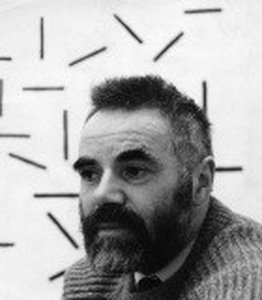
Victor Pasmore
1908 - 1998
Quick Facts
- Birth Date: 1908-12-03
- Birth Place: Chelsham, Surrey
- Death Date: 1998-01-23
- Influenced:
- Terry Frost
- Richard Hamilton
- Influenced By:
- Piet Mondrian
- Paul Klee
- Monet
- Cézanne
- Movement:
- Abstract art
- Constructivism
- Name: Victor Pasmore
- Nationality: British
- Notable Works:
- Suburban Gardens
- Apollo Pavilion

