 Preview
 Send
Send Share
Share
 Details

 Download
 Similars
 X-Ray
X-Ray Diaporama
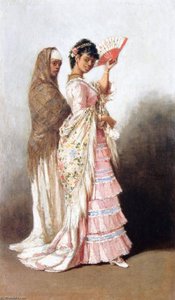
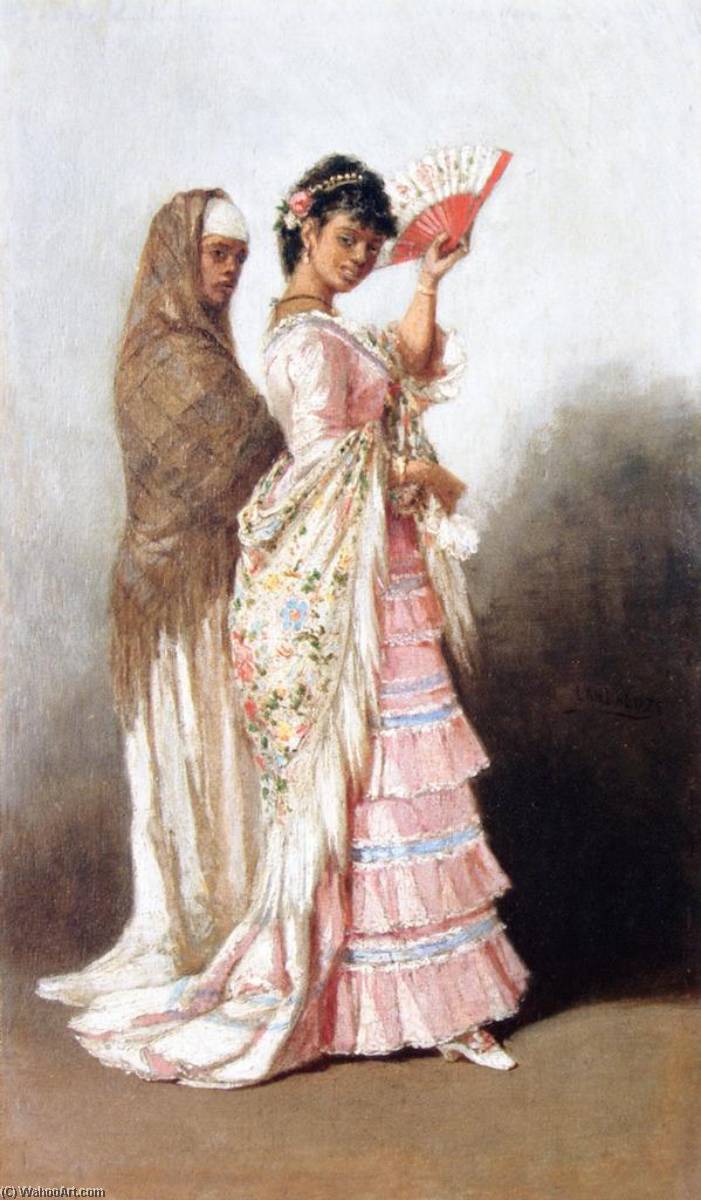
Mulatta Woman and Her Dueña

 Read More
Hand Made Oil Reproduction
Hand-painted oil on canvas in your size and frame, made to order by our artists. ( Buy Print Buy Image)




































Pick from our preset sizes that match the artwork's original proportions.

You may enter your own dimensions to fit a specific frame or space. If your selected size does not match the original image's proportions, we will either crop the artwork or extend the painting with additional hand-painted elements. A digital mockup will be sent for your approval before production begins.
Please note that the on-screen preview does not reflect the actual cropping or extension. Only the mockup will accurately show the final composition.
While custom sizes are available, we recommend selecting a dimension from the predefined list to preserve the original proportions.
After order, ArtsDot.com team will email client for instructions and provide a mockup preview
Worldwide Delivery () in 3/4 weeks instead of standard 5 weeks. (4 September). No compromise on quality.

Free Worldwide Express Shipping

High-Quality Linen Canvas

Full Shipping Insurance

Customs Tax Refund Guarantee

True Color Matching Guarantee

60-Day Return Policy (Defects Only)

100% Money-Back Guarantee

Bulk Discount Offer
 Glass option is only available in size under 110 CM

Mulatta Woman and Her Dueña
Reproduction Medium
Reproduction Size
-


Total Price
$ 263
Related Artworks









Artist Biography
A Life Rooted in Bilbao, Blossoming in Havana
Víctor Patricio de Landaluze (1828-1889) wasn’t merely a painter; he was a chronicler of a vanishing world. Born into a family steeped in Basque culture in Bilbao, Spain, his early life suggests an education that encompassed languages and a nascent artistic sensibility. While details about his formative years remain somewhat sparse, the trajectory of his career reveals a man drawn to capturing the essence of Cuban society during its tumultuous transition in the 19th century – a period marked by colonial rule, burgeoning independence movements, and the complex realities of plantation life.
His arrival in Cuba around 1850 marked a pivotal shift. Rather than immediately pursuing academic art, Landaluze found his niche as an illustrator and cartoonist for various periodicals, quickly establishing himself as a keen observer of daily life. This early work honed his skills in depicting the nuances of Cuban society – from the bustling streets of Havana to the quieter rhythms of rural communities. It was during this period that he began to develop what would become his signature style: *costumbrismo*—a movement dedicated to portraying local customs, traditions, and social types with a focus on regional identity.
The Art of Costumbrismo: Painting Cuba’s Soul
Landaluze is arguably the most prominent practitioner of *costumbrismo* in Cuban art history. Unlike purely historical or portraiture paintings, *costumbrismo* sought to capture the spirit and character of a particular place through its people and their daily routines. His canvases aren’t simply scenes; they are windows into a specific time and culture. He depicted a diverse range of subjects – from the dignified *guajiros* (country peasants) who tilled the land, to the landowners overseeing vast sugar plantations, and even the enslaved individuals whose labor underpinned the island's economy.
Crucially, Landaluze’s work wasn’t simply a neutral observation. His perspective was deeply intertwined with the political climate of the time. While he held staunchly conservative views and opposed Cuban independence—a stance reflected in his satirical cartoons—his paintings offer a valuable, albeit complex, insight into the social fabric of colonial Cuba. He presented a carefully constructed image of Cuban society, often idealized, but undeniably revealing the hierarchies and power dynamics that shaped daily life.
Themes and Symbolism: A World of Contrasts
Landaluze’s paintings are rich in symbolism and subtle commentary. His depictions of enslaved people, for example, frequently presented a carefully calibrated balance between realism and romanticization. While acknowledging their existence and labor, he often portrayed them with an air of melancholy or resignation—a reflection of the social constraints they faced. Works like “The Runaway Slave” (El cimarrón) are particularly poignant, capturing a moment of vulnerability amidst the harsh realities of captivity.
Other recurring motifs include depictions of *campesinos* engaged in traditional rituals and celebrations, alongside scenes of lavish plantation life—a stark contrast that underscored the inequalities inherent in colonial society. His paintings of “Three Kings Day in Havana” are particularly famous, capturing a vibrant blend of Catholic and African traditions, offering a glimpse into the cultural richness of the island.
Legacy and Influence
Víctor Patricio de Landaluze’s legacy extends beyond his individual works. He played a significant role in establishing *costumbrismo* as a distinct artistic movement in Cuba, influencing generations of artists who followed. His paintings remain valuable historical documents, providing a unique perspective on 19th-century Cuban society—a society grappling with issues of identity, colonialism, and the struggle for independence.
Today, his works are housed in the Museo Nacional de Bellas Artes de La Habana, where they continue to offer viewers a captivating glimpse into a bygone era. Landaluze’s art serves as a reminder that even seemingly idyllic scenes can hold profound social and political significance, inviting us to contemplate the complexities of history and the enduring power of visual storytelling.
víctor patricio de landaluze
1830 - 1889
Quick Facts
- Artistic Movement Or Style: Costumbrismo
- Artists Or Movements Influenced By This Artist: ['Cuban Art']
- Artists Who Influenced This Artist: ['José Madrazo']
- Date Of Birth: 1828
- Date Of Death: 1889
- Full Name: Víctor Patricio de Landaluze
- Nationality: Spanish-Cuban
- Notable Artworks:
- Mulatta Woman and Her Dueña
- Three Kings Day in Havana
- Place Of Birth: Bilbao, Spain