

 Preview
 Send
Send Share
Share
 Details

 Download
 Similars
 X-Ray
X-Ray Diaporama
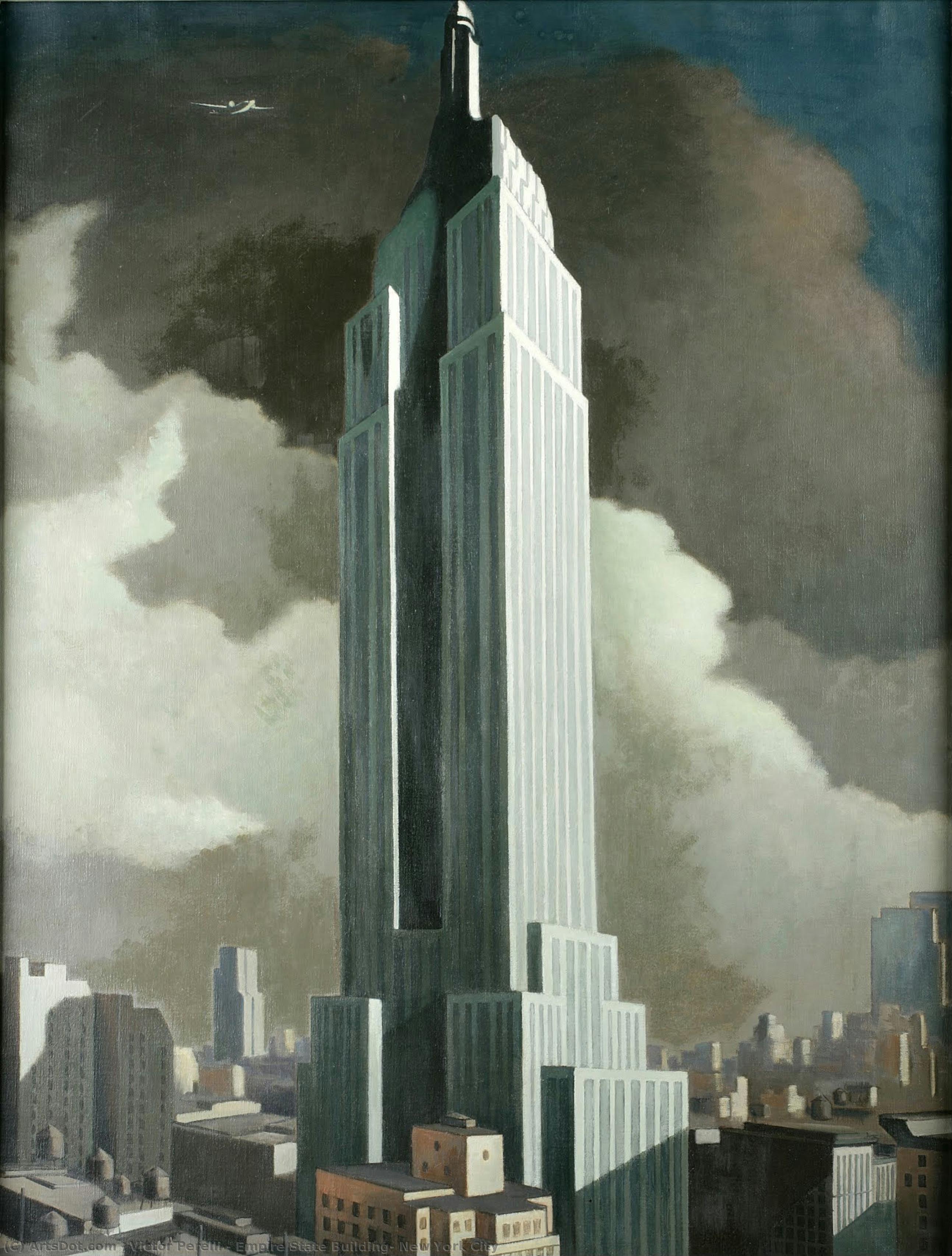
Empire State Building, New York City
 1940
1940 101.0 x 76.0 cm
 Read More
Purchase a high-resolution, enhanced digital image, far superior to the online preview.
Each file is meticulously prepared by our in-house specialists using advanced tools and expert manual retouching. We ensure every image has exceptional clarity, precise color accuracy, and fine detail.
The final file is delivered via email within 72 hours, optimized for immediate use in professional, editorial, and print environments. This is the same quality trusted by top-tier design studios, publishers, and galleries.
Digital Image
Download a high-resolution file for personal display, printing, and creative projects. ( Buy Print Buy Hand Made Painting)
Included in Every Digital Image Order
Expert Digital Delivery, Guaranteed
When you choose ArtsDot.com, you're not just getting an image - you're receiving a professionally enhanced digital artwork, crafted with precision and backed by a satisfaction guarantee. Here's everything that comes with your order, automatically:

Fast Email Delivery
Your high-resolution digital image file will be emailed to you within 72 hours of ordering - ready for immediate use.

AI-Enhanced Digital File
Your artwork is professionally optimized using advanced AI tools and manual editing, ensuring maximum detail, clarity, and color accuracy.

Free Lifetime Re-Delivery
Accidentally deleted or lost your file? No worries - we'll resend it to you anytime, free of charge.

No Import Fees - Ever
Enjoy your artwork instantly with zero customs, duties, or delivery fees - digital downloads are always tax-free.

Color Accuracy Guarantee
We ensure your digital image reflects the original colors as closely as possible using professional tools and color management.

60-Day Satisfaction Guarantee
If you're not satisfied with your digital image, we'll revise it or refund 100% within 60 days - no questions asked.

100% Money-Back Guarantee
Not satisfied? Get a full refund within 60 days of receiving your digital file - no questions asked.

Bulk Order Discounts
Buy 3 images, save 10% - Buy 5, save 15% - Buy 10+, save 20%. Great for creative projects, galleries, and agencies.
Related Artworks









Artist Biography
Aaron Douglas: A Voice of the Harlem Renaissance
Aaron Douglas (1899 – 1983) stands as a monumental figure within the vibrant tapestry of the Harlem Renaissance, an artist whose powerful and evocative works captured the spirit of Black identity, struggle, and aspiration during a pivotal era in American history. Born in Topeka, Kansas, to parents who had migrated from Arkansas seeking opportunity, Douglas’s early life was shaped by the realities of racial segregation and the burgeoning African American community within the Midwest. This formative experience would profoundly influence his artistic vision, informing his commitment to portraying Black experiences with dignity, complexity, and unwavering honesty. His journey began not in formal art training, but through practical labor – he worked as a glass cutter and later in a steel foundry – providing him with a grounding in craftsmanship and a keen awareness of the physical realities of work and life. It was through a determined pursuit of artistic education that Douglas ultimately found his voice, enrolling at the University of Nebraska-Lincoln and subsequently studying at the Art Institute of Chicago, where he absorbed the influences of European modernism while simultaneously developing a distinctly American style.Early Influences and Artistic Development
Douglas’s early work reveals a fascinating synthesis of diverse artistic currents. Initially drawn to the bold colors and dynamic compositions of Post-Impressionists like Vincent van Gogh and Paul Gauguin, he quickly moved beyond mere imitation, incorporating elements of African art – particularly tribal masks and textiles – into his own style. This engagement with non-Western aesthetics proved crucial in shaping his approach to portraiture and narrative painting. He was deeply impacted by the works of Claude Monet, learning to capture fleeting moments of light and atmosphere, a technique he would later apply to depicting scenes of Black life. Furthermore, Douglas’s exposure to the work of European Expressionists like Edvard Munch instilled in him an interest in conveying emotional intensity and psychological depth. However, unlike many Western artists who appropriated African motifs superficially, Douglas engaged with them on a far more profound level, recognizing their inherent power as symbols of cultural identity and resistance. His early portraits, such as *The Black Christ* (1928), demonstrate this sensitivity, portraying subjects with an arresting directness that challenged prevailing stereotypes.Narrative Paintings: Chronicling the African American Experience
Douglas’s most enduring legacy lies in his series of narrative paintings, which powerfully documented the history and struggles of Black Americans during the early 20th century. These works—including *The Negro Exodus* (1937), *Aspects of Negro Life: Concert*, *Aspects of Negro Life: Dance*, and *Aspects of Negro Life: Work* (all 1938)—were commissioned by the Federal Art Project, a component of President Franklin D. Roosevelt’s New Deal programs aimed at providing employment for artists during the Great Depression. Rather than simply depicting scenes of hardship, Douglas sought to create complex narratives that explored themes of migration, resilience, and cultural pride. *The Negro Exodus*, for example, portrays Black families leaving the rural South in search of opportunity in the North, capturing both their hopes and anxieties with a remarkable sense of immediacy. These paintings were not merely historical records; they were imbued with a deep understanding of the psychological and emotional toll of displacement and discrimination. His use of bold colors, simplified forms, and dynamic compositions effectively conveyed the energy and vitality of Black communities while simultaneously acknowledging the injustices they faced.Style and Legacy
Douglas’s artistic style is characterized by a distinctive blend of realism, abstraction, and symbolic imagery. He employed flattened perspectives, geometric shapes, and simplified forms to create visually arresting compositions that prioritized emotional impact over meticulous detail. His palette was often rich and vibrant, utilizing bold reds, yellows, and blues to evoke feelings of energy, passion, and hope. He drew heavily on African motifs – particularly masks and textiles – incorporating them into his paintings as visual metaphors for cultural identity and spiritual power. Douglas’s influence extended far beyond the Harlem Renaissance, impacting generations of Black artists who followed in his footsteps. He is considered a pioneer of Black American art, paving the way for future generations to explore their own identities and experiences through artistic expression. His work continues to resonate today, serving as a powerful reminder of the struggles and triumphs of the African American community and the enduring importance of cultural heritage. His legacy resides not only in his paintings but also in his commitment to using art as a tool for social commentary and historical documentation—a mission that remains vitally relevant in our own time.Further Resources
- National Gallery of Art: Aaron Douglas
- Art UK: Eileen Agar (Relevant for context on the era)
victor perelli
1899 - 1983 , Argentina
Quick Facts
- Artistic Movement Or Style: Harlem Renaissance
- Artists Or Movements Influenced By This Artist: ['Modernism']
- Artists Who Influenced This Artist:
- Claude Monet
- Eugène Boudin
- Date Of Birth: May 26, 1899
- Date Of Death: 1983
- Full Name: Aaron Douglas
- Nationality: American
- Notable Artworks:
- Saudade
- Signing the Mayflower Compact
- Equestrian statue Grant
- Place Of Birth: Topeka, Kansas, USA

