 Preview
 Send
Send Share
Share
 Details

 Download
 Similars
 X-Ray
X-Ray Diaporama
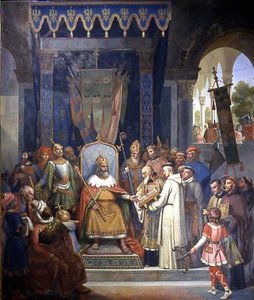
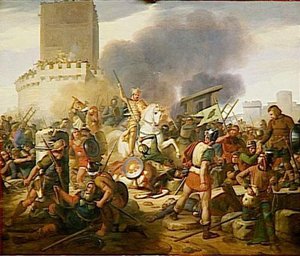
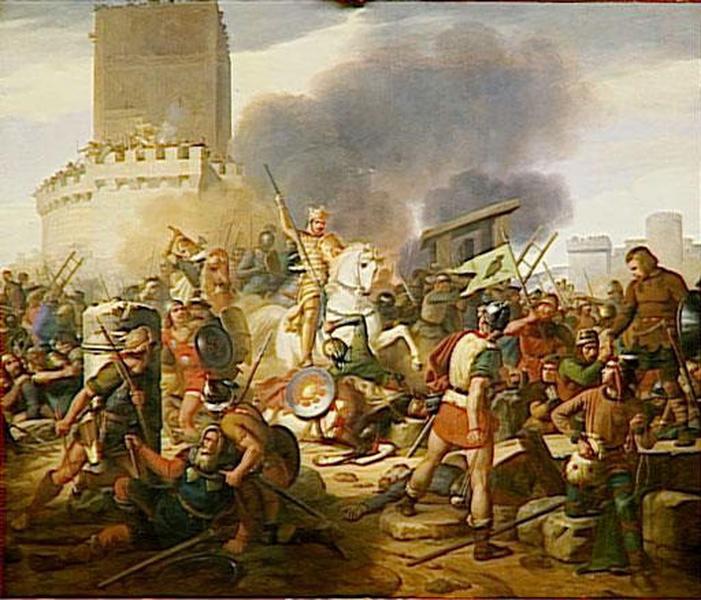
LE COMTE EUDES DEFEND PARIS CONTRE LES NORMANDS.885
 Read More
Giclée / Art Print
Museum-quality giclée or canvas print with fast production and flexible finish options. ( Buy Hand Made Painting Buy Image)




































Pick from our preset sizes that match the artwork's original proportions.

You may enter your own dimensions to fit a specific frame or space. If your selected size does not match the original image's proportions, we will either crop the artwork or extend the image with a mirrored or solid-fill edge. A digital mockup will be sent for your approval before production begins.
Please note that the on-screen preview does not reflect the actual cropping or extension. Only the mockup will accurately show the final composition.
While custom sizes are available, we recommend selecting a dimension from the predefined list to preserve the original proportions.
Worldwide Delivery () in 2 weeks instead of standard 4/5 weeks. (21 August)

Free Worldwide Express Shipping

High-Quality Linen Canvas

Full Shipping Insurance

Customs Tax Refund Guarantee

True Color Matching Guarantee

60-Day Return Policy (Defects Only)

100% Money-Back Guarantee

Bulk Discount Offer
 Glass option is only available in size under 110 CM

LE COMTE EUDES DEFEND PARIS CONTRE LES NORMANDS.885
Giclée / Art Print
Reproduction Size
-


Total Price
$ 63
Related Artworks








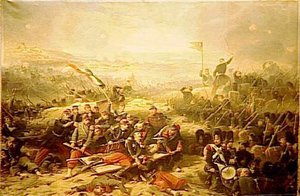

Artist Biography
Jean-Victor Schnetz: A Master of Historical and Genre Painting
Jean-Victor Schnetz (1787-1870) stands as a significant, yet often overlooked, figure in 19th-century French art. A dedicated academic painter, he navigated the complex currents of the Salon system and left behind a substantial body of work characterized by dramatic historical scenes, evocative genre paintings, and a remarkable command of light and composition. His career spanned several decades, witnessing shifts in artistic taste and reflecting the evolving political landscape of France, ultimately solidifying his place as a key representative of the French academic tradition.
Born in Versailles, Schnetz’s early life remains somewhat shrouded in mystery. He received his initial training at the École Royale des Beaux-Arts in Paris, where he studied under the renowned Jacques-Louis David, a pivotal influence on his artistic development. David's emphasis on classical form, meticulous detail, and historical narrative profoundly shaped Schnetz’s approach to painting. This foundation is evident throughout his oeuvre, particularly in works depicting momentous events and figures from the past.
Early Career and Academic Recognition
Schnetz began exhibiting at the Salon de Paris relatively early in his career, quickly gaining recognition for his historical paintings. His talent was immediately apparent – he possessed a remarkable ability to capture dramatic action, convey emotion, and create visually arresting compositions. He frequently depicted scenes from Roman history, drawing inspiration from classical literature and archaeological discoveries. These works were not merely reproductions of ancient events; Schnetz imbued them with a sense of immediacy and theatricality, transforming historical narratives into compelling visual experiences.
His dedication to the academic tradition was further demonstrated by his election to the Académie des Beaux-Arts in 1837 – a prestigious honor reserved for artists who had proven their mastery and commitment to upholding the standards of French art. This recognition solidified his position within the established artistic hierarchy and opened doors to significant commissions and opportunities.
Directorships and Artistic Leadership
Schnetz’s influence extended beyond his own paintings; he also held prominent administrative roles within the French Academy in Rome, serving as its Director twice – from 1841 to 1846 and again from 1853 to 1866. These directorships afforded him considerable authority and allowed him to shape the artistic environment of a crucial center for training and innovation. During his tenure, he championed the principles of academic art, fostering a rigorous approach to technique and composition while also encouraging experimentation within established conventions.
His leadership was marked by a commitment to supporting young artists and promoting French artistic ideals abroad. He actively sought out talented students and provided them with invaluable guidance and mentorship, contributing significantly to the continued vitality of the French art establishment.
Notable Works and Artistic Style
Schnetz’s most celebrated works include “The Battle for the Town Hall, 28 July 1830,” a dynamic depiction of the Parisian uprising against Charles X. This painting exemplifies his ability to capture the chaos and fervor of revolutionary events with dramatic lighting and carefully orchestrated composition. Another significant work is "Le Voeu à la Madone" (The Wish to the Madonna), a poignant genre scene that showcases his skill in portraying human emotion and capturing intimate moments of domestic life.
His style is characterized by meticulous detail, rich color palettes, and a strong sense of realism. He skillfully employed chiaroscuro – the contrast between light and dark – to create dramatic effects and emphasize key elements within his compositions. While firmly rooted in academic tradition, Schnetz’s work possesses a remarkable vitality and emotional resonance that distinguishes it from purely formalistic representations.
Legacy and Historical Significance
Jean-Victor Schnetz's legacy is one of quiet but enduring importance. He represents the culmination of the French academic painting tradition – a style characterized by rigorous technique, historical subject matter, and a commitment to upholding established artistic standards. His works are now housed in prestigious museums across Europe, including the Louvre Museum in Paris, the Petit Palais, and the Hermitage in St. Petersburg, ensuring that his contributions to art history will continue to be appreciated for generations to come.
Despite not always receiving the widespread recognition of some of his contemporaries, Schnetz’s paintings offer a valuable window into 19th-century French society and culture. They provide insights into the political events, social customs, and artistic values that shaped this era, solidifying his place as a significant artist within the broader context of European art history.
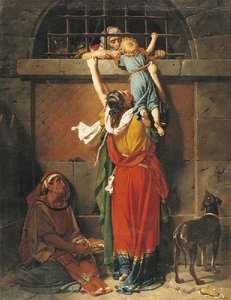
victor schnetz
1787 - 1870
Quick Facts
- Artistic Movement Or Style: Academic Art
- Artists Or Movements Influenced By This Artist: ['Romanticism']
- Artists Who Influenced This Artist: ['Jacques-Louis David']
- Date Of Birth: April 14, 1787
- Date Of Death: March 15, 1870
- Full Name: Jean-Victor Schnetz
- Nationality: French
- Notable Artworks:
- Battle for Town Hall
- The Old Italian Woman
- Roman Scenes
- Place Of Birth: Versailles, France