 Preview
 Send
Send Share
Share
 Details

 Download
 Similars
 X-Ray
X-Ray Diaporama
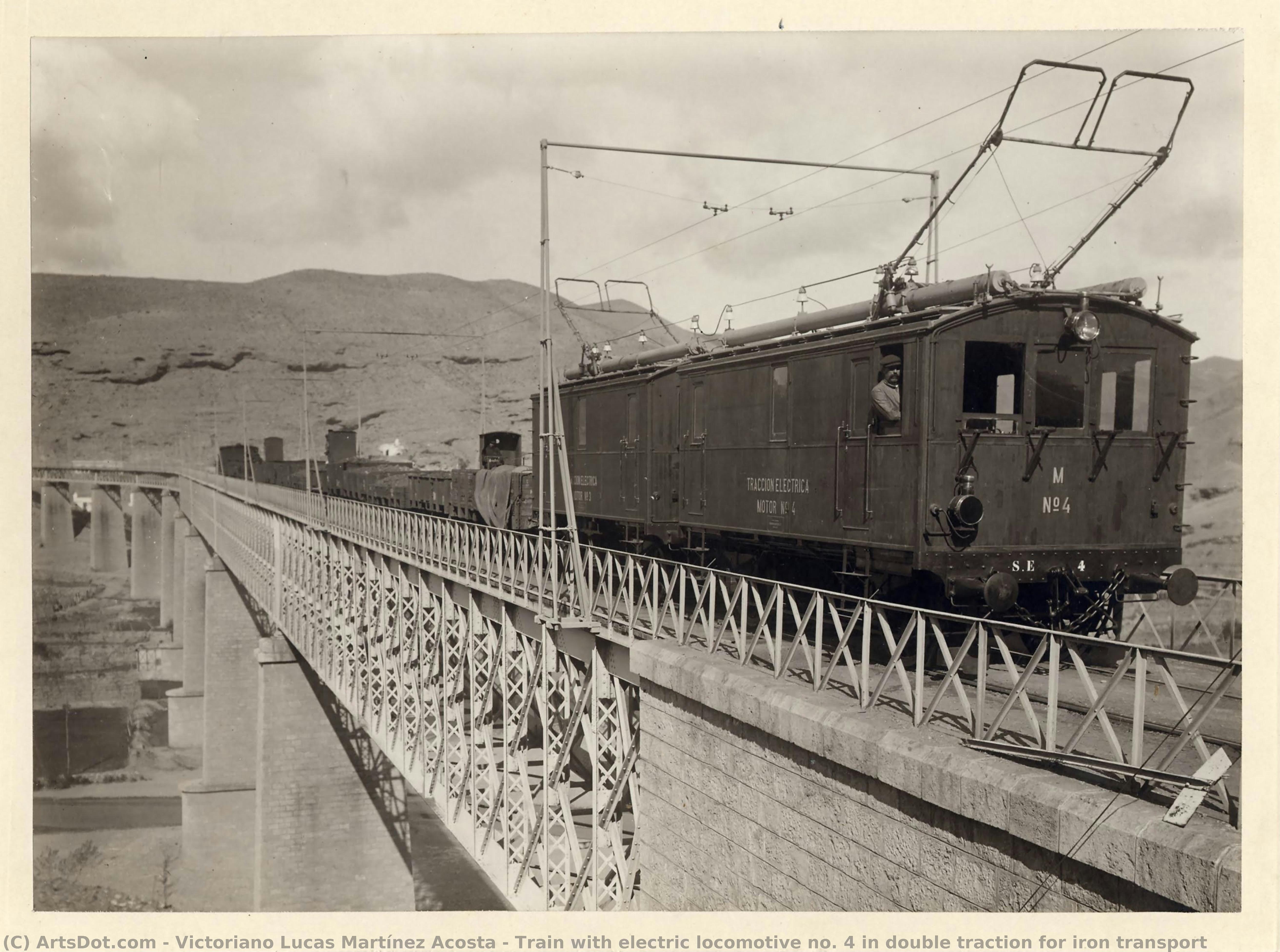
Train with electric locomotive no. 4 in double traction for iron transport
 1912
1912 16.0 x 22.0 cm
 Spanish Railways Foundation
 Read More
Hand Made Oil Reproduction
Hand-painted oil on canvas in your size and frame, made to order by our artists. ( Buy Print Buy Image)




































Pick from our preset sizes that match the artwork's original proportions.

You may enter your own dimensions to fit a specific frame or space. If your selected size does not match the original image's proportions, we will either crop the artwork or extend the painting with additional hand-painted elements. A digital mockup will be sent for your approval before production begins.
Please note that the on-screen preview does not reflect the actual cropping or extension. Only the mockup will accurately show the final composition.
While custom sizes are available, we recommend selecting a dimension from the predefined list to preserve the original proportions.
After order, ArtsDot.com team will email client for instructions and provide a mockup preview
Worldwide Delivery () in 3/4 weeks instead of standard 5 weeks. (4 September). No compromise on quality.

Free Worldwide Express Shipping

High-Quality Linen Canvas

Full Shipping Insurance

Customs Tax Refund Guarantee

True Color Matching Guarantee

60-Day Return Policy (Defects Only)

100% Money-Back Guarantee

Bulk Discount Offer
 Glass option is only available in size under 110 CM

Train with electric locomotive no. 4 in double traction for iron transport
Reproduction Medium
Reproduction Size
-


Total Price
$ 263
Related Artworks




Artist Biography
Victoriano Lucas Martínez Acosta: A Painter of Progress and Steel
Victoriano Lucas Martínez Acosta, born in San Miguel de Tucumán, Argentina, in 1977, is an artist whose work offers a compelling visual dialogue with the industrial heartland of South America. While his career began on the basketball court – a professional player and coach known for his skill and leadership – it was through a shift in focus that Martínez Acosta discovered his true passion: capturing the evocative power of landscapes shaped by industry, particularly the intricate world of railways and locomotives.
Initially, Martínez’s artistic journey felt somewhat serendipitous. His background as an athlete instilled within him a keen eye for detail, spatial awareness, and an appreciation for precision – qualities that naturally translated to his painting style. He began experimenting with oil paints, drawn to their rich textures and ability to render the subtle nuances of light and shadow. His early works were largely explorations of rural Argentine scenes, but it wasn’t long before he became captivated by the burgeoning industrial landscape transforming his homeland. The rhythmic clang of steel, the billowing steam, and the vast networks of tracks ignited a creative fire within him.
The Language of Railways
Martínez Acosta's paintings are not simply depictions of trains; they’re meditations on progress, transportation, and the human relationship with technology. He frequently portrays locomotives in motion, often against dramatic skies or rolling hills, imbuing them with a sense of both power and vulnerability. The repetition of tracks, the geometric precision of the machinery, and the interplay of light and shadow create a visual rhythm that mirrors the relentless pace of industrial development.
His subject matter is deeply rooted in Argentine history – a nation built on agriculture but increasingly reliant on railways for trade and connectivity. The trains themselves become symbols of this transition, representing both the potential for growth and the displacement of traditional ways of life. He masterfully utilizes color to evoke specific moods: deep blues and grays suggest the cold efficiency of machinery, while warmer tones – ochres, reds, and yellows – hint at the warmth of human activity surrounding these powerful machines.
Technique and Inspiration
Martínez Acosta’s technique is characterized by a meticulous attention to detail and a confident brushstroke. He builds up layers of paint gradually, creating textures that mimic the weathered surfaces of locomotives and the rugged terrain they traverse. His compositions are often carefully balanced, drawing the eye across the canvas and inviting contemplation. While he draws inspiration from the works of realist painters like Gustave Courbet, who similarly depicted industrial scenes with unflinching honesty, Martínez Acosta imbues his paintings with a distinctly personal vision.
The artist’s connection to ArtsDot is significant; it provides a platform for his work to reach a wider audience. His art reflects the broader themes explored on the site – the preservation of artistic heritage and the accessibility of fine art reproductions. Furthermore, exploring resources like the Ballarat Fine Art Gallery and ArtsDot's timeline offers valuable context for understanding the evolution of Western art and the historical significance of his chosen subject matter.
A Contemporary Voice
Victoriano Lucas Martínez Acosta’s work stands as a testament to the enduring appeal of industrial landscapes. He transforms familiar scenes – railways, locomotives, and factories – into compelling narratives that speak to both the beauty and the complexities of progress. His paintings are not merely representations of objects; they are windows into a rapidly changing world, inviting viewers to consider their own relationship with technology and the legacy we leave behind.
Currently featured on ArtsDot, his evocative depictions of train journeys and industrial scenes continue to resonate with collectors and art enthusiasts alike. His journey from the basketball court to the canvas is a remarkable one, demonstrating that artistic passion can emerge in unexpected places – and that even those who have dedicated their lives to sport can find new ways to express themselves through the power of visual storytelling.

victoriano lucas martínez acosta
1977 - , Argentina
Quick Facts
- Artistic Movement Or Style: Industrial landscapes/Railway art
- Date Of Birth: November 5, 1977
- Full Name: Victoriano Lucas Martínez Acosta
- Nationality: Argentine-Spanish
- Notable Artworks: ['Train with electric locomotive no. 4']
- Place Of Birth: San Miguel de Tucumán, Argentina