

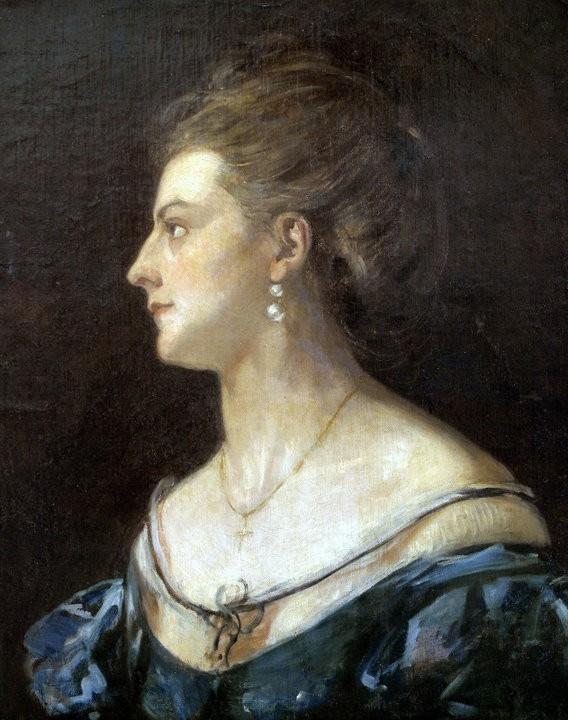
 Preview
 Send
Send Share
Share
 Details

 Download
 Similars
 X-Ray
X-Ray Diaporama
His Wife

 Read More
Purchase a high-resolution, enhanced digital image, far superior to the online preview.
Each file is meticulously prepared by our in-house specialists using advanced tools and expert manual retouching. We ensure every image has exceptional clarity, precise color accuracy, and fine detail.
The final file is delivered via email within 72 hours, optimized for immediate use in professional, editorial, and print environments. This is the same quality trusted by top-tier design studios, publishers, and galleries.
Digital Image
Download a high-resolution file for personal display, printing, and creative projects. ( Buy Print Buy Hand Made Painting)
Included in Every Digital Image Order
Expert Digital Delivery, Guaranteed
When you choose ArtsDot.com, you're not just getting an image - you're receiving a professionally enhanced digital artwork, crafted with precision and backed by a satisfaction guarantee. Here's everything that comes with your order, automatically:

Fast Email Delivery
Your high-resolution digital image file will be emailed to you within 72 hours of ordering - ready for immediate use.

AI-Enhanced Digital File
Your artwork is professionally optimized using advanced AI tools and manual editing, ensuring maximum detail, clarity, and color accuracy.

Free Lifetime Re-Delivery
Accidentally deleted or lost your file? No worries - we'll resend it to you anytime, free of charge.

No Import Fees - Ever
Enjoy your artwork instantly with zero customs, duties, or delivery fees - digital downloads are always tax-free.

Color Accuracy Guarantee
We ensure your digital image reflects the original colors as closely as possible using professional tools and color management.

60-Day Satisfaction Guarantee
If you're not satisfied with your digital image, we'll revise it or refund 100% within 60 days - no questions asked.

100% Money-Back Guarantee
Not satisfied? Get a full refund within 60 days of receiving your digital file - no questions asked.

Bulk Order Discounts
Buy 3 images, save 10% - Buy 5, save 15% - Buy 10+, save 20%. Great for creative projects, galleries, and agencies.
Related Artworks



Artist Biography
Albert Bierstadt: A Titan of the American West
Born in Düsseldorf, Germany, in 1830, Albert Bierstadt’s artistic journey began far from the rugged landscapes he would later immortalize. His early life was steeped in the traditions of the Dusseldorf School, a movement renowned for its meticulous detail, dramatic lighting, and heroic depictions of nature. This training instilled within him an appreciation for capturing the grandeur and emotional impact of the natural world – a sensibility that would profoundly shape his career as one of America’s most celebrated landscape painters.
Bierstadt's family immigrated to New Bedford, Massachusetts, when he was just two years old. Returning to Düsseldorf at age 21, he immersed himself in artistic study under the tutelage of Andreas Aschenbach and Karl Friedman Lessing, masters of the Dusseldorf School. These formative years exposed him to a rigorous approach – an emphasis on precise observation, painstaking rendering of textures, and the use of atmospheric effects to heighten the drama of his scenes. He traveled extensively throughout Europe, sketching and absorbing the landscapes of various regions, further refining his technique and broadening his artistic vision.
Bierstadt’s arrival in America marked a pivotal moment. He quickly established himself as a leading figure in the Hudson River School, a movement characterized by its romanticized depictions of American wilderness. Unlike earlier landscape painters who focused on idyllic scenes, Bierstadt sought to capture the awe-inspiring scale and power of the West – the towering mountains, vast plains, and dramatic skies of the Rocky Mountains and Sierra Nevada. His paintings weren’t merely representations; they were intended to evoke a sense of wonder and inspire a feeling of connection with nature.
The Pioneer of Grand Landscapes
Bierstadt's artistic breakthrough came in 1860, when he witnessed the landscapes that would become the cornerstone of his career. Attached to a military expedition charting wagon routes through the Wyoming Rockies, he meticulously documented the region’s flora, fauna, and indigenous peoples. This experience proved invaluable; he didn’t just paint what he saw but gathered detailed sketches, collected artifacts, and even utilized early photographic techniques – becoming one of the first artists to employ stereoscopy in his work. This commitment to accuracy and observation set him apart from many of his contemporaries.
His paintings quickly gained recognition, particularly after a series of dramatic scenes depicting Yosemite Valley captivated the public’s imagination. These works, imbued with an almost theatrical quality, were exhibited at the National Academy of Design in New York, where they commanded exceptionally high prices – a testament to their immediate popularity. The US Congress even appropriated $20,000 for one canvas and commissioned two monumental murals for the Capitol Building, solidifying Bierstadt’s position as America's foremost artist.
Technique and Style
Bierstadt’s artistic style was characterized by several key elements. He employed a vast scale, often filling the entire canvas with his subjects to emphasize their immensity. His use of light and shadow was particularly dramatic, creating a sense of depth and atmosphere that drew viewers into the scene. He meticulously rendered details – from the individual blades of grass to the textures of rock formations – demonstrating an extraordinary level of technical skill.
Furthermore, Bierstadt’s compositions were often structured around a central focal point, typically a majestic mountain peak or a dramatic sunset. He utilized atmospheric perspective—making distant objects appear paler and less distinct—to create a sense of vastness and distance. His palette favored rich, warm colors – deep blues, greens, and browns – which contributed to the overall feeling of grandeur and romanticism.
Legacy and Historical Significance
Despite his initial success, Bierstadt’s work faced criticism in the late 1870s as the Romantic style of the Dusseldorf School fell out of favor. The Barbizon school's emphasis on naturalism and Impressionism’s focus on capturing fleeting moments challenged the scale and dramatic intensity that defined Bierstadt’s paintings. His monumental *The Last of the Buffalo* was even rejected for the Paris Exposition in 1889, a poignant indicator of shifting artistic tastes.
However, Albert Bierstadt's influence on American art remains undeniable. He played a crucial role in popularizing the depiction of the American West and introducing Eastern audiences to its breathtaking beauty. His paintings served as both visual records and romanticized visions, shaping public perceptions of the frontier and contributing significantly to the development of the American landscape tradition. Today, his works are treasured for their technical mastery, dramatic compositions, and enduring appeal – a testament to the legacy of a true giant of the Hudson River School.
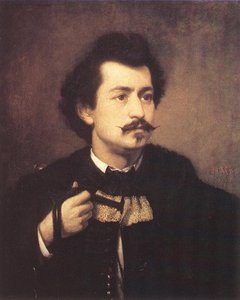
viktor madarász
1830 - 1917
Quick Facts
- Artistic Movement Or Style: Hudson River School
- Date Of Birth: January 7, 1830
- Date Of Death: February 18, 1902
- Full Name: Albert Bierstadt
- Nationality: American
- Notable Artworks:
- The Rocky Mountains
- Yosemite Valley
- Among the Sierra Nevada”, “Last of the Buffalo” ], "Artists who influenced this artist": [ "Andreas Aschenbach", "Karl Friedman Lessing" ], "Artists or movements influenced by this artist": [ "Later American painters"
- Place Of Birth: Düsseldorf, Germany

