 Preview
 Send
Send Share
Share
 Details

 Download
 Similars
 X-Ray
X-Ray Diaporama
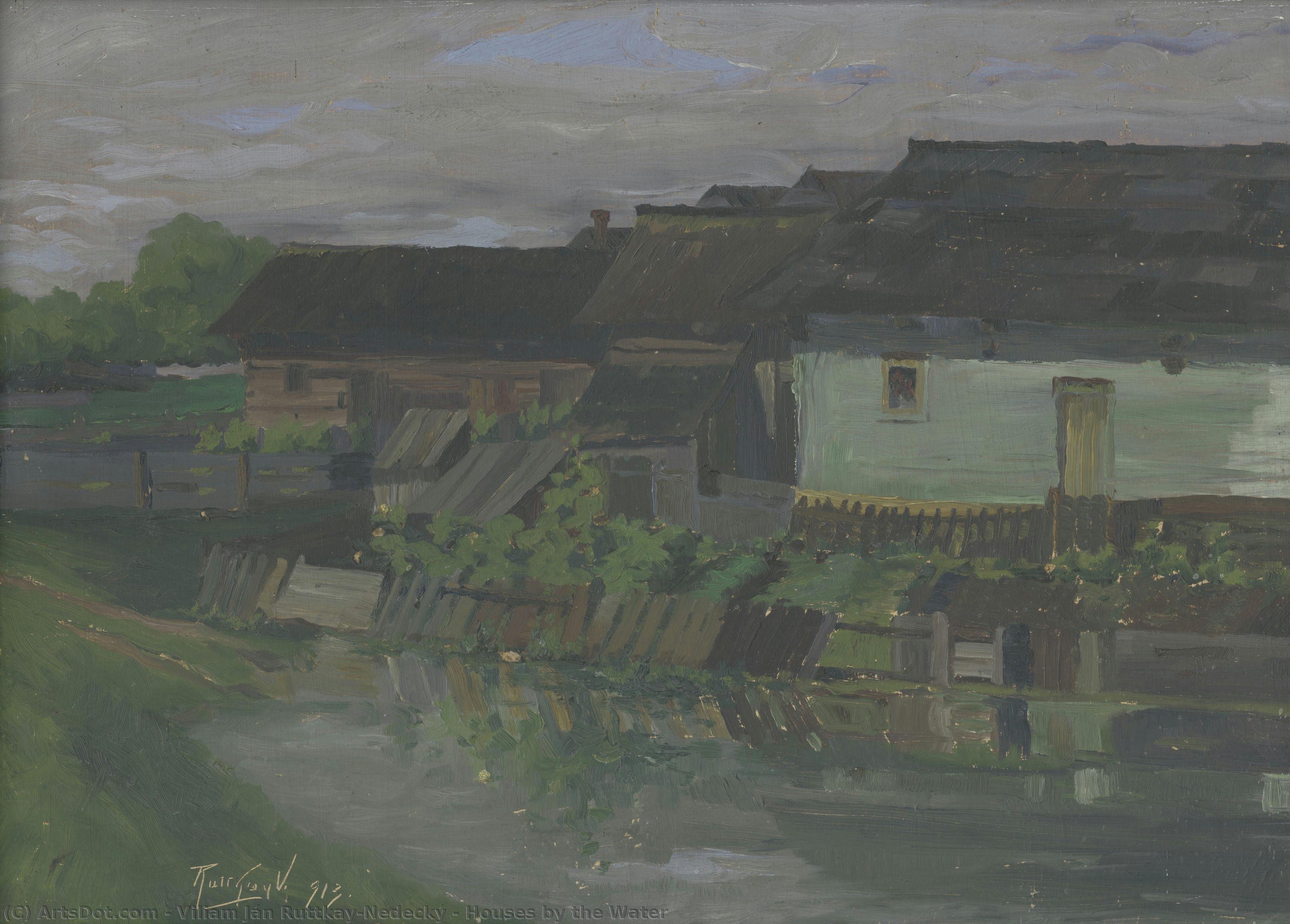
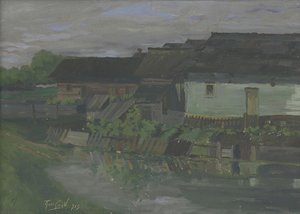
Houses by the Water
 46.0 x 33.0 cm
 Gallery of M. A. Bazovsky
 Read More
Giclée / Art Print
Museum-quality giclée or canvas print with fast production and flexible finish options. ( Buy Hand Made Painting Buy Image)




































Pick from our preset sizes that match the artwork's original proportions.

You may enter your own dimensions to fit a specific frame or space. If your selected size does not match the original image's proportions, we will either crop the artwork or extend the image with a mirrored or solid-fill edge. A digital mockup will be sent for your approval before production begins.
Please note that the on-screen preview does not reflect the actual cropping or extension. Only the mockup will accurately show the final composition.
While custom sizes are available, we recommend selecting a dimension from the predefined list to preserve the original proportions.
Worldwide Delivery () in 2 weeks instead of standard 4/5 weeks. (1 September)

Free Worldwide Express Shipping

High-Quality Linen Canvas

Full Shipping Insurance

Customs Tax Refund Guarantee

True Color Matching Guarantee

60-Day Return Policy (Defects Only)

100% Money-Back Guarantee

Bulk Discount Offer
 Glass option is only available in size under 110 CM

Houses by the Water
Giclée / Art Print
Reproduction Size
-


Total Price
$ 63
Related Artworks







Artist Biography
The Soul of the Slovak Landscape: The Life of Viliam Ján Ruttkay-Nedecký
In the quiet, mist-laden valleys of Central Europe, there exists a visual language of profound intimacy and meticulous detail, a language perfected by the hand of Viliam Ján Ruttkay-Nedecký. Born in 1892 in Príbovce, Slovakia, Ruttkay-Nedecký was more than a mere chronicler of scenery; he was an artist who sought to capture the very breath of the land. His journey began with formal academic rigor at the Academy of Fine Arts in Budapest, a period that would serve as the crucible for his technical mastery. During these formative years, he moved through the vibrant artistic currents of the era, absorbing the fleeting light of Impressionism and the psychological weight of Expressionism. This diverse education allowed him to develop a style that could oscillate between the delicate play of sunlight on a meadow and the profound, often somber, depth of a human portrait.
The trajectory of his career was irrevocably altered by the tides of history. The upheaval of World War I interrupted his studies, forcing him into military service, yet this period of displacement only deepened his connection to his roots. Upon returning to Slovakia, Ruttkay-Nedecký underwent a significant artistic evolution. While his early works flirted with the stylistic innovations of the Budapest art scene, his heart eventually found its true calling in the landscapes of his homeland. He became a dedicated observer of the Slovak terrain, finding infinite complexity in the Tatra Mountains and the golden, rolling meadows of the countryside. His work transitioned into a refined realism, where every stroke of oil on canvas served to document the enduring beauty of the Slovak visual culture.
Technique and the Mastery of Light
To stand before a Ruttkay-Nedecký original is to witness a masterclass in controlled execution. He was an artist of immense patience, favoring the application of thin, translucent layers of pigment to build a sense of atmosphere that feels almost tactile. His technique allowed him to achieve subtle gradations of tone, creating landscapes that seem to shift as the viewer's perspective changes. Whether he was capturing the heavy, damp air of a mountain morning or the sharp, clear light of a summer afternoon, his ability to manipulate texture and light gave his subjects a palpable sense of life.
His repertoire extended far beyond the horizon of the landscape. Ruttkay-Nedecký possessed a unique ability to find dignity in all subjects, ranging from:
- Portraiture of Dignitaries: Capturing the psychological depth and social standing of notable figures with an unflinching eye for detail.
- The Human Condition: Moving beyond the elite to paint the raw, honest lives of beggars, wanderers, and the Roma people, imbuing them with a profound sense of humanity.
- Still Lifes and Figurative Compositions: Utilizing everyday objects and human forms to explore balance, light, and the quiet moments of domestic existence.
Legacy and Historical Significance
Ruttkay-Nedecký’s contribution to Slovak art extends well beyond the borders of his canvases. He was a foundational figure in the institutionalization of art in his region, serving as a respected pedagogue and a pioneer of organized artistic life. His commitment to the growth of the arts led him to become one of the founders of the Union of Czechoslovak Visual Artists and to establish the Regional Gallery in Banská Bystrica in 1956. Through his teaching and his leadership, he helped cultivate a new generation of artists who would continue to explore the Slovak identity through various modern lenses.
Throughout his life, his work traveled far beyond the borders of Slovakia, finding audiences in prestigious galleries in Vienna, Budapest, Dresden, and beyond. Even as he navigated the complexities of the 20th century, his dedication to the essence of place remained unshakable. Today, Viliam Ján Ruttkay-Nedecký is remembered not just as a painter of landscapes, but as a guardian of memory—an artist who used the medium of oil and canvas to ensure that the light, the people, and the spirit of Central Europe would never fade from the collective consciousness.
viliam ján ruttkay-nedecký
1892 - 1967 , Slovakia
Quick Facts
- Artistic Movement Or Style: Realism
- Date Of Birth: January 14, 1892
- Date Of Death: June 30, 1967
- Full Name: Viliam Ján Ruttkay-Nedecký
- Nationality: Slovak
- Notable Artworks: ['Houses by the Water']
- Place Of Birth: Presov, Slovakia