 Preview
 Send
Send Share
Share
 Details

 Download
 Similars
 X-Ray
X-Ray Diaporama
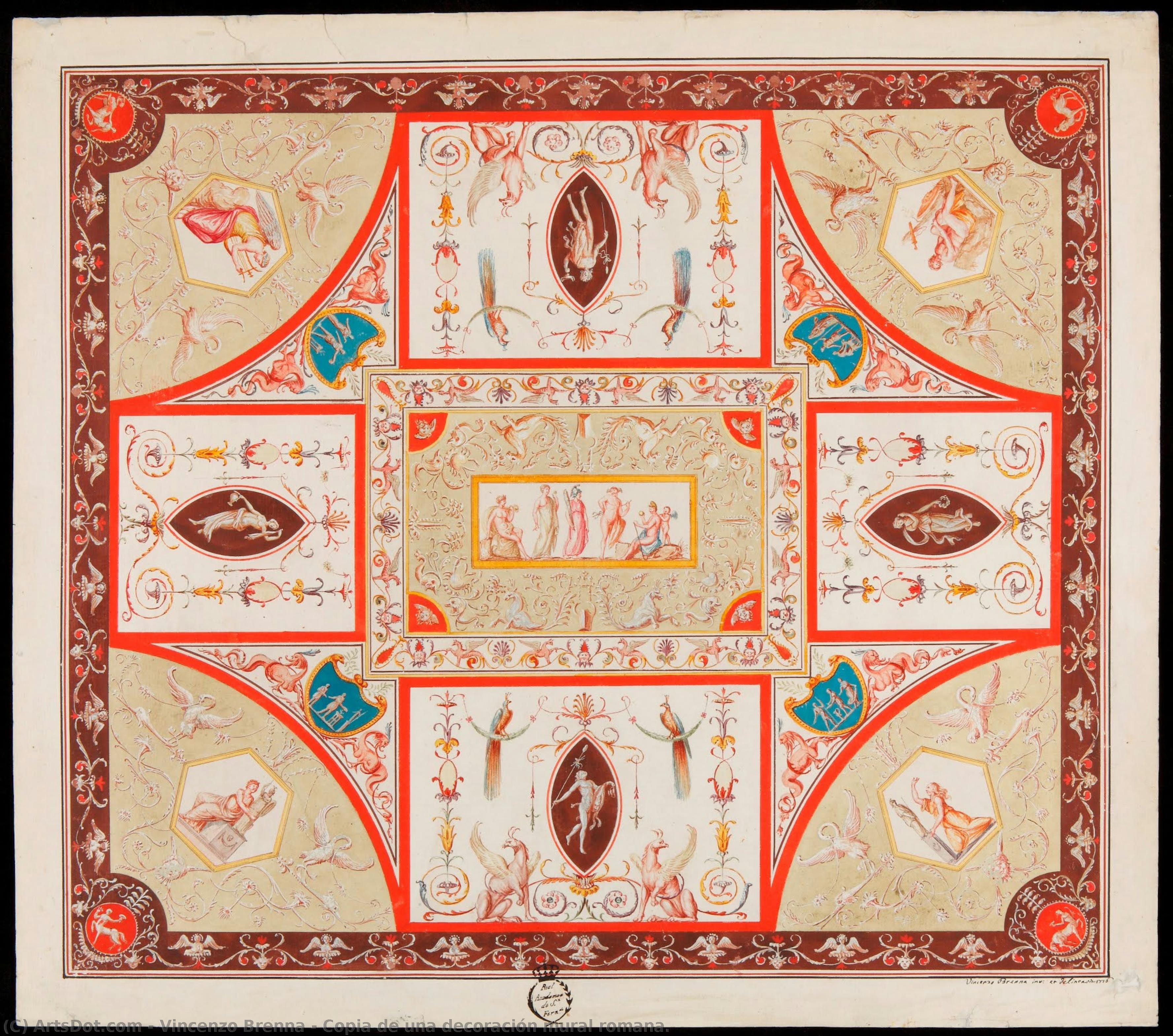
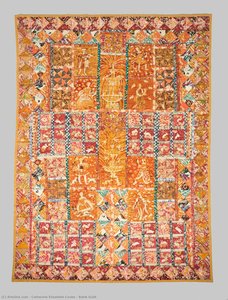
Copia de una decoración mural romana.

 Read More
Hand Made Oil Reproduction
Hand-painted oil on canvas in your size and frame, made to order by our artists. ( Buy Print Buy Image)




































Pick from our preset sizes that match the artwork's original proportions.

You may enter your own dimensions to fit a specific frame or space. If your selected size does not match the original image's proportions, we will either crop the artwork or extend the painting with additional hand-painted elements. A digital mockup will be sent for your approval before production begins.
Please note that the on-screen preview does not reflect the actual cropping or extension. Only the mockup will accurately show the final composition.
While custom sizes are available, we recommend selecting a dimension from the predefined list to preserve the original proportions.
After order, ArtsDot.com team will email client for instructions and provide a mockup preview
Worldwide Delivery () in 3/4 weeks instead of standard 5 weeks. (22 August). No compromise on quality.

Free Worldwide Express Shipping

High-Quality Linen Canvas

Full Shipping Insurance

Customs Tax Refund Guarantee

True Color Matching Guarantee

60-Day Return Policy (Defects Only)

100% Money-Back Guarantee

Bulk Discount Offer
 Glass option is only available in size under 110 CM

Copia de una decoración mural romana.
Reproduction Medium
Reproduction Size
-


Total Price
$ 263
Related Artworks


Artist Biography
Vincenzo Brenna: Bridging Italy and Russia Through Architecture
Vincenzo Brenna, born in Castello, Italy, in 1747, remains a fascinating figure in the annals of architectural history – an artist whose career unfolded across continents and whose legacy is often overshadowed by more celebrated contemporaries. While his name may not be as instantly recognizable as Giacomo Quarenghi or Charles Cameron, Brenna’s unique contribution lies in his masterful synthesis of Italian elegance with the burgeoning spirit of Russian neoclassicism. His story is one of a talented architect who navigated shifting artistic landscapes and ultimately left an indelible mark on the imperial palaces and grand spaces of 18th-century Russia.
Brenna’s early life was steeped in artistic tradition. He received his training in Florence under Stefano Pozzi, a renowned architect and designer known for his innovative approach to classical forms. This foundation provided him with a rigorous understanding of architectural principles, but it was his subsequent journey to Poland that proved pivotal. Invited by Stanisław Kostka Potocki, a wealthy Polish nobleman and amateur artist, Brenna embarked on a project to design a church in Ujazdow, demonstrating an early aptitude for translating theoretical knowledge into tangible form. This experience exposed him to the evolving tastes of European aristocracy and laid the groundwork for his future success.
The Russian Stage: A Palace Architect Emerges
Brenna’s career truly took flight when he arrived in Russia in 1781, summoned by Paul I and Maria Fyodorovna. The young royal couple, embarking on a grand tour of Europe, were captivated by Brenna's work in Poland and recognized his potential to transform their palaces into spaces of unparalleled beauty and grandeur. Initially hired as an interior decorator, Brenna quickly ascended to the role of chief architect, becoming intimately involved in the design and construction of some of Russia’s most iconic landmarks. This period marked a significant shift in his artistic style – he began to seamlessly blend Italian sensibilities with the emerging Russian aesthetic, creating buildings that were both opulent and distinctly Russian.
His early projects included the reconstruction of Saint Isaac's Cathedral in St. Petersburg, a monumental undertaking that showcased his ability to manage complex architectural challenges while maintaining a commitment to classical principles. However, it was his work on Pavlovsk Palace and Gatchina Palaces for Paul I that truly cemented his reputation. These palaces exemplify Brenna’s signature style – a harmonious blend of Italian symmetry and Russian decorative elements. The intricate detailing, the carefully chosen materials, and the overall sense of grandeur reflect his meticulous approach to design and his deep understanding of both Italian and Russian architectural traditions.
A Masterpiece in Saint Petersburg: St. Michael's Castle
Perhaps Brenna’s most enduring achievement is the creation of Saint Michael’s Castle (Zimny Palace) in Saint Petersburg, completed around 1785. This castle stands as a testament to his innovative design skills and his ability to balance functionality with aesthetic appeal. The structure incorporates elements of both Italianate and Russian styles, creating a unique architectural statement that reflects the evolving tastes of the imperial court. The castle’s layout, its elaborate ornamentation, and its carefully landscaped gardens all contribute to its overall sense of grandeur and sophistication. It is considered by many historians as Brenna's most important work.
Legacy and Influence
Despite being overshadowed by his contemporaries in the decades following Paul I’s death, Vincenzo Brenna’s influence on Russian architecture remains significant. His designs helped to shape the visual landscape of Imperial Russia and influenced a generation of architects. Notably, he mentored Carlo Rossi, who went on to become one of Russia's most prominent architects, carrying forward Brenna’s legacy in his own work. Brenna’s works are now housed primarily at the Galleria Sabauda in Turin, Italy, offering art enthusiasts a chance to appreciate his artistic vision and technical skill. His story serves as a reminder that architectural history is often shaped by individuals whose contributions may not always receive the immediate recognition they deserve.
Brenna’s career was not without its complexities. Later in life, rumors of financial impropriety and fraud surfaced, casting a shadow over his reputation. However, despite these controversies, his architectural achievements continue to be celebrated for their beauty, innovation, and enduring impact on the cultural landscape of Russia.
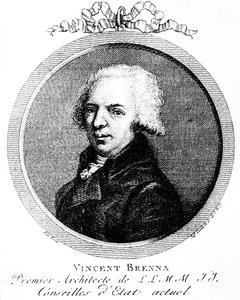
Vincenzo Brenna
1747 - 1820 , Italy
Quick Facts
- Artistic Movement Or Style: Neoclassical/Russian
- Artists Or Movements Influenced By This Artist: ['Carlo Rossi']
- Artists Who Influenced This Artist:
- Italian architects
- Russian styles
- Date Of Birth: 1747
- Date Of Death: 1820
- Full Name: Vincenzo Brenna
- Nationality: Italian
- Notable Artworks:
- Saint Michael's Castle
- Pavlovsk Palace
- Gatchina Palaces
- Place Of Birth: Castello, Italy