 Preview
 Send
Send Share
Share
 Details

 Download
 Similars
 X-Ray
X-Ray Diaporama
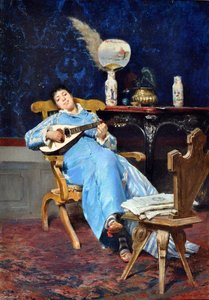
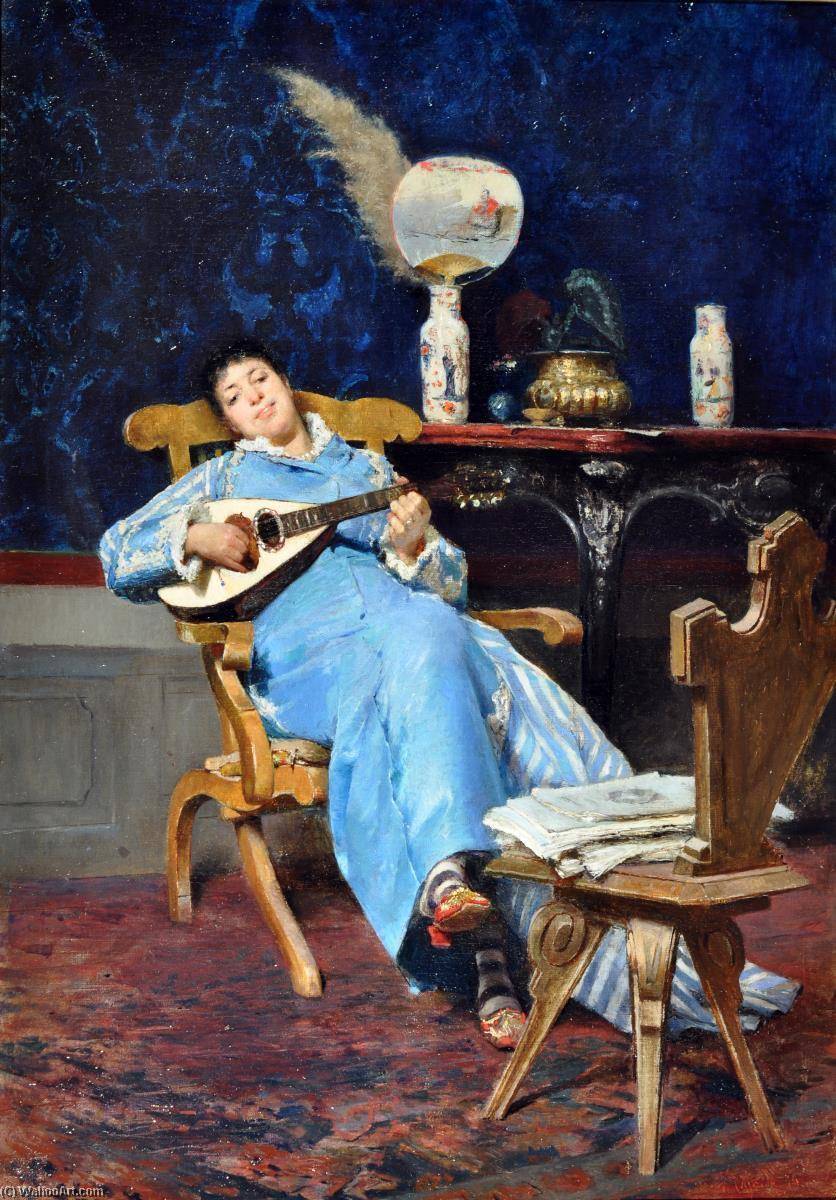
Girl with a Mandolin
 Read More
Hand Made Oil Reproduction
Hand-painted oil on canvas in your size and frame, made to order by our artists. ( Buy Print Buy Image)




































Pick from our preset sizes that match the artwork's original proportions.

You may enter your own dimensions to fit a specific frame or space. If your selected size does not match the original image's proportions, we will either crop the artwork or extend the painting with additional hand-painted elements. A digital mockup will be sent for your approval before production begins.
Please note that the on-screen preview does not reflect the actual cropping or extension. Only the mockup will accurately show the final composition.
While custom sizes are available, we recommend selecting a dimension from the predefined list to preserve the original proportions.
After order, ArtsDot.com team will email client for instructions and provide a mockup preview
Worldwide Delivery () in 3/4 weeks instead of standard 5 weeks. (22 August). No compromise on quality.

Free Worldwide Express Shipping

High-Quality Linen Canvas

Full Shipping Insurance

Customs Tax Refund Guarantee

True Color Matching Guarantee

60-Day Return Policy (Defects Only)

100% Money-Back Guarantee

Bulk Discount Offer
 Glass option is only available in size under 110 CM

Girl with a Mandolin
Reproduction Medium
Reproduction Size
-


Total Price
$ 263
Related Artworks









Artist Biography
The Luminous Legacy of Vincenzo Caprile
To wander through the canvases of Vincenzo Caprile is to embark on a sensory journey along the sun-drenched shores of the Amalfi Coast and the vibrant streets of Naples. Born in Naples in 1856, Caprile emerged as a pivotal figure in Italian Impressionism, an artist whose brush possessed the unique ability to capture not just the landscape, but the very soul of the Mediterranean. His artistic odyssey began within the prestigious halls of the Academy of Fine Arts of Naples, where he studied under the watchful eyes of masters such as Domenico Morelli and Gabriele Smargiassi. These mentors instilled in him a revolutionary approach to the canvas, one that moved away from rigid academicism toward a profound preoccupation with the fleeting interplay of light, shadow, and atmosphere.
Caprile’s early development was deeply intertwined with the School of Resina, a movement spearheaded by Filippo Palizzi. Immersed in this community alongside contemporaries like Federico Rossano and Marco de Gregorio, he embraced the essential practice of plein air painting. This commitment to working directly from nature allowed him to observe the subtle shifts in the Neapolitan sky and the shimmering textures of the Tyrr'ian Sea with unparalleled intimacy. His technique evolved into a masterful display of Impressionistic prowess, characterized by loose, energetic brushstrokes and a vibrant palette that could evoke everything from the mist-laden uncertainty of a coastal morning to the golden, honeyed warmth of a Mediterranean sunset.
A Tapestry of Coastal Life and Venetian Serenity
The breadth of Caprile’s oeuvre is a testament to his versatility as both a genre painter and a landscape artist. He found profound inspiration in the dramatic topography of the Amalfi Coast, rendering the rugged cliffs of Positano, Ravello, and Amalfi with a sense of breathtaking immediacy. His seascapes are particularly renowned for their atmospheric depth; he did not merely paint water, but rather the way light dances upon it, capturing the rhythmic pulse of the Gulf of Salerno. In works such as La Fanciulla di Positano, one finds a tender marriage between human grace and the picturesque grandeur of the harbor, illustrating his ability to weave intimate human moments into expansive natural vistas.
As his career matured, Caprile’s horizons expanded beyond the Neapolitan shores. During the final third of his life, he sought refuge and inspiration in Venice, a period that introduced a new lyrical dimension to his work. Here, he alternated between the nostalgic charm of Neapolitan landscapes and the ethereal, liquid beauty of the Venetian lagoons. This duality—the rugged, sun-soaked vitality of the south and the shimmering, melancholic light of the north—enriched his artistic vocabulary, allowing him to explore a wider spectrum of emotional resonance through his use of color and light.
Artistic Community and Enduring Significance
Beyond the solitary act of painting, Caprile was a vital thread in the social and cultural fabric of the Italian art scene. He was an active participant in the prestigious exhibitions of his era, making his debut in 1873 and continuing to showcase his talents both domestically and abroad for decades. His collaborative spirit was perhaps most visibly realized in his contributions to the opulent décor of Caffè Gambrinus in Naples. Alongside other Impressionist luminaries such as Luca Postiglione and Giuseppe Casciaro, he helped transform this celebrated social hub into a gallery of Neapolitan splendor, cementing his place within the city's cultural identity.
The historical significance of Vincenzo Caprile lies in his role as a bridge between traditional Italian landscape painting and the modern Impressionist movement. While much of his work remains cherished in private collections, the presence of his masterpieces in institutions like the Galleria Nazionale d'Arte Moderna ensures that his vision continues to inspire. His legacy is found in every stroke of light that defines a coastal wave and every vibrant hue that captures a Mediterranean afternoon, leaving behind a timeless record of an Italy caught in a moment of eternal beauty.
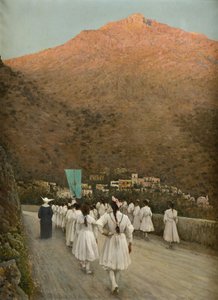
Vincenzo Caprile
1856 - 1936 , Italy
Quick Facts
- Artistic Movement Or Style: Impressionism
- Artists Who Influenced This Artist:
- Domenico Morelli
- Gabriele Smargiassi
- Date Of Birth: Naples, Italy (1856)
- Date Of Death: 1936
- Full Name: Vincenzo Caprile
- Nationality: Italian
- Notable Artworks:
- La Fanciulla di Positano
- Portrait of the owner of the Covo dei Saraceni
- Place Of Birth: Naples