 Preview
 Send
Send Share
Share
 Details

 Download
 Similars
 X-Ray
X-Ray Diaporama
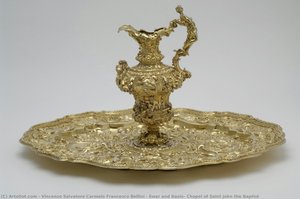
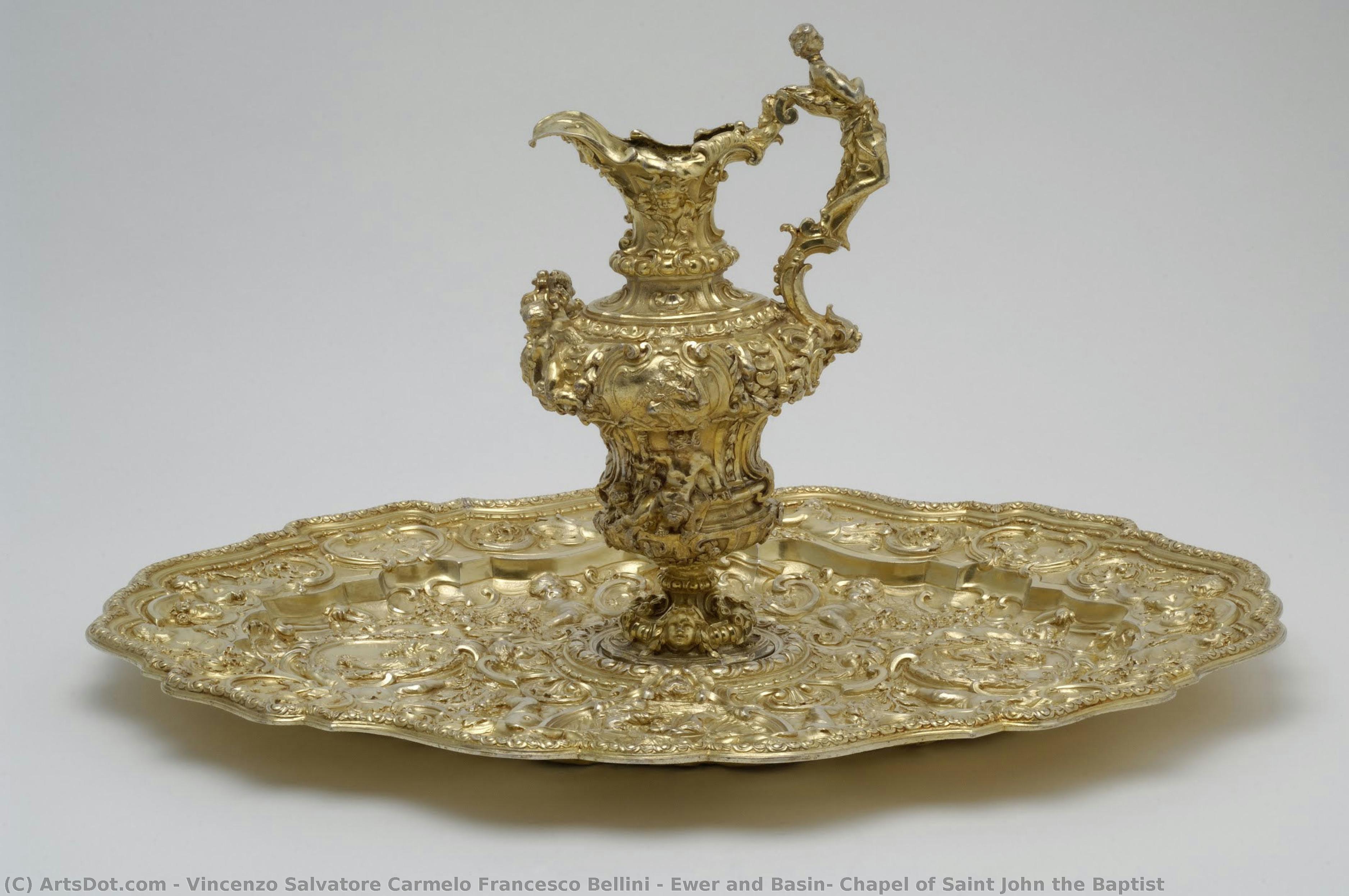
Ewer and Basin, Chapel of Saint John the Baptist


 Read More
Hand Made Oil Reproduction
Hand-painted oil on canvas in your size and frame, made to order by our artists. ( Buy Print Buy Image)




































Pick from our preset sizes that match the artwork's original proportions.

You may enter your own dimensions to fit a specific frame or space. If your selected size does not match the original image's proportions, we will either crop the artwork or extend the painting with additional hand-painted elements. A digital mockup will be sent for your approval before production begins.
Please note that the on-screen preview does not reflect the actual cropping or extension. Only the mockup will accurately show the final composition.
While custom sizes are available, we recommend selecting a dimension from the predefined list to preserve the original proportions.
After order, ArtsDot.com team will email client for instructions and provide a mockup preview
Worldwide Delivery () in 3/4 weeks instead of standard 5 weeks. (5 September). No compromise on quality.

Free Worldwide Express Shipping

High-Quality Linen Canvas

Full Shipping Insurance

Customs Tax Refund Guarantee

True Color Matching Guarantee

60-Day Return Policy (Defects Only)

100% Money-Back Guarantee

Bulk Discount Offer
 Glass option is only available in size under 110 CM

Ewer and Basin, Chapel of Saint John the Baptist
Reproduction Medium
Reproduction Size
-


Total Price
$ 263
Related Artworks




Artist Biography
Thomas Cole: Pioneer of the American Sublime
Born in Bolton-le-Moors, Lancashire, England, on February 1, 1801, Thomas Cole’s journey to becoming a pivotal figure in American art was one shaped by both familial migration and an innate artistic sensibility. His early life, spent assisting with engraving and apprenticed to a designer of calico prints, provided a foundational understanding of visual representation – skills that would later inform his meticulous approach to landscape painting. The decision to immigrate to the United States in 1818, alongside his family, marked a significant turning point, relocating him to Steubenville, Ohio, where he initially worked as an engraver’s assistant and then began studying under a local portrait painter. This period of apprenticeship laid the groundwork for his future artistic endeavors, establishing crucial techniques and fostering a deep appreciation for capturing realistic detail.
Cole's relocation to New York City in 1825 proved instrumental in shaping his artistic trajectory. A pivotal moment occurred during a trip up the Hudson River, where he sketched the dramatic landscapes of the Catskill Mountains. Inspired by these scenes – the towering peaks, the dense forests, and the interplay of light and shadow – Cole embarked on a series of paintings that would define his career and establish him as a leading voice in the burgeoning American art movement known as the Hudson River School. His initial exposure to the Pennsylvania Academy of the Fine Arts further honed his skills, providing him with formal training and access to a wider artistic community.
The Hudson River School and Romantic Ideals
Thomas Cole’s work is inextricably linked to the rise of the Hudson River School, an artistic movement that emerged in the early 19th century. This group of landscape painters sought to capture the grandeur and beauty of America's natural scenery, often imbued with a sense of spiritual significance. Unlike European artists who typically depicted idealized or mythological subjects, the Hudson River School focused on the American wilderness – its rugged mountains, vast forests, and winding rivers – presenting it as a source of inspiration and national pride. Cole’s paintings resonated deeply with the Romantic ideals of his time, emphasizing emotion, imagination, and the sublime—a feeling of awe and terror inspired by the power and immensity of nature.
Cole's artistic vision extended beyond mere representation; he aimed to convey a deeper meaning through his landscapes. He frequently incorporated allegorical elements, drawing inspiration from biblical narratives, classical mythology, and literary themes. His most ambitious project, *The Course of Empire* (1833–36), exemplifies this approach. This series of five paintings chronicles the rise and fall of an ancient civilization, using the natural landscape as a metaphor for human history—a powerful commentary on the cyclical nature of progress and decline. The series’ meticulous detail and dramatic composition captivated audiences and cemented Cole's reputation as a master of historical landscape painting.
Technique and Subject Matter
Cole’s artistic technique was characterized by its precision, realism, and masterful use of light and color. He meticulously studied the effects of light on different surfaces—water, foliage, rock—creating a sense of depth and atmosphere in his paintings. His compositions often featured small figures or structures set against expansive landscapes, emphasizing the scale and power of nature. He was particularly drawn to scenes from the Catskill Mountains, capturing their rugged beauty with remarkable detail and sensitivity.
Beyond landscape, Cole explored a range of subjects, including biblical narratives (*The Voyage of Life*), literary themes (*Awakening*, inspired by Cooper’s *Last of the Mohicans*), and even allegorical representations of human experience. His paintings frequently depicted scenes of wilderness exploration, reflecting his own fascination with the American frontier and its untamed beauty. His work also incorporated elements of the sublime—a concept central to Romanticism—evoking feelings of awe, wonder, and perhaps a touch of fear in the face of nature’s overwhelming power.
Legacy and Historical Significance
Thomas Cole's influence on American art is undeniable. He is widely considered one of the founders of the Hudson River School and a key figure in establishing landscape painting as a respected and significant genre. His meticulous attention to detail, his evocative use of light and color, and his ability to imbue his landscapes with both beauty and meaning set a new standard for American artists.
Cole’s work continues to resonate today, inspiring artists and viewers alike. His paintings offer a powerful reminder of the enduring appeal of nature and its capacity to evoke profound emotions. The Metropolitan Museum of Art's *View from Mount Holyoke, Northampton, Massachusetts, after a Thunderstorm—The Oxbow* (1836), is particularly celebrated for its innovative composition and masterful depiction of atmospheric perspective, solidifying Cole’s place as a visionary artist who captured the essence of the American sublime. He died on February 11, 1848, leaving behind a legacy that continues to shape our understanding of landscape art and its role in reflecting human experience.
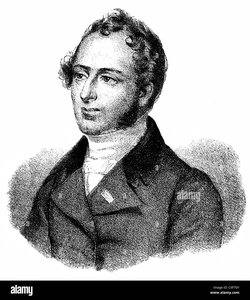
vincenzo salvatore carmelo francesco bellini
1801 - 1835 , Italy
Quick Facts
- Artistic Movement Or Style: Hudson River School
- Artists Or Movements Influenced By This Artist: ['Hudson River School']
- Artists Who Influenced This Artist: ['Francis Wheatley']
- Date Of Birth: February 1, 1801
- Date Of Death: February 11, 1848
- Full Name: Thomas Cole
- Nationality: American
- Notable Artworks:
- The Titan's Goblet
- The Course of Empire
- The Oxbow
- The Voyage of Life
- Place Of Birth: Bolton-le-Moors, England