 Send
Send Share
Share
 Details

 Download
 Similars
 Diaporama
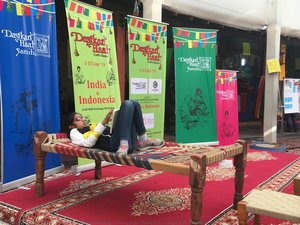
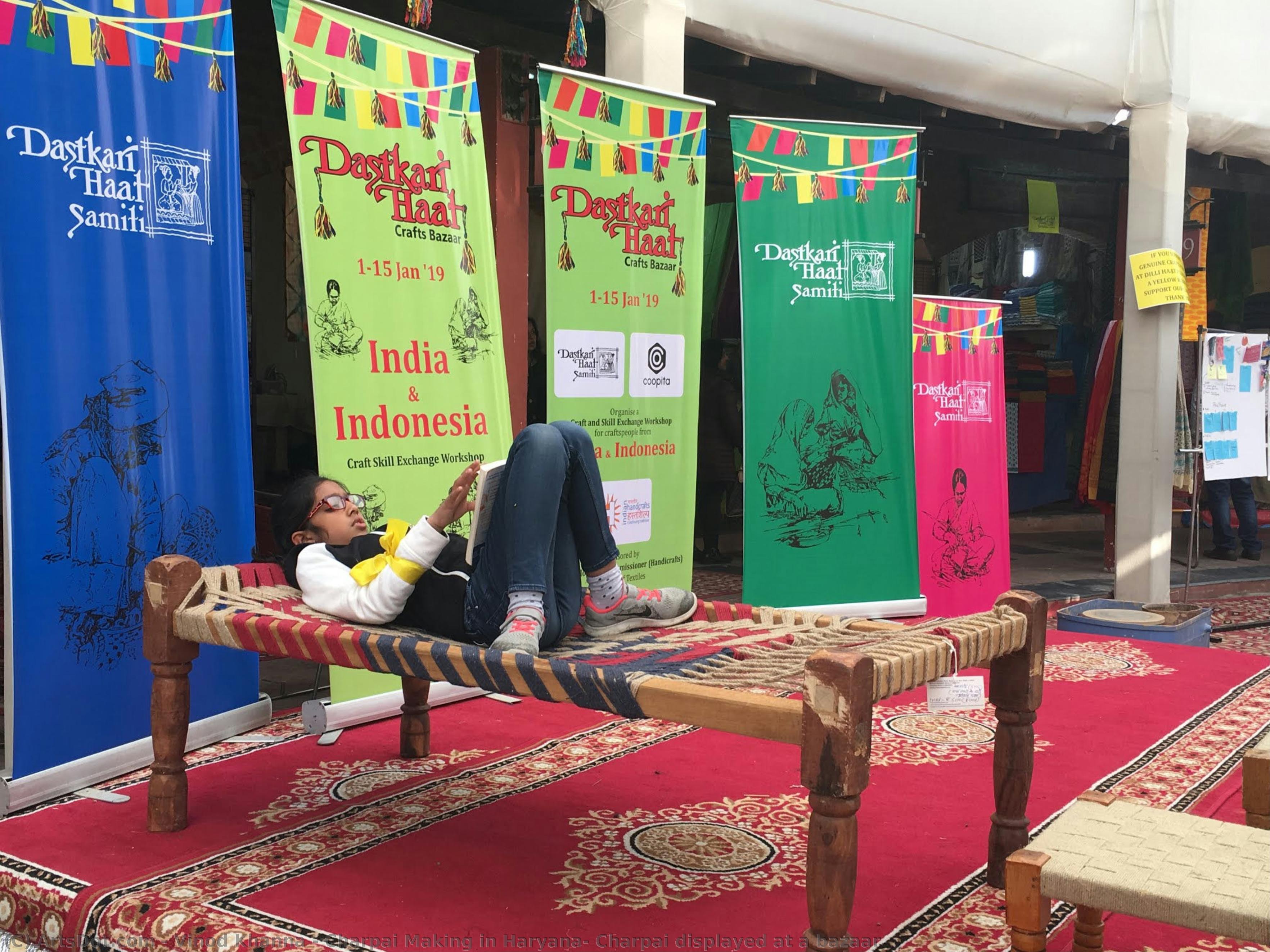
Charpai Making in Haryana: Charpai displayed at a bazaar


 Read More
Hand Made Oil Reproduction
Hand-painted oil on canvas in your size and frame, made to order by our artists. ( Buy Print Buy Image)




































Pick from our preset sizes that match the artwork's original proportions.

You may enter your own dimensions to fit a specific frame or space. If your selected size does not match the original image's proportions, we will either crop the artwork or extend the painting with additional hand-painted elements. A digital mockup will be sent for your approval before production begins.
Please note that the on-screen preview does not reflect the actual cropping or extension. Only the mockup will accurately show the final composition.
While custom sizes are available, we recommend selecting a dimension from the predefined list to preserve the original proportions.
After order, ArtsDot.com team will email client for instructions and provide a mockup preview
Worldwide Delivery () in 3/4 weeks instead of standard 5 weeks. (23 August). No compromise on quality.

Free Worldwide Express Shipping

High-Quality Linen Canvas

Full Shipping Insurance

Customs Tax Refund Guarantee

True Color Matching Guarantee

60-Day Return Policy (Defects Only)

100% Money-Back Guarantee

Bulk Discount Offer
 Glass option is only available in size under 110 CM

Charpai Making in Haryana: Charpai displayed at a bazaar
Reproduction Medium
Reproduction Size
-


Total Price
$ 263
Artwork Description
A Vibrant Tapestry of Life: Capturing the Essence of Haryana
In the evocative work Charpai Making in Haryana: Charpai displayed at a bazaar, the viewer is transported into the heart of a bustling Indian marketplace, where the mundane and the magnificent intertwine. The composition centers on a woman seated upon a charpai, a traditional woven bed that serves as both a functional object and a cultural anchor. This piece, captured in 2019 by the multifaceted artist Vinod Khanna, transcends mere documentation; it is a sensory immersion into the rhythmic vitality of Haryana. The scene is punctuated by a kaleidoscope of colorful flags that dance above the setting, casting a celebratory atmosphere over the bazaar. As light plays across the scattered dining tables and chairs, the image captures a fleeting moment of communal existence, where the presence of modern artifacts like a cell phone and a handbag sit in quiet dialogue with ancient traditions.
The artistry of this work lies in its ability to weave together the textures of daily life into a cohesive visual narrative. The technique employs a keen eye for detail, allowing the viewer to feel the coarse weave of the charpai and the lively movement of the crowd. There is a profound sense of depth achieved through the layering of elements—the foregrounded subject, the mid-ground bustle of the bazaar, and the distant figures browsing the stalls. This spatial complexity invites the eye to wander, discovering small, humanizing details that ground the larger spectacle in reality. The use of color is particularly striking; the vibrant hues of the flags act as emotional punctuation marks, injecting a sense of joy and energy that contrasts beautifully with the more grounded, earthy tones of the marketplace setting.
Beyond its visual splendor, the artwork serves as a poignant exploration of cultural identity and the persistence of tradition in a changing world. The charpai itself acts as a powerful symbol of stability and heritage, representing a way of life that remains resilient amidst the encroaching tides of modernity. For the collector or interior designer, this piece offers more than just aesthetic beauty; it provides a window into a soulful, lived experience. It is an ideal selection for spaces that seek to evoke warmth, storytelling, and a connection to global heritage. Whether placed in a contemporary gallery setting or a sophisticated residential lounge, this reproduction brings with it the spirit of the bazaar—a reminder of the enduring beauty found in the shared rhythms of human connection and the colorful tapestry of our collective history.
Related Artworks
Artist Biography
A Life Beyond the Silver Screen
Vinod Khanna, a name synonymous with Bollywood charisma and undeniable talent, was far more than just an actor. Born on October 6, 1946, in Peshawar, British India – a city now within Pakistan – his life story is one of captivating contrasts: glamour and spirituality, mainstream success and introspective retreat, the dazzling world of cinema and the demanding arena of politics. The family’s relocation to Mumbai following the partition of India shaped Khanna's early years, instilling in him a sense of displacement and perhaps fueling an underlying search for belonging that would later manifest in his spiritual journey. His father, Krishanchand Khanna, was a businessman, while his mother, Kamla Khanna, provided a nurturing home environment alongside his three sisters and brother, Pramod Khanna – who himself followed in the family’s artistic footsteps. Education at institutions like St. Mary's School, Delhi Public School, and Barnes School instilled discipline but it was during his boarding school years that a passion for cinema truly ignited within him. Even with a commerce degree from Sydenham College, Mumbai, the allure of acting and a youthful enthusiasm for cricket hinted at a multifaceted personality yearning for expression beyond conventional paths.From Rising Star to Spiritual Seeker
Khanna’s entry into Bollywood in 1968 with *Man Ka Meet* was unassuming, yet it marked the beginning of an extraordinary career. Early roles in films like *Sachaa Jhutha*, *Aan Milo Sajna*, and *Purab Aur Paschim* alongside established stars provided valuable experience and a growing recognition among audiences. However, it was *Mere Apne* (1971) that truly launched him into the spotlight, followed by impactful performances in films like *Achanak* (1973), showcasing his versatility and willingness to embrace challenging roles. The mid-to-late 1970s witnessed Khanna’s ascent to superstardom with a string of blockbuster hits – *Amar Akbar Anthony*, *Muqaddar Ka Sikandar*, and *Qurbani* becoming cultural touchstones. He wasn't merely acting; he was embodying a new kind of hero, charismatic yet vulnerable, strong yet sensitive. The Filmfare Award for Best Supporting Actor for *Haath Ki Safai* (1974) acknowledged his growing critical acclaim. Yet, at the very peak of his fame in 1982, Khanna made an astonishing decision: he walked away from it all. This wasn’t a calculated career move but a profound spiritual awakening spurred by his connection with Osho Rajneesh. He sought enlightenment and self-discovery at Osho’s ashram, embarking on a five-year sabbatical that stunned the industry and captivated the nation. While painting wasn't a central focus during this period, it was a time of intense introspection and artistic exploration in its broader sense – a search for meaning beyond the material world.A Return to the Screen and Public Life
The return to Bollywood in 1987 with *Insaaf* wasn’t merely a comeback; it was a re-establishment of his presence, proving that Khanna hadn't lost his touch. He seamlessly reintegrated into the industry, continuing to deliver memorable performances, often portraying mature and fatherly figures in later films like *Wanted*, *Dabangg*, and *Dabangg 2*. This shift reflected not only his evolving age but also a deepening emotional resonance in his acting. Beyond the silver screen, Khanna ventured into politics, serving as a Member of Parliament from Gurdaspur (1998-2009 & 2014-2017). His foray into public service demonstrated a desire to contribute to society beyond entertainment. He held ministerial positions in the Government of India, including Minister for Culture and Tourism and Minister of State for External Affairs, bringing his unique perspective and celebrity status to the political landscape.Artistic Legacy and Enduring Influence
While not primarily known as a painter in the traditional sense, Vinod Khanna’s artistic sensibilities permeated his work. His choices in films, often favoring narratives with depth and complexity, and his involvement in production through Vinod Khanna Productions, demonstrated an eye for quality and storytelling. He was a style icon, famously dubbed the “Sexy Sanyasi,” embodying a captivating blend of glamour and spirituality that resonated deeply with audiences. This moniker wasn’t merely sensationalist; it reflected a genuine duality within his personality – a man comfortable in both worlds. His influence extends to various art forms within Indian cinema, inspiring generations of actors and filmmakers. The posthumous Dadasaheb Phalke Award in 2018, India’s highest film honor, was a fitting tribute to his significant contribution to the nation's cinematic heritage. Notably, Khanna also engaged with visual arts through supporting and showcasing works like “Charpai Making in Haryana: Charpai displayed at a bazaar”, demonstrating an appreciation for traditional Indian crafts and artistic expression beyond filmmaking.A Lasting Remembrance
Vinod Khanna’s passing on April 27, 2017, left a void in the world of Indian cinema and public life. He remains an iconic figure celebrated not only for his talent and charisma but also for his unique journey – an actor who dared to seek enlightenment, a politician who served with dedication, and a man who lived life on his own terms. His legacy is one of versatility, courage, and a relentless pursuit of meaning, solidifying his place as a true legend in Indian cultural history. He will be remembered not just for the roles he played but for the life he lived – a testament to the power of self-discovery and the enduring allure of the human spirit.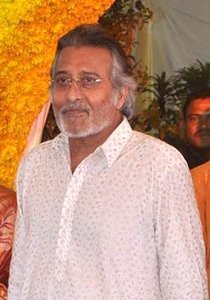
Vinod Khanna
1946 - 2017 , Pakistan
Quick Facts
- Artistic Movement Or Style: Bollywood cinema
- Artists Or Movements Influenced By This Artist: Indian filmmakers
- Date Of Birth: October 6, 1946
- Date Of Death: April 27, 2017
- Full Name: Vinod Khanna
- Nationality: Indian
- Notable Artworks:
- Achanak
- Qurbani
- Insaaf
- Charpai Making
- Place Of Birth (City And Country): Peshawar, Pakistan
Related Articles
Turn Your Art into Global Income: Sell Originals & Digital Prints on ArtsDot’s Verified Marketplace – A Guide for Aspiring Artists
Turn your art into global income with ArtsDot’s verified marketplace. Sell hand‑painted originals and high‑quality digital prints, backed by expert craftsmanship, transparent workflow, and a 100% satisfaction guarantee.
Edward Hopper's Masterpieces: 25 Iconic Paintings & Their Enduring Legacy | ArtsDot
Explore 25 iconic Edward Hopper paintings & their stories. Discover American realism, urban loneliness, and timeless beauty through his masterpieces. Find museum-quality art reproductions & curated decor ideas at ArtsDot.com.
Egon Schiele's Masterpieces: 25 Paintings That Define Expressionism | ArtsDot
Delve into the haunting world of Egon Schiele with our curated selection of his 25 most iconic Expressionist paintings. Explore the artist's life, technique & emotional depth. Find museum-quality Schiele reproductions and elevate your home decor on ArtsDot.com.
Modigliani's Masterpieces: 25 Iconic Paintings & Sculptures | ArtsDot
Explore 25 iconic artworks by Amedeo Modigliani, from his haunting portraits to captivating sculptures. Discover the stories behind these masterpieces of early 20th-century art & find museum-quality reproductions at ArtsDot.com.

Henri Matisse's Masterpieces: Explore 25 Iconic Paintings & Art Decor Ideas
Journey through Henri Matisse's 25 most iconic paintings! Explore Fauvism, vibrant colors & the stories behind masterpieces like 'The Dance'. Find museum-quality art reproductions and curated decor ideas to elevate your space. Discover all masterpieces on ArtsDot.com.