

 Preview
 Send
Send Share
Share
 Details

 Download
 Similars
 X-Ray
X-Ray Diaporama
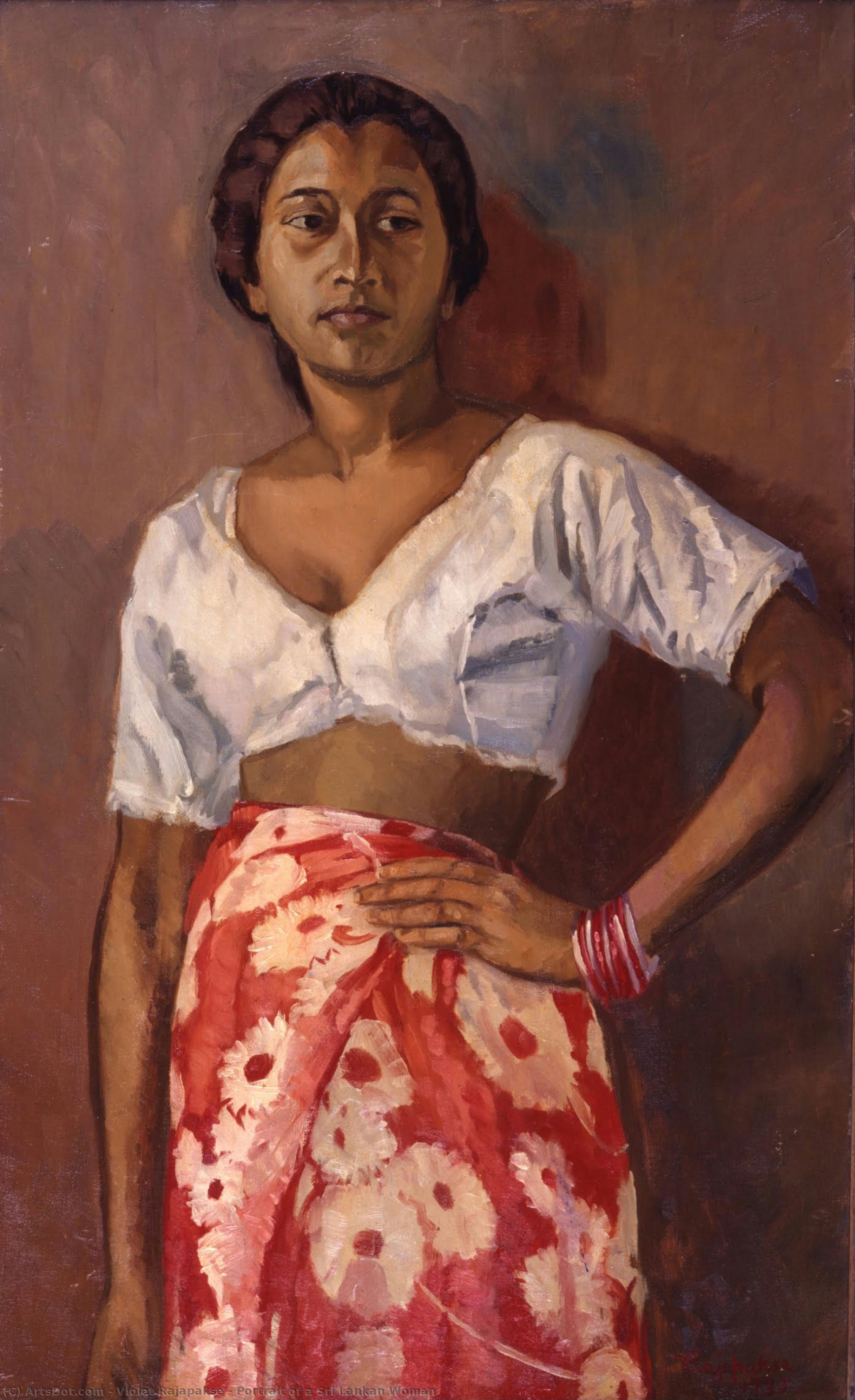
Portrait of a Sri Lankan Woman
 58.0 x 97.0 cm
 Fukuoka Asian Art Museum
 Read More
Purchase a high-resolution, enhanced digital image, far superior to the online preview.
Each file is meticulously prepared by our in-house specialists using advanced tools and expert manual retouching. We ensure every image has exceptional clarity, precise color accuracy, and fine detail.
The final file is delivered via email within 72 hours, optimized for immediate use in professional, editorial, and print environments. This is the same quality trusted by top-tier design studios, publishers, and galleries.
Digital Image
Download a high-resolution file for personal display, printing, and creative projects. ( Buy Print Buy Hand Made Painting)
Included in Every Digital Image Order
Expert Digital Delivery, Guaranteed
When you choose ArtsDot.com, you're not just getting an image - you're receiving a professionally enhanced digital artwork, crafted with precision and backed by a satisfaction guarantee. Here's everything that comes with your order, automatically:

Fast Email Delivery
Your high-resolution digital image file will be emailed to you within 72 hours of ordering - ready for immediate use.

AI-Enhanced Digital File
Your artwork is professionally optimized using advanced AI tools and manual editing, ensuring maximum detail, clarity, and color accuracy.

Free Lifetime Re-Delivery
Accidentally deleted or lost your file? No worries - we'll resend it to you anytime, free of charge.

No Import Fees - Ever
Enjoy your artwork instantly with zero customs, duties, or delivery fees - digital downloads are always tax-free.

Color Accuracy Guarantee
We ensure your digital image reflects the original colors as closely as possible using professional tools and color management.

60-Day Satisfaction Guarantee
If you're not satisfied with your digital image, we'll revise it or refund 100% within 60 days - no questions asked.

100% Money-Back Guarantee
Not satisfied? Get a full refund within 60 days of receiving your digital file - no questions asked.

Bulk Order Discounts
Buy 3 images, save 10% - Buy 5, save 15% - Buy 10+, save 20%. Great for creative projects, galleries, and agencies.
Related Artworks









Artist Biography
Jackson Pollock: A Revolutionary of American Abstraction
Born in Cody, Wyoming, in 1912, Paul Jackson Pollock—as he was initially known—emerged from a transient childhood marked by frequent moves across the American West and Southwest. His family’s itinerant existence, rooted in Scotch-Irish heritage and shaped by his father's experiences in South Africa and later as a wheat elevator operator, instilled within him a restless spirit and a profound skepticism towards conventional narratives. This early life of movement and uncertainty would profoundly influence his artistic approach, shaping a career dedicated to disrupting established forms and embracing the spontaneous energy of creation.
Pollock’s formal art training was limited; he briefly attended Manual Arts High School in Los Angeles but ultimately eschewed traditional academic instruction. Instead, he absorbed influences from diverse sources – European modernism, particularly the work of Wassily Kandinsky and Piet Mondrian, as well as the burgeoning avant-garde scene in New York City. Crucially, his exposure to the Theosophical Society fostered a belief in intuitive knowledge and a rejection of rational control, ideas that would become central to his artistic process.
The Emergence of Action Painting
Pollock’s breakthrough came in the late 1940s with the development of what he termed “drip painting.” Rejecting the conventional brushstroke and easel-based approach, he began experimenting with pouring, dripping, and splattering paint directly onto canvases laid flat on the floor. This technique, initially met with skepticism by critics, liberated him from the constraints of traditional representation and allowed for a visceral engagement with the materials themselves. As he famously stated, “I don’t think about what I’m doing when I do it. It’s automatic.”
This process, often described as “action painting,” wasn't simply random; it was driven by an intense emotional and physical energy. Pollock sought to capture the subconscious, channeling his feelings and experiences directly onto the canvas. The resulting works—large-scale, densely layered compositions filled with vibrant color and dynamic movement—became emblematic of Abstract Expressionism, a movement that sought to express universal human emotions through non-objective imagery.
Key Works and Techniques
Several paintings stand as pivotal examples of Pollock’s innovative approach. “Number 1, 1950” (often referred to as "Lavender Mist"), housed at the MoMA in New York, exemplifies his early drip technique, showcasing a chaotic yet balanced field of color. “Blue Poles” (1952), acquired by Tate Gallery in London, is perhaps his most famous work, characterized by its undulating blue patterns and dynamic energy. “Mural” (1948) represents a shift towards more structured compositions while retaining the core principles of action painting.
Pollock’s technique involved using commercial house paints—often thinned with turpentine—and applying them with sticks, knives, and even his hands. He frequently worked on multiple canvases simultaneously, creating a sense of interconnectedness and rhythm within his paintings. The scale of his works – often monumental in size – further emphasized the immersive quality of his process.
Influence and Legacy
Jackson Pollock’s impact on 20th-century art is undeniable. He challenged conventional notions of painting, pushing the boundaries of technique and subject matter. His embrace of chance and spontaneity paved the way for subsequent generations of artists to explore new forms of expression. Furthermore, his willingness to engage with the physicality of paint—to treat it as a dynamic medium rather than merely a tool for representation—transformed our understanding of what painting could be.
Despite facing periods of personal struggle, including alcoholism, Pollock’s work gained increasing recognition during his lifetime and posthumously. His legacy continues to inspire artists today, solidifying his position as one of the most important figures in American art history. His radical approach to creativity remains a testament to the power of intuition, experimentation, and the profound connection between artist and medium.

violet rajapakse
1912 - 1986 , Sri Lanka
Quick Facts
- Artistic Movement Or Style: Abstract Expressionism, Action painting
- Artists Or Movements Influenced By This Artist: ['Lee Krasner']
- Artists Who Influenced This Artist: ['Edward Gordon Craig']
- Date Of Birth: January 28, 1912
- Date Of Death: August 11, 1956
- Full Name: Paul Jackson Pollock
- Nationality: American
- Notable Artworks:
- Blue Poles
- Mural
- Place Of Birth: Cody, Wyoming, USA

