

 Preview
 Send
Send Share
Share
 Details

 Download
 Similars
 X-Ray
X-Ray Diaporama
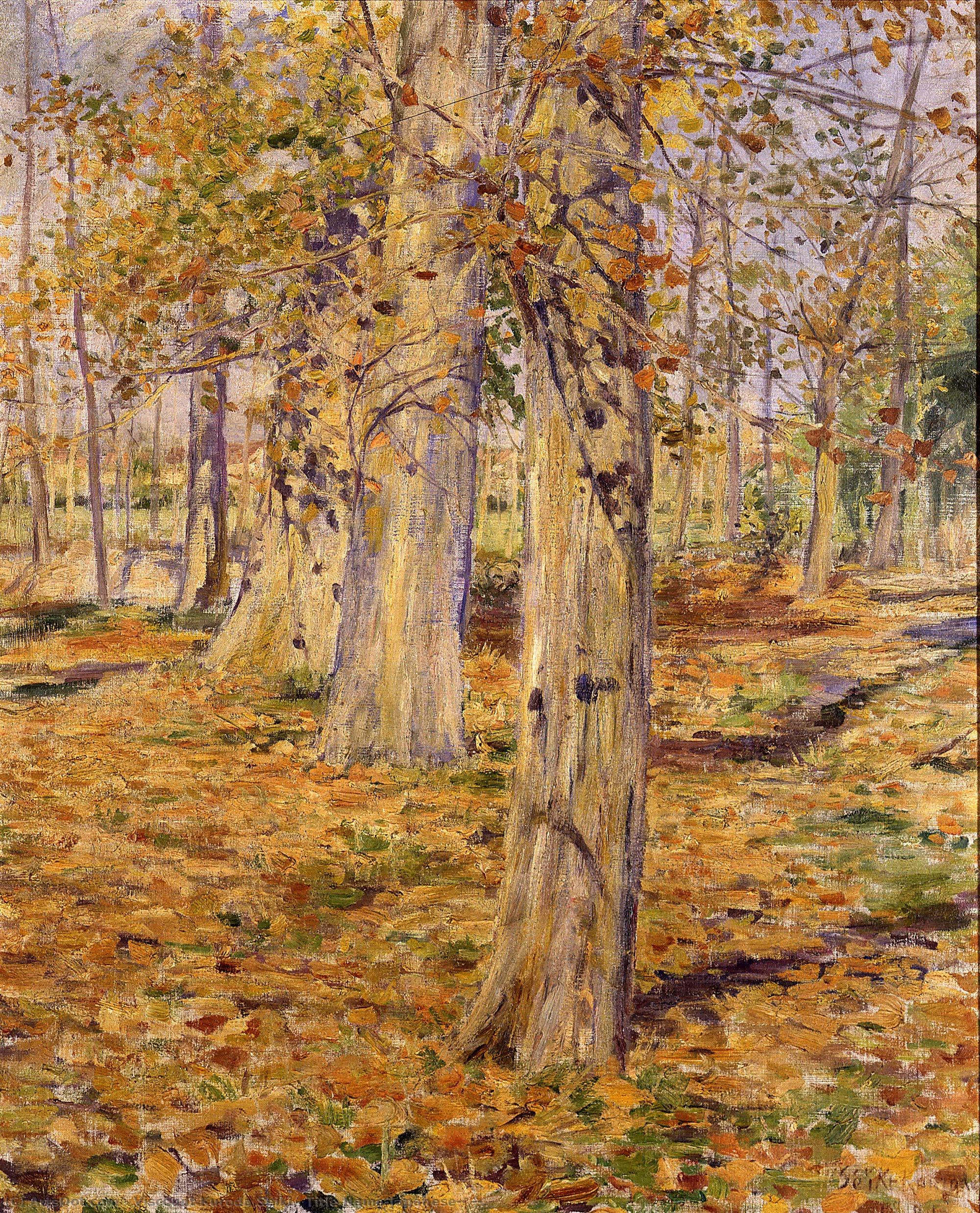
Title Name(Japanese): 落葉
 Oil On Canvas
- WallArt
- Impressionism
 19th Century
 63.0 x 80.0 cm
 Read More
Purchase a high-resolution, enhanced digital image, far superior to the online preview.
Each file is meticulously prepared by our in-house specialists using advanced tools and expert manual retouching. We ensure every image has exceptional clarity, precise color accuracy, and fine detail.
The final file is delivered via email within 72 hours, optimized for immediate use in professional, editorial, and print environments. This is the same quality trusted by top-tier design studios, publishers, and galleries.
Digital Image
Download a high-resolution file for personal display, printing, and creative projects. ( Buy Print Buy Hand Made Painting)
Included in Every Digital Image Order
Expert Digital Delivery, Guaranteed
When you choose ArtsDot.com, you're not just getting an image - you're receiving a professionally enhanced digital artwork, crafted with precision and backed by a satisfaction guarantee. Here's everything that comes with your order, automatically:

Fast Email Delivery
Your high-resolution digital image file will be emailed to you within 72 hours of ordering - ready for immediate use.

AI-Enhanced Digital File
Your artwork is professionally optimized using advanced AI tools and manual editing, ensuring maximum detail, clarity, and color accuracy.

Free Lifetime Re-Delivery
Accidentally deleted or lost your file? No worries - we'll resend it to you anytime, free of charge.

No Import Fees - Ever
Enjoy your artwork instantly with zero customs, duties, or delivery fees - digital downloads are always tax-free.

Color Accuracy Guarantee
We ensure your digital image reflects the original colors as closely as possible using professional tools and color management.

60-Day Satisfaction Guarantee
If you're not satisfied with your digital image, we'll revise it or refund 100% within 60 days - no questions asked.

100% Money-Back Guarantee
Not satisfied? Get a full refund within 60 days of receiving your digital file - no questions asked.

Bulk Order Discounts
Buy 3 images, save 10% - Buy 5, save 15% - Buy 10+, save 20%. Great for creative projects, galleries, and agencies.
Collectible Description
A Symphony of Gold and Ochre: The Serenity of Autumn
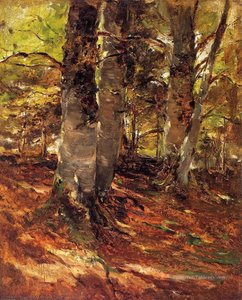
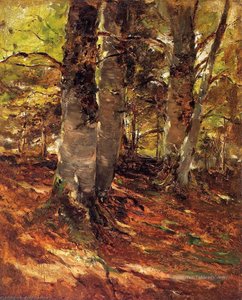
In the quiet corners of the forest, where time seems to slow to the rhythm of falling leaves, lies the soul of Viscount Kuroda Seiki’s "落葉" (Falling Leaves). This evocative oil painting invites the viewer into a sanctuary of autumnal stillness, capturing a moment of profound seasonal transition. The composition is masterfully structured around the verticality of ancient, textured tree trunks that reach upward, creating a sense of cathedral-like grandeur within the woods. As the eye wanders through the scene, it encounters a rich tapestry of gold, brown, and muted greens, all unified by a soft, diffused light that filters through the canopy like a whispered memory. It is not merely a depiction of a landscape, but an invitation to experience the quietude of nature’s most contemplative season.
The technique employed in this piece speaks to the artist's profound connection to the Impressionist movement. Rather than focusing on the clinical precision of every leaf or branch, Seiki utilizes loose, expressive brushstrokes that imbue the canvas with a palpable texture. This painterly approach allows light to dance across the surface, creating a dappled effect that mimics the way sunlight breaks through thinning foliage. Through the clever use of atmospheric perspective, the distant trees dissolve into pale, ethereal shapes, lending the artwork an immense sense of depth and mystery. For the collector or interior designer, this technique offers a dynamic visual experience; the painting changes character depending on the light of the room, much like the forest itself shifts with the passing hours.
Beyond its aesthetic brilliance, "落葉" carries a deep symbolic resonance that speaks to the universal human experience. The falling leaves serve as a poignant metaphor for the cycle of life—a beautiful yet melancholic reminder of decay and the inevitable passage of time. Yet, within this decay lies the promise of renewal, a theme central to the Japanese aesthetic of finding beauty in impermanence. This duality creates an emotional impact that is both nostalgic and deeply peaceful. It is a piece that does not demand attention with loud colors or jarring shapes, but rather earns it through a subtle, enduring grace.
For those seeking to curate a space of reflection and sophistication, this reproduction offers more than just decoration; it provides an emotional anchor. Whether placed in a sunlit study or a quiet corner of a living room, the warm palette and organic forms of Seiki’s masterpiece bring a sense of natural harmony and timeless elegance to any interior. It is a window into a world of tranquility, perfect for those who appreciate art that speaks to the soul and celebrates the fleeting, golden moments of our existence.
Related Artworks
Artist Biography
A Pioneer Bridging East and West: The Life and Art of Viscount Kuroda Seiki
Born Kuroda Shintarō in 1866, amidst the transformative currents of Japan’s Meiji era, Viscount Kuroda Seiki emerged as a pivotal figure in the nation's artistic evolution. His journey from samurai lineage to becoming celebrated as “the father of Western-style painting” in Japan is a compelling narrative of cultural exchange and artistic innovation. Adopted by his uncle, Kuroda Kiyotsuna, a high-ranking official in the imperial government, young Seiki was immersed in an environment that valued modernization and engagement with the wider world. This upbringing instilled in him not only a sense of duty but also a curiosity that would lead him far beyond the shores of Japan. Initially preparing for university studies with a focus on English, Kuroda’s path took an unexpected turn under the influence of Yamamoto Hosui, igniting within him a passion for painting and setting the stage for his artistic destiny.From Parisian Studios to a Distinctly Japanese Vision
Kuroda's pursuit of artistic mastery led him to Paris in 1884, where he initially studied law but soon gravitated towards the vibrant art scene. He enrolled in the studio of Louis-Joseph-Raphaël Collin, a French artist who skillfully blended academic rigor with the emerging principles of *plein air* painting—a technique emphasizing direct observation and capturing the fleeting effects of light and atmosphere. This mentorship proved crucial, providing Kuroda with a solid foundation in Western artistic traditions while simultaneously encouraging him to explore new approaches to representation. He absorbed influences from masters like Jean-François Millet and Jules Bastien-Lepage, drawn to their depictions of rural life and naturalism, as well as the burgeoning Impressionist movement led by Claude Monet. These diverse inspirations coalesced within Kuroda, shaping his artistic sensibility and preparing him for a unique mission upon his return to Japan in 1893: to establish a distinctly Japanese form of Western-style painting—*yōga*.Forging a New Path: The Hakubakai and Artistic Leadership
Back in Japan, Kuroda didn’t simply replicate European styles; he sought to synthesize them with the aesthetic sensibilities of his homeland. He became instrumental in forming the *Hakubakai*, an art society dedicated to promoting Western-influenced painting through exhibitions and fostering a new generation of artists. This period marked a turning point in Japanese art history, as Kuroda and his contemporaries challenged traditional conventions and paved the way for modern artistic expression. His paintings from this era, such as the celebrated Lakeside, exemplify this fusion—vibrant colors, elegant figures (often women), and an atmospheric quality reminiscent of Impressionism are all grounded in a distinctly Japanese aesthetic sensibility. Other notable works like *Portrait of Kitao Jirō* and the tragically lost *Talk on Ancient Romance*, demonstrate his versatility and commitment to exploring both portraiture and narrative painting within this evolving style.A Legacy Etched in Paint and Pedagogy
Kuroda’s influence extended beyond his own artistic creations; he profoundly impacted Japanese art education as the director of the Western Painting Faculty at the Tokyo School of Fine Arts. He introduced rigorous training methods based on Western academic principles, while also encouraging students to develop their individual voices and explore new forms of expression. His dedication to fostering a vibrant artistic community ensured that his legacy would endure through generations of artists he mentored. His contributions were formally recognized with the title of Viscount, solidifying his position as a leading figure in Japanese society. Kuroda Seiki’s work continues to resonate today, displayed prominently in institutions like the Tokyo National Museum and the Artizon Museum, serving as a testament to his pioneering spirit and enduring artistic vision. He remains a symbol of Japan's successful integration of Western influences while maintaining its unique cultural identity—a bridge between two worlds, beautifully rendered on canvas.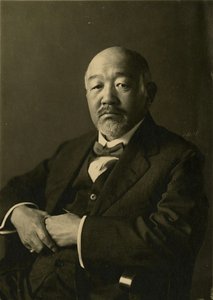
Viscount Kuroda Seiki
1866 - 1924 , Japan
Quick Facts
- Artistic Movement Or Style: Yōga, Impressionism
- Artists Or Movements Influenced By This Artist: ['Modern Japanese painting']
- Artists Who Influenced This Artist:
- Raphaël Collin
- Jean-François Millet
- Claude Monet
- Date Of Birth: August 9, 1866
- Date Of Death: July 15, 1924
- Full Name: Viscount Kuroda Seiki
- Nationality: Japanese
- Notable Artworks:
- Lakeside
- Portrait of Kitao Jirô
- Wisdom, Impression, Sentiment
- Place Of Birth: Osaka, Japan

