

 Preview
 Send
Send Share
Share
 Details

 Download
 Similars
 X-Ray
X-Ray Diaporama
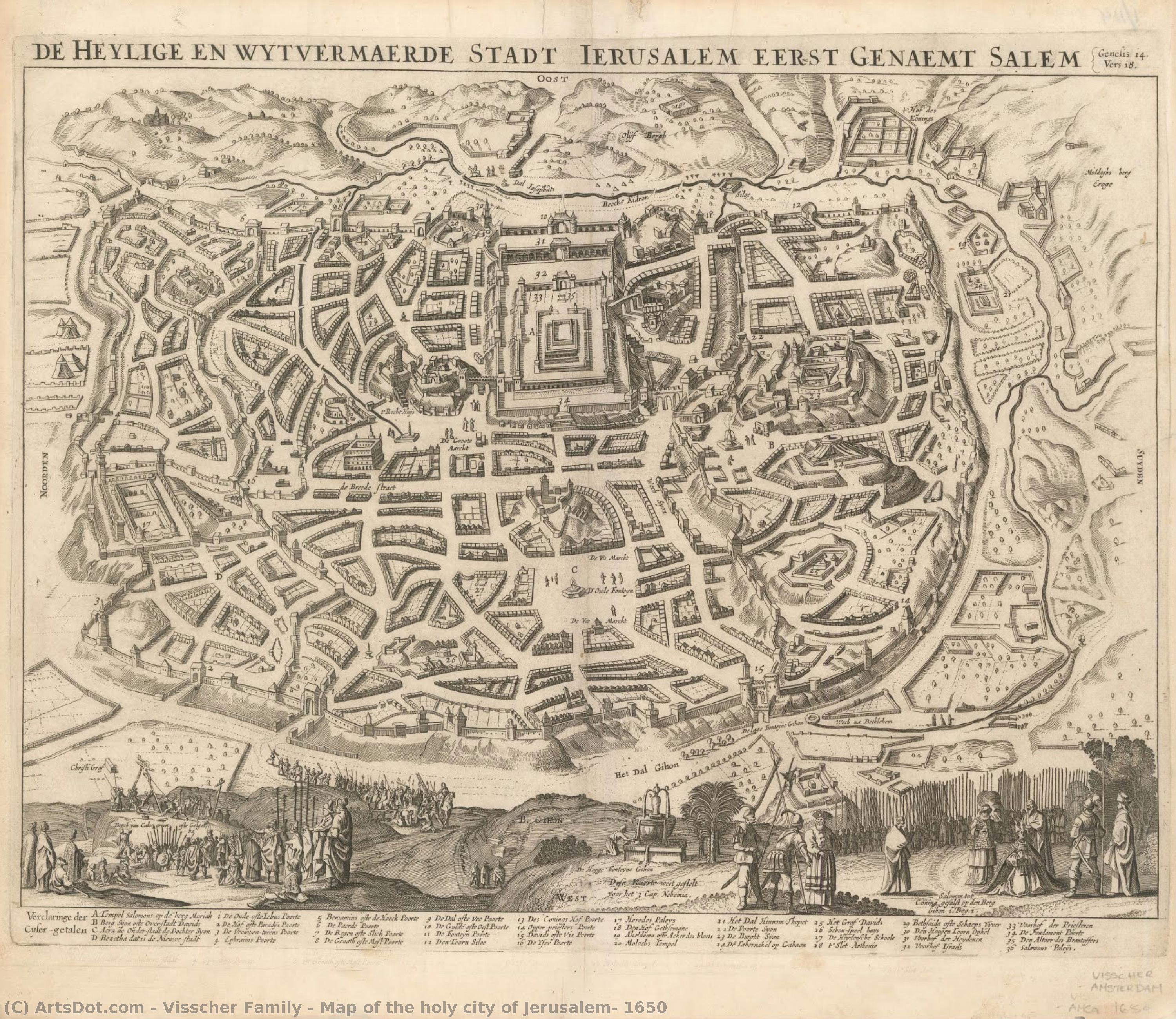
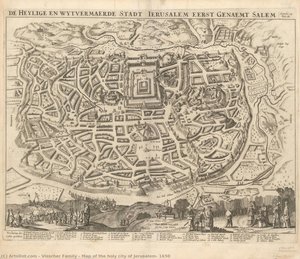
Map of the holy city of Jerusalem, 1650
 Oil On Copper
- Dutch Golden Age
 1650
1650- Early Modern
 38.0 x 44.0 cm
 the-national-library-of-israel
 Read More
Purchase a high-resolution, enhanced digital image, far superior to the online preview.
Each file is meticulously prepared by our in-house specialists using advanced tools and expert manual retouching. We ensure every image has exceptional clarity, precise color accuracy, and fine detail.
The final file is delivered via email within 72 hours, optimized for immediate use in professional, editorial, and print environments. This is the same quality trusted by top-tier design studios, publishers, and galleries.
Digital Image
Download a high-resolution file for personal display, printing, and creative projects. ( Buy Print Buy Hand Made Painting)
Included in Every Digital Image Order
Expert Digital Delivery, Guaranteed
When you choose ArtsDot.com, you're not just getting an image - you're receiving a professionally enhanced digital artwork, crafted with precision and backed by a satisfaction guarantee. Here's everything that comes with your order, automatically:

Fast Email Delivery
Your high-resolution digital image file will be emailed to you within 72 hours of ordering - ready for immediate use.

AI-Enhanced Digital File
Your artwork is professionally optimized using advanced AI tools and manual editing, ensuring maximum detail, clarity, and color accuracy.

Free Lifetime Re-Delivery
Accidentally deleted or lost your file? No worries - we'll resend it to you anytime, free of charge.

No Import Fees - Ever
Enjoy your artwork instantly with zero customs, duties, or delivery fees - digital downloads are always tax-free.

Color Accuracy Guarantee
We ensure your digital image reflects the original colors as closely as possible using professional tools and color management.

60-Day Satisfaction Guarantee
If you're not satisfied with your digital image, we'll revise it or refund 100% within 60 days - no questions asked.

100% Money-Back Guarantee
Not satisfied? Get a full refund within 60 days of receiving your digital file - no questions asked.

Bulk Order Discounts
Buy 3 images, save 10% - Buy 5, save 15% - Buy 10+, save 20%. Great for creative projects, galleries, and agencies.
A Window into the Sacred Past
In the delicate interplay of line and light, the Map of the Holy City of Jerusalem, 1650, offers much more than a mere geographical record; it serves as a profound portal to a vanished era. Created by the illustrious Visscher Family, this exquisite work captures the spiritual and architectural essence of one of the world's most storied landscapes. At first glance, the viewer is drawn into a meticulously detailed topography where every structure, wall, and landmark is rendered with the precision characteristic of the Dutch Golden Age. The composition breathes life into the ancient city, populating its streets with tiny, spirited figures that suggest a bustling, living metropolis rather than a static relic. This sense of movement—the quiet drama of inhabitants navigating their urban landscape—imbues the piece with an intimate, human connection that transcends its historical distance.
The technical mastery behind this work is nothing short of breathtaking. Executed on copper, a medium that allows for unparalleled fine detail, the artist utilizes the sharp, clean lines of engraving to define the complex architecture of Jerusalem. The 1650s were a period when cartography and fine art were inextricably linked, and the Visscher family stood at the very pinnacle of this intersection. Each stroke of the engraver's tool contributes to a rich texture, where the shadows of buildings and the contours of the terrain create a subtle sense of depth and three-dimensionality. For the discerning collector or interior designer, the physical presence of such a detailed work provides a sophisticated focal point, offering a tactile quality that invites prolonged contemplation and discovery.
Historical Resonance and Aesthetic Splendor
To behold this map is to engage with the intellectual currents of the 17th-century Netherlands. During this era, the Dutch Republic was a global leader in both maritime exploration and scientific inquiry, and the Visscher family played a pivotal role in disseminating knowledge through their stunning prints and maps. This particular depiction of Jerusalem carries a heavy weight of symbolism; it is not just a map of stone and mortar, but a map of faith, history, and cultural memory. The way the city is framed within its surroundings evokes a sense of reverence, inviting the viewer to reflect on the layers of biblical and historical significance embedded in every street corner and gate.
Integrating such a masterpiece into a contemporary space requires an eye for timelessness. Whether placed in a grand library, a scholarly study, or a curated gallery wall, this reproduction brings an air of academic prestige and worldly elegance. The muted, historical palette and the intricate detail work harmonize beautifully with both classical and modern interior aesthetics, providing a conversation piece that is as much about storytelling as it is about decoration. It is an investment in heritage—a way to surround oneself with the enduring beauty of human achievement and the eternal allure of the sacred.
Related Artworks



Artist Biography
Claes Janszoon Visscher: The Fisherman Who Shaped Dutch Art
Claes Janszoon Visscher (1587 – 19 June 1652) stands as a monumental figure in the history of Dutch Golden Age art, representing not merely an artist but also the embodiment of a thriving commercial enterprise and a pivotal force in disseminating knowledge and shaping cultural perceptions. Born into a shipyard family in Amsterdam—a city already brimming with artistic ambition—Visscher’s life trajectory intertwined seamlessly with the burgeoning printmaking industry, establishing a legacy that continues to resonate today.
- Early Life & Training: Visscher's formative years were spent mastering the craft of etching and printing under his father’s tutelage. This apprenticeship instilled in him not only technical proficiency but also an understanding of the entrepreneurial spirit crucial for success in a competitive marketplace.
- The Founding of the Visscher Family Business: Recognizing the potential of printmaking to elevate artistic expression and disseminate information, Claes Janszoon established Sign of the Fisher—a workshop that would become one of Amsterdam’s most prominent publishing houses. Collaborations with fellow artists like Jodocus Hondius fostered innovation and propelled the firm's reputation for excellence.
- A Master Printmaker: Visscher’s artistic output spanned diverse genres, including landscapes, portraits, maps, and biblical illustrations. His meticulous attention to detail—evident in his meticulously rendered panoramas of Amsterdam and his exquisitely crafted topographical charts—demonstrated a commitment to accuracy alongside an aesthetic sensibility deeply rooted in humanist ideals.
- The Biblical Revolution: Perhaps Visscher’s most enduring contribution was his role in translating the Bible into Dutch and producing lavishly illustrated editions for the clergy. This ambitious project not only catered to religious piety but also spurred artistic experimentation, resulting in groundbreaking prints that captured the spirit of the Reformation era.
- Legacy & Influence: Visscher’s workshop continued its success after his death, passed down through generations and maintained by his son Nicolaes I and grandson Nicolaes II. His enduring influence can be seen in the stylistic conventions of subsequent printmakers and mapmakers—a testament to his pioneering role in shaping Dutch artistic culture and intellectual discourse.
Nicolaes Visscher I: Expanding Horizons
Nicolaes Visscher I (1618–1679) inherited the reins of Sign of the Fisher from his father, Claes Janszoon Visscher, continuing the family’s tradition of artistic excellence and commercial acumen. Unlike his father who focused primarily on etching and landscape prints, Nicolaes I broadened the firm's scope to encompass architectural drawings and decorative arts—reflecting the broader cultural trends of the era.
- Architectural Drawings: Visscher’s meticulous renderings of Amsterdam’s buildings showcased his mastery of perspective and contributed significantly to documenting the city’s urban landscape.
- Decorative Arts Patronage: He actively supported artists working in various mediums—painting, sculpture, ceramics—demonstrating a commitment to fostering artistic innovation within the Visscher workshop and beyond.
- The Rembrandt Connection: Nicolaes I collaborated closely with Rembrandt Harmenszoon van Rijn on several projects, including the etching of Rembrandt’s portrait—a partnership that cemented Visscher's reputation as one of Amsterdam’s leading artists and printmakers.
Nicolaes Visscher II: Artistic Innovation & Continued Success
Nicolaes Visscher II (1649–1702) solidified the Visscher family’s position at the forefront of Dutch art and printing, inheriting his father's workshop and upholding its commitment to artistic rigor and commercial prosperity. He distinguished himself from his predecessors through a distinctive stylistic approach—characterized by bold compositions and vibrant colors—that reflected the influence of Baroque aesthetics.
- Baroque Style: Visscher II’s prints embraced dramatic lighting, dynamic movement, and opulent ornamentation—elements characteristic of the Baroque artistic idiom prevalent throughout Europe.
- Panoramic Views: He produced monumental panoramas depicting scenes from biblical narratives and historical events—demonstrating a fascination with grand scale and theatrical presentation.
- Legacy & Reputation: Nicolaes II’s workshop continued to flourish after his death, maintaining Sign of the Fisher's prominence in Amsterdam’s artistic milieu until its sale in 1726.
The Visscher Family’s Impact on Dutch Culture
The Visscher family’s contribution extended far beyond mere artistic production. Their workshop served as a hub for intellectual exchange, fostering collaborations between artists, engravers, and scholars—and disseminating knowledge about the natural world and human history through meticulously crafted prints.
- Collaboration & Patronage: Visscher’s family actively supported artists working in diverse disciplines—engraving, painting, architecture—creating a vibrant ecosystem of creative activity.
- Dissemination of Knowledge: Their prints served as invaluable educational tools—capturing scientific observations and conveying historical narratives with remarkable clarity and accuracy.
- Symbolism & Artistic Tradition: The Visscher family’s stylistic conventions—particularly the recurring motif of the fisherman—became emblematic of Dutch artistic identity—a testament to their enduring legacy in shaping cultural heritage.
Concluding Remarks
Claes Janszoon Visscher and his descendants established Sign of the Fisher as one of Amsterdam’s most influential printmaking businesses, leaving an indelible mark on Dutch art history. Their unwavering dedication to artistic excellence—combined with astute entrepreneurial skills—transformed them into pioneers of their time—and ensured that their legacy would endure for centuries to come.
visscher family
1587 - 1652 , Netherlands
Quick Facts
- Artistic Movement Or Style: Dutch Golden Age
- Artists Or Movements Influenced By This Artist: ['Nicolaes Berchem']
- Artists Who Influenced This Artist:
- Johannes Piscator
- Esaias van de Velde
- Date Of Death: 1652
- Full Name: Claes Janszoon Visscher
- Nationality: Dutch
- Notable Artworks:
- Orbis Terrarum Nova et Accuratissima Tabula
- Just a moment...
- The Visscher Family
- Place Of Birth: Amsterdam, Netherlands

