 Preview
 Send
Send Share
Share
 Details

 Download
 Similars
 X-Ray
X-Ray Diaporama
 Stats
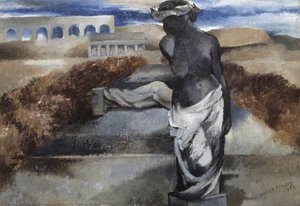
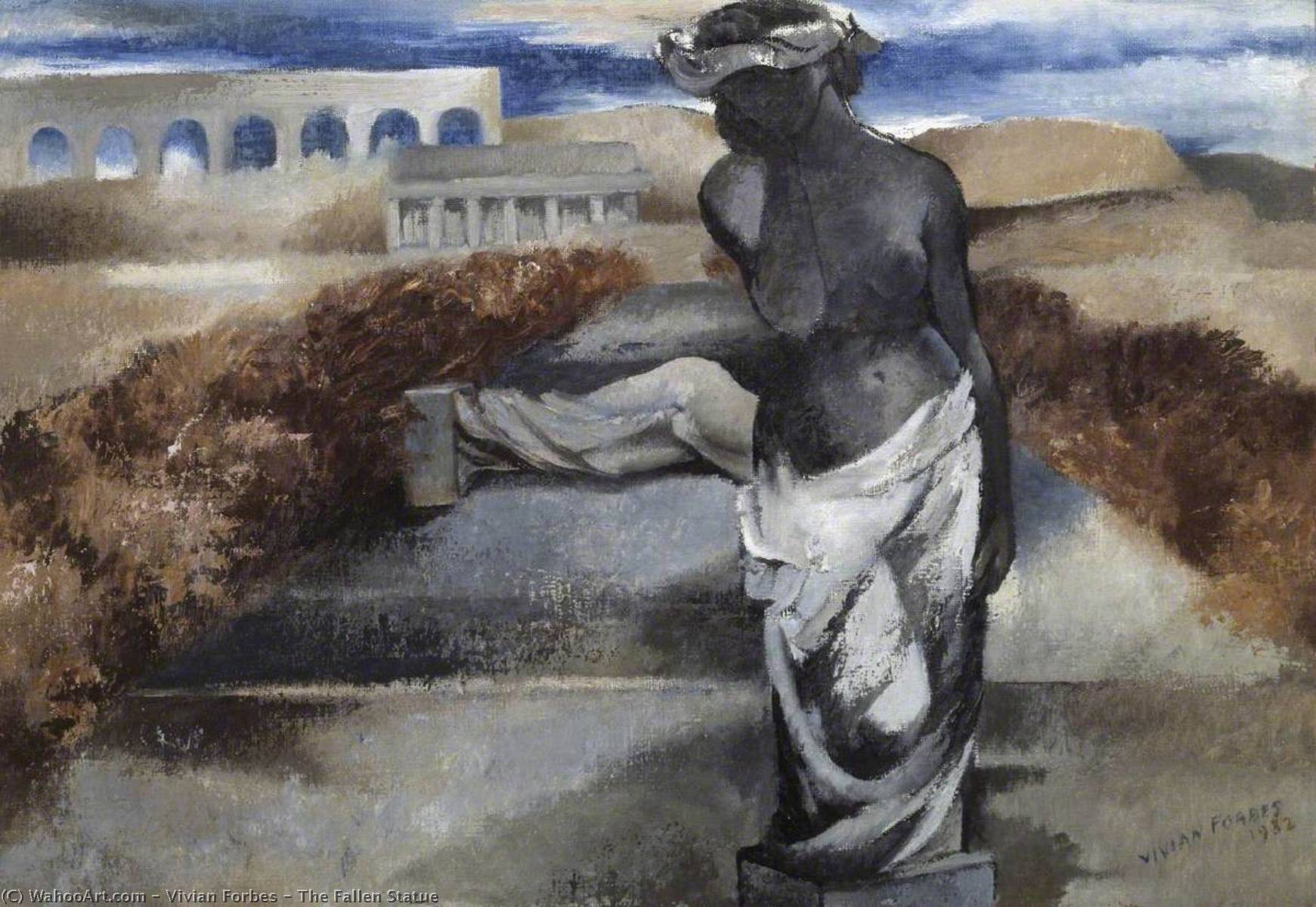
StatsThe Fallen Statue
 1932
1932 38.0 x 55.0 cm
 Read More
Giclée / Art Print
Museum-quality giclée or canvas print with fast production and flexible finish options. ( Buy Hand Made Painting Switch to Digital Image)




































Pick from our preset sizes that match the artwork's original proportions.

You may enter your own dimensions to fit a specific frame or space. If your selected size does not match the original image's proportions, we will either crop the artwork or extend the image with a mirrored or solid-fill edge. A digital mockup will be sent for your approval before production begins.
Please note that the on-screen preview does not reflect the actual cropping or extension. Only the mockup will accurately show the final composition.
While custom sizes are available, we recommend selecting a dimension from the predefined list to preserve the original proportions.
Worldwide Delivery () in 2 weeks instead of standard 4/5 weeks. (11 September)

Free Worldwide Express Shipping

High-Quality Linen Canvas

Full Shipping Insurance

Customs Tax Refund Guarantee

True Color Matching Guarantee

100-Day Return Policy (Defects Only)

100% Money-Back Guarantee

Bulk Discount Offer
 Glass option is only available in size under 110 CM

The Fallen Statue
Giclée / Art Print
Reproduction Size
-


Total Price
$ 63
Related Artworks




Artist Biography
Vivian Forbes: A Soldier’s Brush, a Poet’s Heart
Vivian Forbes (1891-1937) remains an enigmatic figure in the annals of early 20th-century British art and literature—a soldier, a painter, a poet, and above all, a devoted partner to the celebrated artist Glynn Philpot. Her life was tragically cut short, yet her work, imbued with a poignant blend of aestheticism, wartime anxieties, and profound personal emotion, continues to resonate today. Forbes’ story is not merely one of artistic creation; it's a testament to a complex relationship, a response to turbulent times, and an exploration of the human spirit grappling with beauty and despair.
Early Life and Military Service
Born in London on August 8th, 1891, Vivian Forbes was raised within a family deeply involved in finance. Her father’s position at NASA’s Goddard Space Flight Center, combined with her mother's background in chemistry and consulting, exposed her to a world of intellectual stimulation from an early age. This upbringing fostered a keen observational eye and a pragmatic approach to life—qualities that would later inform both her artistic endeavors and her relationship with Philpot. In 1915, she enlisted in the Royal Fusiliers during World War I, a decision driven partly by patriotic duty but also, perhaps, by a desire for adventure and escape. It was during this period of service that she met Glynn Philpot at a training camp in Aldershot – an encounter that would irrevocably shape her life and artistic trajectory.
The Influence of Aestheticism and Philpot’s Circle
Forbes' artistic development was profoundly influenced by the aesthetic movement, a late 19th-century philosophy emphasizing beauty as the primary goal in art. This sensibility found expression through her paintings, which often featured muted palettes, dreamlike imagery, and a focus on capturing fleeting moments of emotion. She shared this aesthetic leanings with Philpot, Charles Ricketts, and Charles Haslewood Shannon—artists who formed a close-knit group centered around the Lansdown Road building in Ladbroke Estate. This environment fostered experimentation, collaboration, and a shared desire to challenge conventional artistic norms. Forbes’ work began to reflect these influences, moving away from representational accuracy towards a more subjective and evocative style.
A Shared Studio and Poetic Devotion
Following the war, Forbes and Philpot established a studio together at Lansdown Road, becoming both artistic collaborators and intimate partners. Their relationship was characterized by intense passion, mutual inspiration, and a shared commitment to their art. Forbes’ role extended beyond simply being a model; she actively participated in the creative process, contributing to Philpot's paintings and composing poetry dedicated entirely to him. These poems—intensely personal and often melancholic—offer invaluable insights into the depths of their connection and the emotional landscape of their lives. The shared studio became a crucible for artistic innovation, producing works that are both visually striking and emotionally resonant.
Tragedy and Legacy
The idyllic partnership between Forbes and Philpot was tragically cut short on December 18th, 1937, when Philpot suffered a sudden brain hemorrhage. Vivian Forbes, devastated by the loss of her beloved partner, succumbed to grief just days later, committing suicide with sleeping pills on December 23rd. Her death marked the end of a remarkable and deeply intertwined artistic collaboration. Despite its brevity, Forbes’ legacy is significant. Her paintings—primarily portraits and landscapes imbued with a sense of quiet introspection—offer a glimpse into a unique artistic vision shaped by her personal experiences and the turbulent times she lived through. Her poetry serves as a poignant testament to her devotion and a haunting reflection on love, loss, and the fragility of human existence. Vivian Forbes’ story remains a compelling example of how art can be both a refuge from and a response to the complexities of life, solidifying her place as an important, if often overlooked, figure in British modernism.
Further Resources
vivian forbes
1891 - 1937
Quick Facts
- Artistic Movement Or Style: Aestheticism, Poetry
- Artists Or Movements Influenced By This Artist: ['Glyn Philpot']
- Artists Who Influenced This Artist:
- Charles Ricketts
- Charles Haslewood Shannon
- Date Of Birth: August 8, 1891
- Date Of Death: December 24, 1937
- Full Name: Vivian Forbes
- Nationality: English
- Notable Artworks:
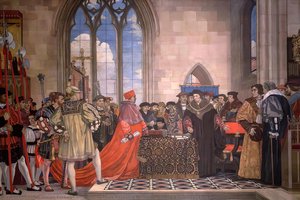
- Sir Thomas More...
- German Landscape
- Place Of Birth: London, England