

 Preview
 Send
Send Share
Share
 Details

 Download
 Similars
 X-Ray
X-Ray Diaporama
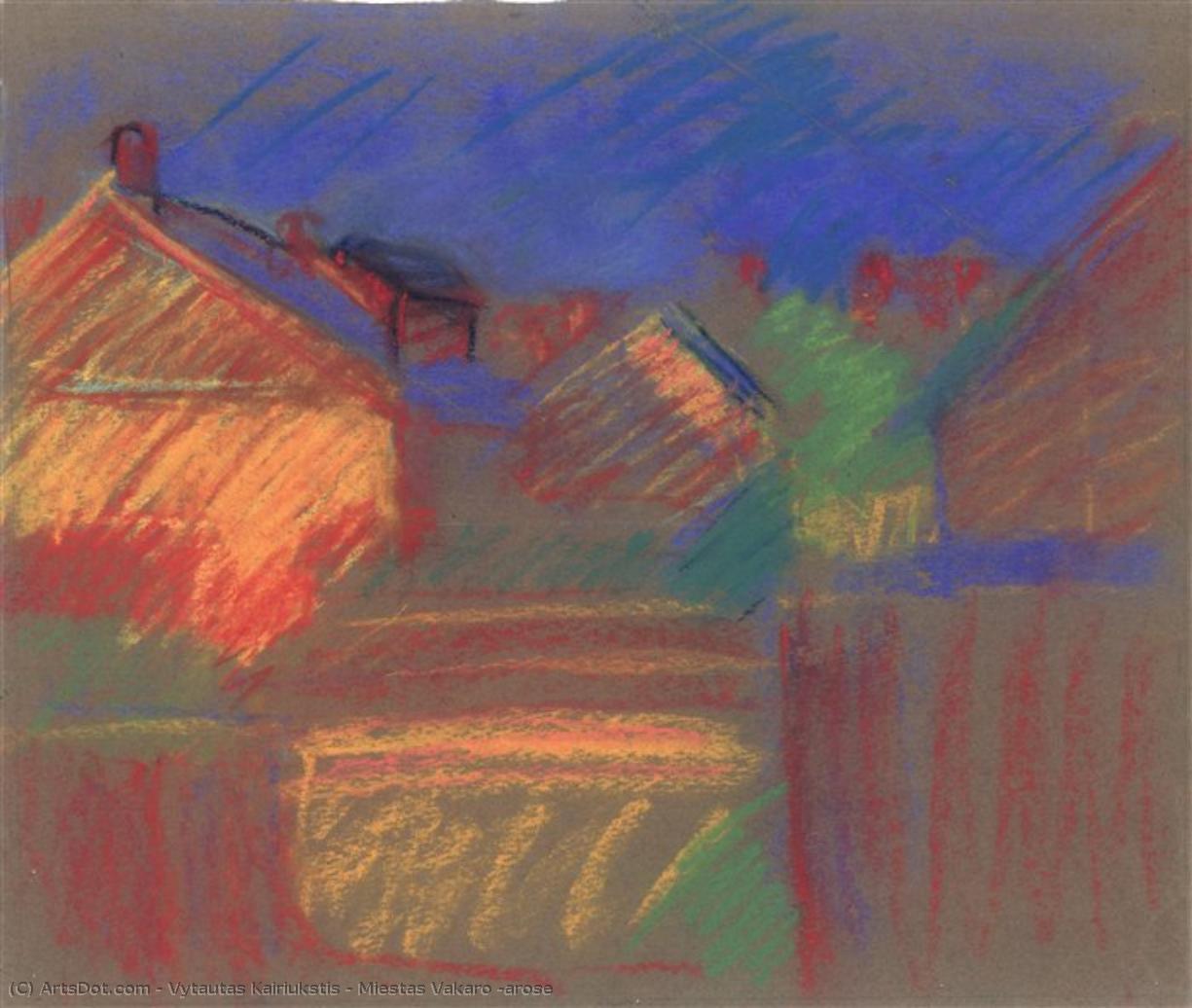
Miestas Vakaro Žarose


 Read More
Hand Made Oil Reproduction
Hand-painted oil on canvas in your size and frame, made to order by our artists. ( Buy Print Buy Image)




































Pick from our preset sizes that match the artwork's original proportions.

You may enter your own dimensions to fit a specific frame or space. If your selected size does not match the original image's proportions, we will either crop the artwork or extend the painting with additional hand-painted elements. A digital mockup will be sent for your approval before production begins.
Please note that the on-screen preview does not reflect the actual cropping or extension. Only the mockup will accurately show the final composition.
While custom sizes are available, we recommend selecting a dimension from the predefined list to preserve the original proportions.
After order, ArtsDot.com team will email client for instructions and provide a mockup preview
Worldwide Delivery () in 3/4 weeks instead of standard 5 weeks. (17 August). No compromise on quality.

Free Worldwide Express Shipping

High-Quality Linen Canvas

Full Shipping Insurance

Customs Tax Refund Guarantee

True Color Matching Guarantee

60-Day Return Policy (Defects Only)

100% Money-Back Guarantee

Bulk Discount Offer
 Glass option is only available in size under 110 CM

Miestas Vakaro Žarose
Reproduction Medium
Reproduction Size
-


Total Price
$ 263
Related Artworks
Artist Biography
A Pioneer of Lithuanian Abstraction: The Life and Work of Vytautas Kairiūkštis
Vytautas Kairiūkštis, born Witold Kajruksztis in 1890 in the small Polish town of Sejny, stands as a pivotal figure in the development of abstract art within Lithuania. His life was a testament to artistic exploration and a relentless pursuit of modernism, particularly during a period when the nation was forging its own identity amidst complex political and cultural shifts. Kairiūkštis wasn’t merely an artist; he was a catalyst, a theorist, and an educator who dared to introduce radical new concepts to a society steeped in tradition. His journey began with formal training at the Vilnius Drafting School between 1910 and 1911, laying the groundwork for his later experimentation but it was his relocation to Vilnius in 1921 that truly ignited his artistic vision.The Birth of Avant-Garde Lithuania
The year 1923 marked a watershed moment for Lithuanian art, largely due to Kairiūkštis’s initiative. He organized the “New Art Exhibition,” a daring showcase that brought the principles of Cubism, Constructivism, and Suprematism to Vilnius. This exhibition wasn't simply a display of foreign styles; it was a deliberate attempt to establish an avant-garde movement within Lithuania itself. Crucially, Kairiūkštis collaborated with Władysław Strzemiński, a prominent Polish artist and theorist, whose influence proved invaluable in shaping the exhibition’s direction and intellectual framework. The accompanying manifesto, penned by Kairiūkštis, articulated a powerful vision of artistic autonomy—a belief in the inherent value of form and color independent of representational concerns. This was a bold statement for its time, challenging conventional aesthetic norms and advocating for an art rooted in intellect and objectivity. Following this success, he co-founded the “Block” group in 1924 alongside other forward-thinking artists like Henryk Stażewski and Teresa Żarnowerowna, further solidifying his position as a leader of the Lithuanian avant-garde.Constructivism, Photomontage, and Artistic Ideology
Kairiūkštis’s artistic practice was deeply rooted in Constructivism, an art movement that rejected pure abstraction in favor of art with a social purpose. However, his work wasn't limited to painting; he embraced photomontage as a powerful medium for exploring new visual languages and conveying contemporary ideas. His travels throughout Europe between 1924 and 1931—to Italy, Germany, Belgium, Denmark, and France—were instrumental in broadening his artistic horizons and exposing him to the latest developments in abstract art. These journeys fueled his theoretical pursuits as well; he became a prolific writer and critic, contributing to publications like “L'Art Contemporain - Sztuka Współczesna” alongside Jan Brzekowski and Wanda Chodasiewicz-Grabowska. He wasn’t content with simply creating art—he sought to articulate its underlying principles and advocate for its role in shaping modern society.Later Life and Enduring Legacy
Despite facing political challenges and shifting artistic landscapes, Kairiūkštis remained committed to his vision throughout his life. He held positions of increasing responsibility within Lithuanian cultural institutions, including vice president of the Lithuanian Society of Literature and Art in Vilnius (1932) and employment at the M. K. Čiurlionis Museum of Art in Kaunas (1940-1944). After World War II, he dedicated himself to teaching at the State Institute of the Decorative and Applied Arts, nurturing a new generation of Lithuanian artists. While his work was often overshadowed by political constraints during periods of Soviet influence, Kairiūkštis’s contribution to Lithuanian art remains profound. He dared to introduce radical ideas, fostering a spirit of experimentation and intellectual inquiry that continues to inspire artists today. His legacy lies not only in the striking visual forms he created but also in his unwavering belief in the power of art to transform society and reflect the complexities of the modern world.Major Achievements & Historical Significance
- Pioneering the Avant-Garde: Kairiūkštis’s 1923 exhibition is widely considered the birth of avant-garde art in Lithuania, introducing Cubism, Constructivism and Suprematism to a new audience.
- Theoretical Contributions: His writings on artistic autonomy and objectivity helped shape the intellectual landscape of Lithuanian modernism.
- Educational Impact: As an educator, he nurtured generations of artists, fostering a spirit of experimentation and innovation.
- Embracing New Media: His exploration of photomontage expanded the possibilities of visual expression in Lithuania.
- International Engagement: Through his travels and collaborations, Kairiūkštis connected Lithuanian art to broader European movements.
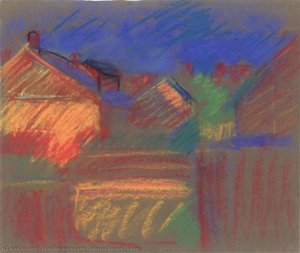
vytautas kairiukstis
1890 - 1961 , Lithuania
Quick Facts
- Artistic Movement Or Style: Constructivism, Suprematism
- Date Of Birth: 1890
- Date Of Death: 1961
- Full Name: Vytautas Kairiukstis
- Nationality: Lithuanian
- Notable Artworks: ['Miestas Vakaro Žarose']
- Place Of Birth: Sejny, Lithuania

