 Preview
 Send
Send Share
Share
 Details

 Download
 Similars
 X-Ray
X-Ray Diaporama
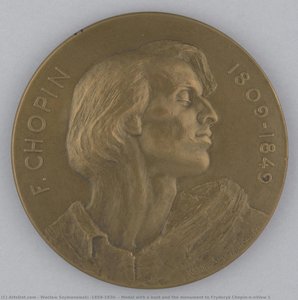
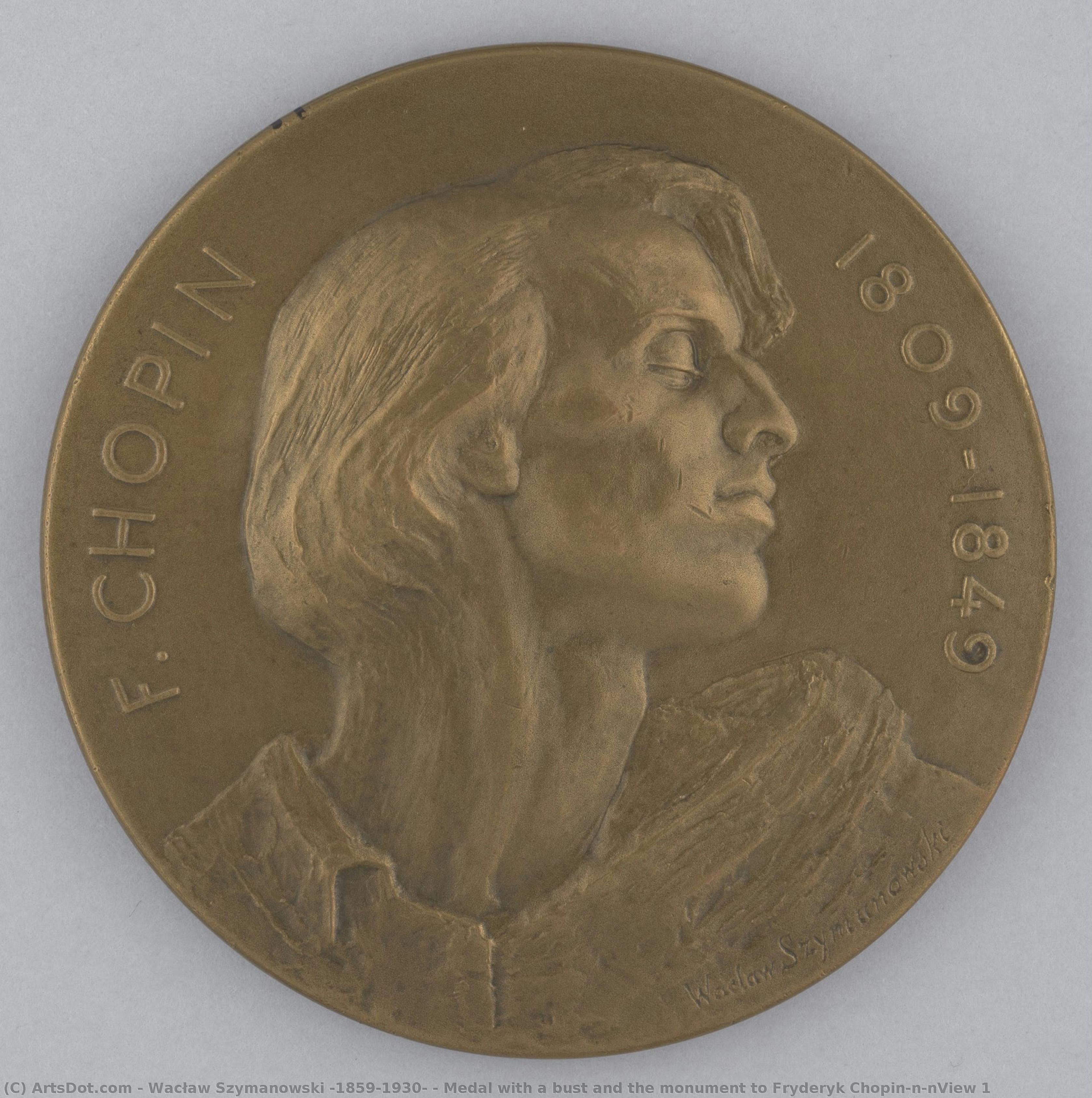
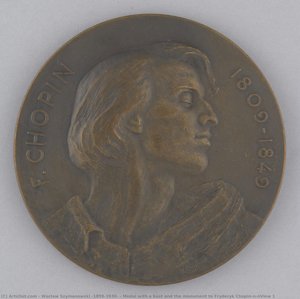
Medal with a bust and the monument to Fryderyk Chopin\n\nView 1

 Read More
Hand Made Oil Reproduction
Hand-painted oil on canvas in your size and frame, made to order by our artists. ( Buy Print Buy Image)




































Pick from our preset sizes that match the artwork's original proportions.

You may enter your own dimensions to fit a specific frame or space. If your selected size does not match the original image's proportions, we will either crop the artwork or extend the painting with additional hand-painted elements. A digital mockup will be sent for your approval before production begins.
Please note that the on-screen preview does not reflect the actual cropping or extension. Only the mockup will accurately show the final composition.
While custom sizes are available, we recommend selecting a dimension from the predefined list to preserve the original proportions.
After order, ArtsDot.com team will email client for instructions and provide a mockup preview
Worldwide Delivery () in 3/4 weeks instead of standard 5 weeks. (5 September). No compromise on quality.

Free Worldwide Express Shipping

High-Quality Linen Canvas

Full Shipping Insurance

Customs Tax Refund Guarantee

True Color Matching Guarantee

60-Day Return Policy (Defects Only)

100% Money-Back Guarantee

Bulk Discount Offer
 Glass option is only available in size under 110 CM

Medal with a bust and the monument to Fryderyk Chopin\n\nView 1
Reproduction Medium
Reproduction Size
-


Total Price
$ 263
Related Artworks






Artist Biography
A Legacy in Bronze and Paint: The Life of Wacław Szymanowski
Wacław Szymanowski, born in Warsaw on August 23rd, 1859, was a Polish artist whose name became synonymous with both the romantic spirit of painting and the enduring power of sculpture. He lived through a period of immense national upheaval for Poland—a time when artistic expression often served as a powerful declaration of identity and cultural resilience. The son of Wacław Szymanowski, a respected journalist and writer, and later the father of physicist and politician Wacław Szymanowski, he inherited a legacy of intellectual engagement that undoubtedly shaped his own creative path. His early years were dedicated to capturing the beauty of Polish landscapes and its people, particularly the mountaineers and Hutsuls whose lives resonated with a sense of untamed freedom. These genre paintings, executed with meticulous detail and a warm palette, established him as a promising talent in the late 19th-century art scene.From Genre to Monument: A Shift in Artistic Focus
Around 1895, Szymanowski underwent a significant artistic transformation, turning his attention towards sculpture. This wasn’t merely a change of medium; it was a shift in ambition and scale. He embraced the Art Nouveau-Symbolist style that was sweeping across Europe, infusing his work with a sense of emotional depth and allegorical meaning. His sculptures moved beyond realistic representation, seeking to capture the essence of human experience and national pride. This period saw him undertake ambitious projects like the monument to Artur Grottger in Kraków (1907), a tribute to a fellow Polish artist whose works depicted the struggles of the nation. However, it was his commission for a statue honoring Frédéric Chopin that would ultimately define his artistic legacy. The idea for this monument arose in 1907, intended as a celebration of the composer’s centenary in 1910, but political obstacles and the looming shadow of World War I delayed its realization.The Chopin Monument: A Symbol of National Identity
The statue of Frédéric Chopin, finally cast and unveiled in Warsaw's Royal Baths Park (Łazienki Park) in 1926, is more than just a beautiful sculpture—it’s a potent symbol of Polish national identity. The bronze figure captures Chopin at the height of his creative power, lost in musical contemplation. Szymanowski skillfully conveyed not only the composer's likeness but also the emotional intensity and poetic spirit that characterized his work. The monument faced considerable controversy during its planning stages, with debates surrounding its design and placement reflecting the complex political landscape of Poland at the time. Despite these challenges, Szymanowski persevered, creating a masterpiece that continues to resonate with audiences today. It became an immediate landmark, a place for remembrance, reflection, and national pride—a testament to the enduring power of art to transcend political boundaries.Later Life and Artistic Contributions
Beyond the Chopin monument, Szymanowski continued to create significant works throughout his career. He designed numerous tomb monuments, including one honoring his father at Warsaw’s Powązki Cemetery, demonstrating a sensitivity to grief and remembrance. His portrait busts captured the likenesses of prominent figures, offering intimate glimpses into the lives of his contemporaries. While he initially gained recognition for his paintings of Polish mountaineers and Hutsuls, it was his sculptures that cemented his place in art history. He died in Warsaw on July 22nd, 1930, at the age of 70, leaving behind a body of work that continues to inspire and captivate. His legacy is not simply one of artistic skill but also of unwavering dedication to Polish culture and national identity—a testament to the power of art to reflect and shape the spirit of a nation.Historical Significance and Enduring Appeal
Wacław Szymanowski’s work occupies a unique position in Polish art history. He bridged the gap between Romantic painting and Symbolist sculpture, creating works that were both aesthetically beautiful and deeply meaningful. His sculptures, particularly the Chopin monument, became powerful symbols of national identity during a period of immense political and social change. His ability to capture the essence of human emotion, combined with his technical skill and artistic vision, ensured his lasting legacy. Today, Szymanowski’s works are celebrated for their beauty, historical significance, and enduring appeal—a reminder of the power of art to transcend time and inspire generations. He remains a pivotal figure in Polish sculpture, whose contributions continue to be studied and admired by artists and scholars alike.
Quick Facts
- Artistic Movement Or Style: Art Nouveau-Symbolist
- Date Of Birth: August 23, 1859
- Date Of Death: July 22, 1930
- Full Name: Wacław Szymanowski
- Nationality: Polish
- Notable Artworks:
- Chopin Statue (Warsaw)
- Grottger Monument (Kraków)
- Place Of Birth: Warsaw, Poland