

 Preview
 Send
Send Share
Share
 Details

 Download
 Similars
 X-Ray
X-Ray Diaporama
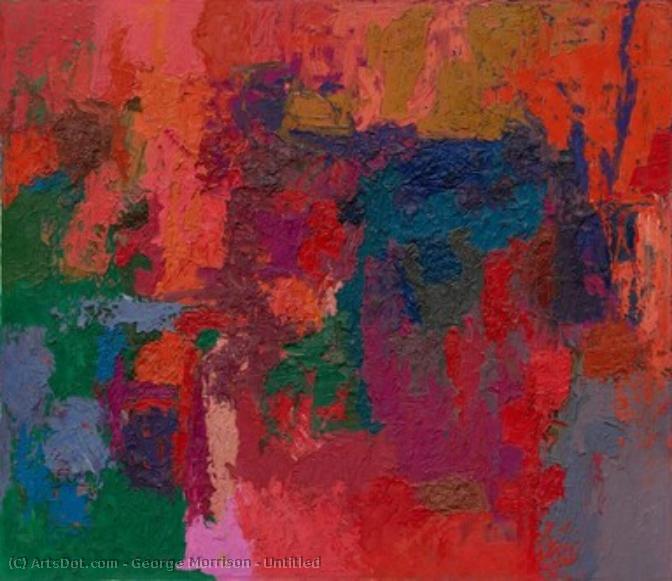
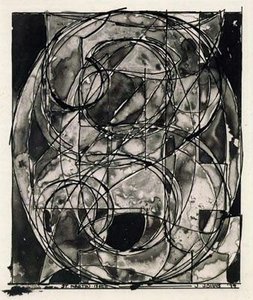
Untitled
 Abstract Expressionism
 1961
1961 96.0 x 111.0 cm
 Read More
Purchase a high-resolution, enhanced digital image, far superior to the online preview.
Each file is meticulously prepared by our in-house specialists using advanced tools and expert manual retouching. We ensure every image has exceptional clarity, precise color accuracy, and fine detail.
The final file is delivered via email within 72 hours, optimized for immediate use in professional, editorial, and print environments. This is the same quality trusted by top-tier design studios, publishers, and galleries.
Digital Image
Download a high-resolution file for personal display, printing, and creative projects. ( Buy Print Buy Hand Made Painting)
Included in Every Digital Image Order
Expert Digital Delivery, Guaranteed
When you choose ArtsDot.com, you're not just getting an image - you're receiving a professionally enhanced digital artwork, crafted with precision and backed by a satisfaction guarantee. Here's everything that comes with your order, automatically:

Fast Email Delivery
Your high-resolution digital image file will be emailed to you within 72 hours of ordering - ready for immediate use.

AI-Enhanced Digital File
Your artwork is professionally optimized using advanced AI tools and manual editing, ensuring maximum detail, clarity, and color accuracy.

Free Lifetime Re-Delivery
Accidentally deleted or lost your file? No worries - we'll resend it to you anytime, free of charge.

No Import Fees - Ever
Enjoy your artwork instantly with zero customs, duties, or delivery fees - digital downloads are always tax-free.

Color Accuracy Guarantee
We ensure your digital image reflects the original colors as closely as possible using professional tools and color management.

60-Day Satisfaction Guarantee
If you're not satisfied with your digital image, we'll revise it or refund 100% within 60 days - no questions asked.

100% Money-Back Guarantee
Not satisfied? Get a full refund within 60 days of receiving your digital file - no questions asked.

Bulk Order Discounts
Buy 3 images, save 10% - Buy 5, save 15% - Buy 10+, save 20%. Great for creative projects, galleries, and agencies.
Related Artworks
Artist Biography
George Morrison: Bridging Indigenous Roots and Abstract Expressionism
Wah Wah Teh Go Nay Ga Bo, more commonly known as George Morrison (1919-2000), stands as a pivotal figure in American art, uniquely blending the traditions of his Ojibwe heritage with the dynamism of the abstract expressionist movement. Born in Chippewa Falls, Wisconsin, to a family deeply rooted in the Grand Portage Band of the Minnesota Lake Superior Chippewa Tribe, Morrison’s artistic journey was profoundly shaped by his connection to the land and the oral storytelling traditions of his people. His Ojibwe name, “Standing in the Northern Lights,” offers an immediate insight into the spiritual and visual world that informed his work – a constant dialogue between the earthly and the ethereal.
Morrison’s early life instilled within him a deep respect for nature and a keen awareness of the cyclical rhythms of the seasons. This connection would become a cornerstone of his artistic practice, manifesting in landscapes imbued with both abstract energy and recognizable elements of the Minnesota wilderness. He initially studied at the Minneapolis School of Art (now the Minneapolis College of Art and Design), earning a diploma in 1943, before pursuing further education at the prestigious Art Students League in New York City from 1943 to 1946. This period proved crucial, exposing him to the burgeoning abstract expressionist scene dominated by artists like Jackson Pollock and Willem de Kooning – figures whose techniques and philosophies would significantly influence his own development.
The Influence of Surrealism and Abstract Expressionism
Morrison’s artistic trajectory wasn't solely defined by direct emulation. While deeply impacted by the energy and spontaneity of abstract expressionism, he also drew inspiration from Surrealist principles, particularly in his exploration of memory and subconscious imagery. His work often features dreamlike landscapes, fragmented forms, and a sense of underlying tension – elements that suggest a deliberate attempt to capture the intangible essence of experience. The Ethel Morrison Van Derlip Traveling Scholarship afforded him invaluable opportunities for study and travel during this formative period, broadening his artistic horizons.
Following his time in New York, Morrison returned to Minnesota, establishing himself as a respected teacher and artist. He held teaching positions at various institutions including the Cape Ann Art School (renamed Rockport Art School), Dayton Art Institute, Cornell University, Penn State University, Rhode Island School of Design, and ultimately, the University of Minnesota where he taught American Indian Studies and art until his retirement in 1983. This sustained engagement with education underscored his commitment to fostering artistic expression within a broader cultural context.
A Distinctive Artistic Style: Landscapes and Wood Collages
Morrison’s mature style is characterized by bold, layered brushstrokes, vibrant color palettes, and a dynamic sense of movement. His landscapes are not simply representations of the natural world; they are explorations of memory, emotion, and spiritual connection. He frequently employed impasto techniques – applying paint thickly to create textural surfaces that seem to vibrate with energy. Beyond painting, Morrison became renowned for his monumental wood collages, often incorporating found objects and Native American motifs. These works served as powerful statements about identity, history, and the enduring relationship between Indigenous peoples and the land.
A significant achievement in his career was winning the grand prize at the Fourth Invitational Exhibition of Indian Arts and Crafts in Washington, D.C., in 1968. Furthermore, in 1997, his sculpture “Red Totem” (1980) was exhibited at the White House, a testament to the growing recognition of his artistic merit. In 1999, he received the Eiteljorg Fellowship for Native American Fine Art, solidifying his place as a leading figure in contemporary Native American art. Notably, in 2020, George Morrison became the first Native American artist whose work was acquired for the National Gallery of Art’s New York School collection – a landmark moment celebrating his lasting legacy.
Legacy and Historical Significance
George Morrison's contribution to American art lies not only in his individual artistic achievements but also in his ability to bridge cultural divides. He demonstrated that abstract expressionism could be enriched by incorporating Indigenous perspectives, creating works that are both visually arresting and deeply meaningful. His work continues to resonate with audiences today, prompting reflection on themes of identity, spirituality, and the enduring power of connection to the natural world. He remains a vital voice in the ongoing dialogue between Native American art and the broader artistic landscape.
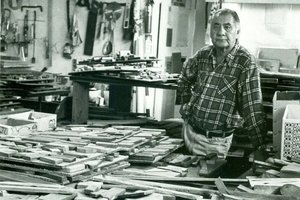
wah wah teh go nay ga bo
1919 - 2000 , United States of America
Quick Facts
- Artistic Movement Or Style: Abstract Expressionism
- Artists Or Movements Influenced By This Artist: ['Surrealism']
- Artists Who Influenced This Artist:
- Willem de Kooning
- Jackson Pollock
- Date Of Birth: September 30, 1919
- Date Of Death: April 17, 2000
- Full Name: George Morrison
- Nationality: Ojibwe American
- Notable Artworks:
- Untitled
- Wah Wah Teh Go Nay Ga Bo
- Place Of Birth: Chippewa Falls, USA

