 Preview
 Send
Send Share
Share
 Details

 Download
 Similars
 X-Ray
X-Ray Diaporama
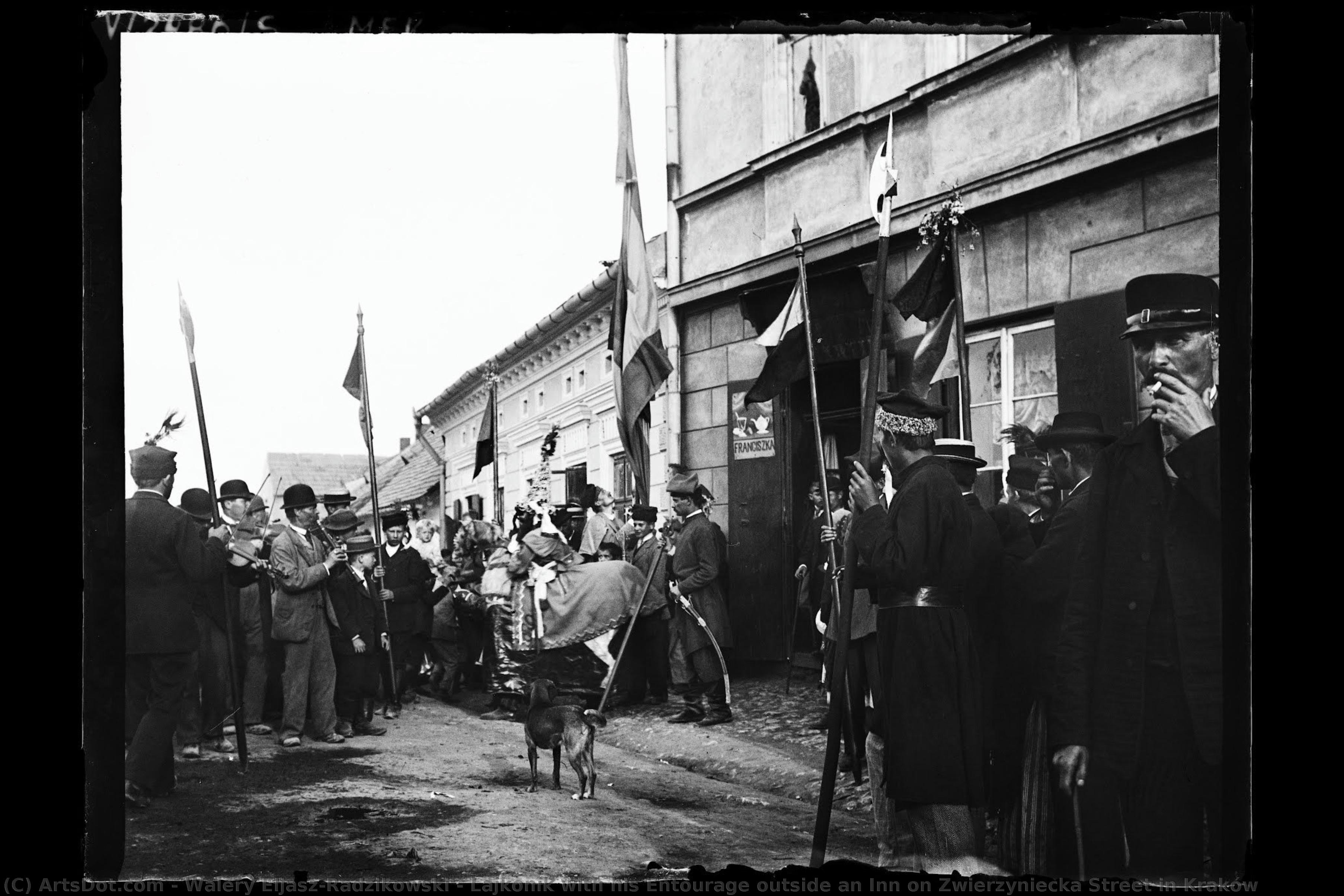
Lajkonik with his Entourage outside an Inn on Zwierzyniecka Street in Kraków


 Read More
Giclée / Art Print
Museum-quality giclée or canvas print with fast production and flexible finish options. ( Buy Hand Made Painting Buy Image)




































Pick from our preset sizes that match the artwork's original proportions.

You may enter your own dimensions to fit a specific frame or space. If your selected size does not match the original image's proportions, we will either crop the artwork or extend the image with a mirrored or solid-fill edge. A digital mockup will be sent for your approval before production begins.
Please note that the on-screen preview does not reflect the actual cropping or extension. Only the mockup will accurately show the final composition.
While custom sizes are available, we recommend selecting a dimension from the predefined list to preserve the original proportions.
Worldwide Delivery () in 2 weeks instead of standard 4/5 weeks. (31 August)

Free Worldwide Express Shipping

High-Quality Linen Canvas

Full Shipping Insurance

Customs Tax Refund Guarantee

True Color Matching Guarantee

60-Day Return Policy (Defects Only)

100% Money-Back Guarantee

Bulk Discount Offer
 Glass option is only available in size under 110 CM

Lajkonik with his Entourage outside an Inn on Zwierzyniecka Street in Kraków
Giclée / Art Print
Reproduction Size
-


Total Price
$ 63
Related Artworks










Artist Biography
Walery Eljasz-Radzikowski: Life and Legacy
Early Life and Education
Walery Eljasz-Radzikowski was born on September 13, 1841, in Krakow, Poland, a period marked by foreign partitions that deeply influenced his life and artistic expression. He began his formal art education in 1856 at the School of Fine Arts in Krakow, studying primarily under the tutelage of the renowned Władysław Łuszczkiewicz. This foundational training instilled in him a strong academic approach to painting and a keen eye for detail. In 1862, he continued his studies in Munich, broadening his artistic horizons before returning to Poland in 1866.Political Activism and the January Uprising
Eljasz-Radzikowski’s life took a significant turn during his time in Munich. While recovering from typhoid fever, he became involved with the Polish insurrectionist Rząd Narodowy, providing crucial support to volunteers heading back to Poland to participate in the January Uprising (1863–1864) against foreign rule. This period demonstrates his strong patriotic sentiments and willingness to contribute to the cause of Polish independence, even through indirect means.Artistic Career and Diverse Pursuits
Upon returning to Krakow, Eljasz-Radzikowski embarked on a multifaceted artistic career. He served as a teacher of fine arts at local schools, including the Gimnazjum of St. Anne from 1872 to 1891, nurturing the next generation of Polish artists. His artistic output was remarkably diverse:- He painted church frescos, notably in Chochołów (1871).
- He illustrated books and magazines, contributing to the burgeoning Polish publishing industry.
- He designed historical costumes for theatre stage productions, showcasing his versatility.
- He exhibited his works internationally, gaining recognition beyond Poland’s borders.
Pioneering Tourism and the Tatra Mountains
Eljasz-Radzikowski is perhaps equally celebrated for his contributions to Polish tourism. He was a co-founder of one of Europe's oldest tourist societies, the Cultural Polish Tatra Society in 1873. His most significant achievement in this field was writing and illustrating Ilustrowany przewodnik do Tatr, Pienin i Szczawnic (Illustrated Guide to the Tatra Mountains, Pieniny, and Szczawnica) in 1870. This groundbreaking work, initially featuring lithographs and woodcuts, later incorporated his own photographs, making it a pioneering example of a visually rich tourist guide.Artistic Style and Influences
Eljasz-Radzikowski’s artistic style is rooted in 19th-century Realism, characterized by accurate depictions of everyday life, historical scenes, and landscapes. His work reflects the influence of his teacher, Władysław Łuszczkiewicz, particularly in its attention to detail and narrative quality. He skillfully captured the beauty of the Tatra Mountains, contributing significantly to their romanticized image within Polish culture.Legacy and Historical Significance
Walery Eljasz-Radzikowski died on March 23, 1905, leaving behind a rich artistic legacy. He is remembered not only as a talented painter and illustrator but also as a dedicated educator, patriot, and pioneer of Polish tourism. His work provides valuable insights into 19th-century Polish life, culture, and the growing national consciousness during a period of foreign occupation. His illustrated guide played a crucial role in promoting the Tatra Mountains as a destination for both domestic and international travelers, shaping their perception and contributing to the region’s development.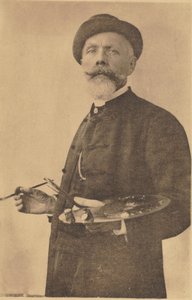
Walery Eljasz-Radzikowski
1840 - 1905 , Poland
Quick Facts
- Birth Date: 13 September 1841
- Birth Place: Krakow, Poland
- Death Date: 23 March 1905
- Influenced By: Władysław Łuszczkiewicz
- Movement:
- 19th-century art
- Realism
- Name: Walery Eljasz-Radzikowski
- Nationality: Polish
- Notable Works: Illustrowany przewodnik do Tatr, Pienin i Szczawnic, Lajkonik with his Entourage outside an Inn on Zwierzyniecka Street in Kraków