

 Preview
 Send
Send Share
Share
 Details

 Download
 Similars
 X-Ray
X-Ray Diaporama
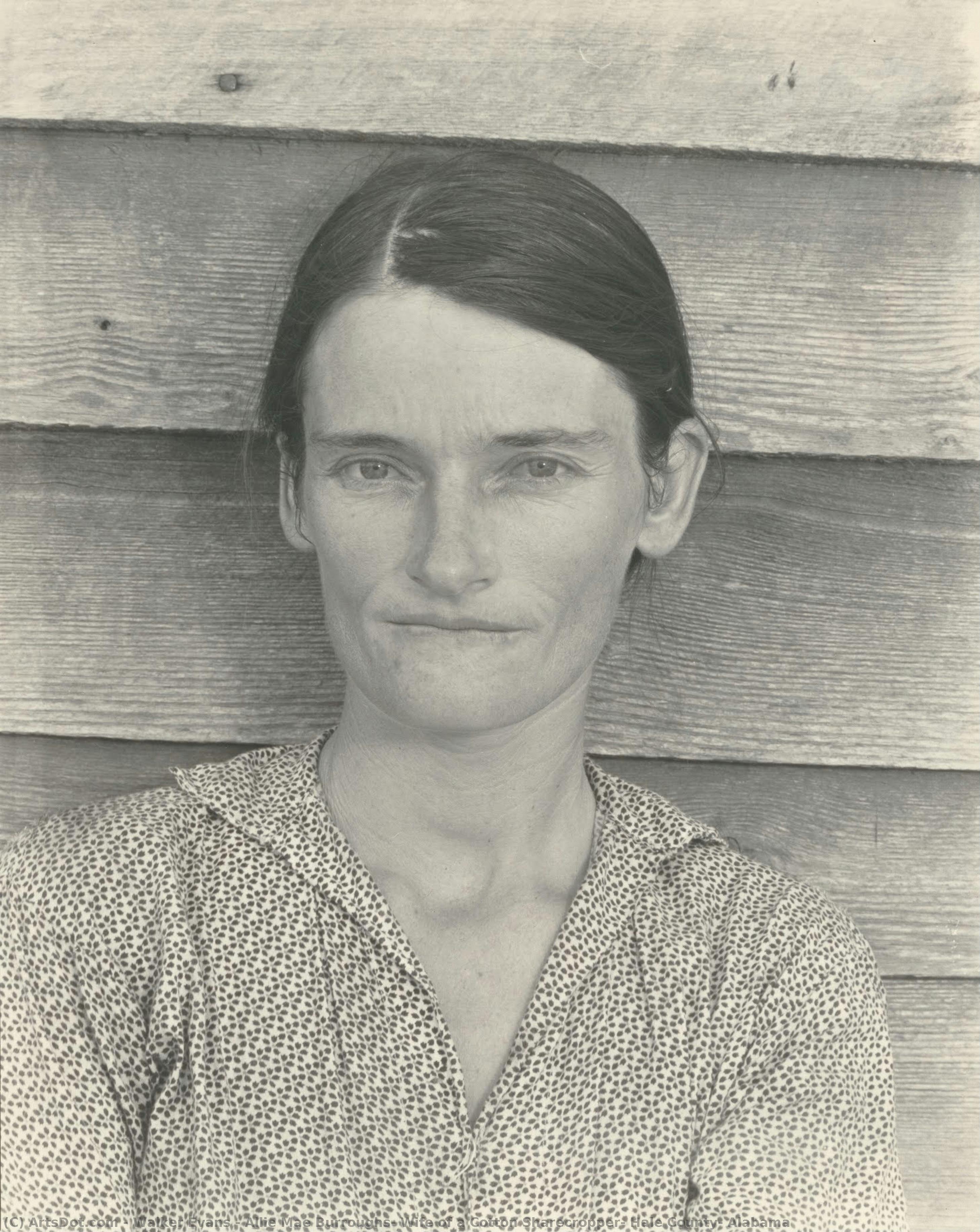
Allie Mae Burroughs, Wife of a Cotton Sharecropper, Hale County, Alabama
 Acrylic On Canvas
- WallArt
- Documentary Photography
 1936
1936 24.0 x 19.0 cm
 J. Paul Getty Museum
 Read More
Purchase a high-resolution, enhanced digital image, far superior to the online preview.
Each file is meticulously prepared by our in-house specialists using advanced tools and expert manual retouching. We ensure every image has exceptional clarity, precise color accuracy, and fine detail.
The final file is delivered via email within 72 hours, optimized for immediate use in professional, editorial, and print environments. This is the same quality trusted by top-tier design studios, publishers, and galleries.
Digital Image
Download a high-resolution file for personal display, printing, and creative projects. ( Buy Print Buy Hand Made Painting)
Included in Every Digital Image Order
Expert Digital Delivery, Guaranteed
When you choose ArtsDot.com, you're not just getting an image - you're receiving a professionally enhanced digital artwork, crafted with precision and backed by a satisfaction guarantee. Here's everything that comes with your order, automatically:

Fast Email Delivery
Your high-resolution digital image file will be emailed to you within 72 hours of ordering - ready for immediate use.

AI-Enhanced Digital File
Your artwork is professionally optimized using advanced AI tools and manual editing, ensuring maximum detail, clarity, and color accuracy.

Free Lifetime Re-Delivery
Accidentally deleted or lost your file? No worries - we'll resend it to you anytime, free of charge.

No Import Fees - Ever
Enjoy your artwork instantly with zero customs, duties, or delivery fees - digital downloads are always tax-free.

Color Accuracy Guarantee
We ensure your digital image reflects the original colors as closely as possible using professional tools and color management.

60-Day Satisfaction Guarantee
If you're not satisfied with your digital image, we'll revise it or refund 100% within 60 days - no questions asked.

100% Money-Back Guarantee
Not satisfied? Get a full refund within 60 days of receiving your digital file - no questions asked.

Bulk Order Discounts
Buy 3 images, save 10% - Buy 5, save 15% - Buy 10+, save 20%. Great for creative projects, galleries, and agencies.
A Portrait of Resilience: Walker Evans’s Allie Mae Burroughs
Walker Evans's photograph, "Allie Mae Burroughs, Wife of a Cotton Sharecropper, Hale County, Alabama," isn't merely a snapshot; it’s a poignant window into the heart of the American Depression. Captured in 1936 during his work for the Farm Security Administration, this image transcends its documentary origins to become a powerful meditation on dignity, hardship, and the quiet strength of an ordinary woman facing extraordinary circumstances. The photograph, now housed at both the J. Paul Getty Museum and the Metropolitan Museum of Art, remains one of Evans’s most enduring works, not for its technical brilliance alone, but for the profound humanity it conveys.
The scene unfolds within the humble confines of Allie Mae Burroughs's four-room cabin in Hale County, Alabama – a landscape scarred by poverty and the relentless cycle of sharecropping. The composition is strikingly simple: Allie Mae stands against the rear wall of her home, bathed in the diffused light that characterizes Evans’s work. Her posture is direct, almost defiant; she holds her hands on her hips, a gesture simultaneously protective and wary. The wooden fence behind her anchors the image within its rural context, while the blurred figures in the background hint at the family's precarious existence – a husband toiling in the fields, children needing care.
The Language of Observation: Evans’s Photographic Style
Evans’s approach was revolutionary for his time. He eschewed the staged portraits favored by many FSA photographers, instead opting for candid moments that revealed the truth of American life. His technique is characterized by a deliberate lack of embellishment; he used a simple gelatin silver print process, emphasizing the textures and tones of the paper itself. The black-and-white palette amplifies the starkness of the scene, highlighting the weariness etched on Allie Mae’s face and the weathered simplicity of her surroundings. The slightly soft focus contributes to an intimate feel, drawing the viewer into this private moment.
Crucially, Evans didn't impose his own narrative onto the subjects he photographed. He allowed them to speak through their expressions and gestures. This is evident in Allie Mae’s gaze – it’s not a passive acceptance of her circumstances, but rather a quiet assessment, a subtle challenge to the viewer. The photograph captures a fleeting moment of resilience, a refusal to be defined solely by poverty or circumstance.
Symbolism and Context: The Weight of Sharecropping
Understanding the context of sharecropping is vital to interpreting this image fully. This system, prevalent in the South during the early 20th century, trapped countless families in cycles of debt and dependence. Farmers worked the land for a portion of the crop’s yield, leaving them perpetually vulnerable to fluctuations in market prices and the demands of their landlords. Allie Mae's husband, Floyd Burroughs, was a halver, meaning he received half of his harvest – a meager reward for backbreaking labor.
The photograph becomes a visual representation of this systemic injustice. It’s not just about a single woman; it’s about the countless individuals trapped within this exploitative system. The image serves as a stark reminder of the human cost of economic hardship and the enduring struggle for dignity in the face of adversity.
Emotional Resonance: A Portrait of Quiet Strength
Despite the bleak circumstances depicted, "Allie Mae Burroughs" is not a photograph of despair. Instead, it’s imbued with a remarkable sense of quiet strength and dignity. Allie Mae's posture, her direct gaze, and the subtle tension in her face convey a profound resilience – a refusal to be broken by circumstance. The image invites us to contemplate the complexities of human experience, reminding us that even in the darkest of times, the spirit endures.
Reproductions of this iconic photograph offer a powerful way to connect with this historical moment and appreciate Evans’s extraordinary ability to capture the essence of humanity. It's a piece that continues to resonate deeply today, serving as a testament to the enduring power of photography to illuminate truth and evoke empathy.
Related Artworks

Artist Biography
A Witness to America: The Life and Legacy of Walker Evans
Walker Evans, born in St. Louis in 1903, emerged as a pivotal figure in American photography, his name inextricably linked with the visual record of the Great Depression. Yet to define him solely by this period would be to diminish the breadth of his artistic vision and enduring influence. His journey was one of constant exploration, evolving from literary aspirations to a uniquely observant photographic style that captured not just *what* America was, but *how* it felt – its quiet dignity, its stark realities, and its often-overlooked beauty. Evans’s upbringing, marked by frequent moves between cities like Toledo, Chicago, and New York, instilled in him an early awareness of the diverse facets of American life. Though educated at prestigious institutions like Phillips Academy Andover and briefly at Williams College, his true education unfolded through self-directed study and immersion in the cultural currents of the time. A year spent in Paris in 1926 exposed him to European artistic trends, but it was upon his return to New York that he discovered his calling, initially as a writer before turning decisively towards photography around 1928.Forging a Documentary Vision
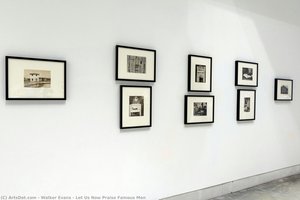
The early influences on Evans’s photographic approach were profound. He admired the meticulous documentation of Eugène Atget, whose images of Parisian streets felt both timeless and immediate, and August Sander, whose portraits aimed for an objective cataloging of German society. Equally important were literary figures like T.S. Eliot, D.H. Lawrence, James Joyce, and e.e. cummings – writers who valued precision of language and a keen observation of the human condition. These influences coalesced in Evans’s developing aesthetic: a commitment to clarity, directness, and an avoidance of sentimentality. This approach found its most powerful expression during his tenure with the Farm Security Administration (FSA) beginning in 1935. Tasked with documenting the effects of the Depression on rural communities in the Southern United States, Evans traveled extensively, capturing images that became iconic representations of hardship and resilience. His collaboration with writer James Agee on *Let Us Now Praise Famous Men* (1941), a groundbreaking work combining stark photographs with lyrical prose depicting three tenant farming families in Alabama, remains a cornerstone of documentary literature and photography. Though initially rejected by *Fortune* magazine for its length and unconventional style, the project stands as a testament to their shared commitment to portraying the lives of ordinary people with honesty and empathy. Evans’s use of an 8x10 view camera contributed significantly to his distinctive style; the large format yielded images of exceptional detail and formal clarity, lending a sense of timelessness to his subjects.Beyond the FSA: Portraits and Shifting Perspectives
Following his work with the FSA, Evans’s artistic trajectory continued to evolve. The landmark exhibition “Walker Evans: American Photographs” at the Museum of Modern Art in 1938 solidified his reputation as a major force in photography, marking the first solo show dedicated to a photographer at the museum. However, he resisted being pigeonholed as simply a documentary photographer. He increasingly turned his attention towards portraits and street photography, capturing candid moments of urban life in New York City with an understated elegance. These later works reveal a subtle shift in focus – less concerned with social commentary and more interested in exploring the aesthetic qualities of everyday scenes. In the 1960s, Evans embraced color photography, producing vibrant images of interiors, architecture, and commonplace objects. This experimentation demonstrated a willingness to challenge conventional notions of photographic representation and explore new avenues for artistic expression. The playful and decorative quality of these later works often surprises those familiar only with his black-and-white FSA photographs, revealing a previously unseen facet of his creative personality.A Lasting Impact on Photographic History
Walker Evans’s legacy extends far beyond the iconic images he created during the Great Depression. He is widely considered one of the most important figures in the history of documentary photography, having established a new standard for realism and objectivity in photographic representation. His work profoundly influenced generations of photographers, inspiring them to look at the world with fresh eyes and to find beauty and meaning in the ordinary. His impact on social realism is undeniable, as his FSA photographs became powerful symbols of hardship and resilience during a pivotal moment in American history. But perhaps his greatest contribution lies in demonstrating how photography could serve not only as a tool for social commentary but also as a medium for aesthetic exploration. He proved that even the most seemingly mundane subjects could be transformed into works of art through careful observation, precise composition, and a commitment to visual truth. Evans’s work continues to resonate today, reminding us of the power of photography to document our world, challenge our perceptions, and connect us to the shared human experience.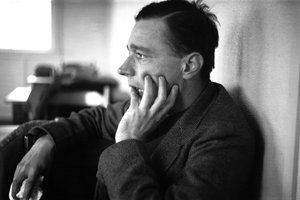
Walker Evans
1903 - 1975 , United States of America
Quick Facts
- Artistic Movement Or Style: Documentary photography
- Artists Or Movements Influenced By This Artist:
- Sherrie Levine
- Social realism
- Artists Who Influenced This Artist:
- Eugène Atget
- August Sander
- Date Of Birth: 1903
- Date Of Death: 1975
- Full Name: Walker Evans
- Nationality: American
- Notable Artworks:
- Let Us Now Praise Famous Men
- Silverware
- Barn with Porch Addition
- Place Of Birth: St. Louis, USA

