 Preview
 Send
Send Share
Share
 Details

 Download
 Similars
 X-Ray
X-Ray Diaporama
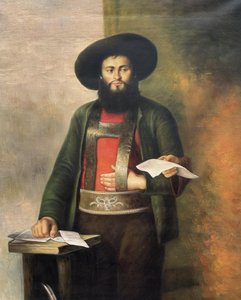
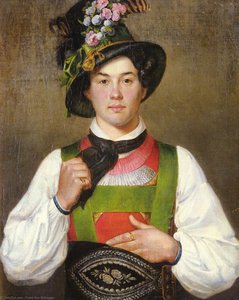
Andreas Hofer - Franz von Defregger


 Read More
Stock Discount Oil Painting Available
In-stock hand-painted oil work ready to ship; add framing when you check out. ()






































 Glass option is only available in size under 110 CM

Andreas Hofer - Franz von Defregger
Stock Discount Oil Painting Available
Reproduction Size
-


Express Shipping
Express Worldwide Shipping. One week. (27 July).
Included
Total Price
$ 142
Artwork Description
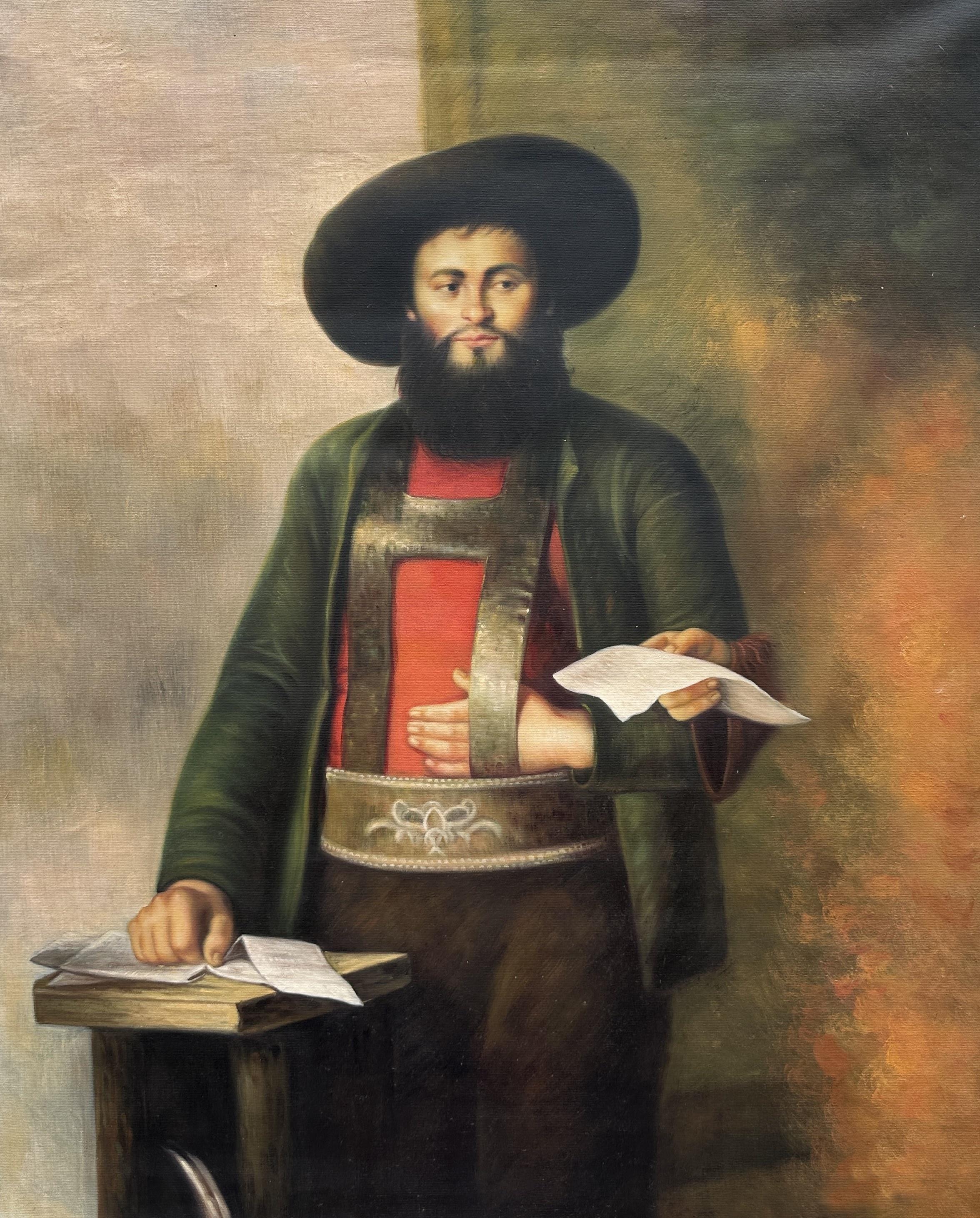
A Hero Forged in Rebellion: Capturing the Spirit of Andreas Hofer
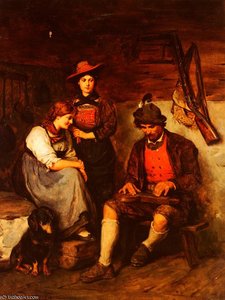
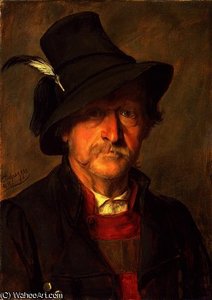
Franz von Defregger’s depiction of Andreas Hofer isn't merely a portrait; it’s an invocation of Tyrolean resilience and the fiery spirit of independence. Painted with a masterful hand, this acrylic reproduction breathes new life into a pivotal moment in Austrian history, showcasing Hofer not as a simple innkeeper, but as a leader imbued with quiet authority and unwavering determination. The artwork firmly resides within the Baroque-influenced tradition, evident in its dramatic chiaroscuro – the stark contrast of light and shadow that sculpts Hofer’s face and clothing, drawing the viewer's eye to his resolute gaze.
Hofer, a man thrust into leadership during the 1809 Tyrolean Rebellion against Bavarian rule, stands as a symbol of resistance. Defregger doesn’t portray him in triumphant battle, but rather in a moment of considered counsel, perhaps planning strategy with his advisors. This choice is profoundly impactful; it emphasizes Hofer's intellect and strategic mind, revealing the weight of responsibility he carried for his people. The earthy palette—rich greens, deep reds, and weathered browns—evokes the rugged landscape of Tyrol itself, grounding the figure in his homeland.
The technical skill on display is remarkable. Each brushstroke, meticulously recreated by ArtsDot’s studio artists, conveys texture and depth, lending a tangible quality to Hofer's attire and the papers he holds—symbols of both his humble origins and his newfound authority. The loose, expressive style hints at the urgency and passion that fueled the rebellion. Collectors will value this piece not only for its historical significance but also for its artistic merit – a stunning example of 19th-century genre painting that captures the essence of Tyrolean identity.
Bring History to Life in Your Home
This hand-painted acrylic reproduction offers more than just aesthetic beauty; it’s an investment in a powerful narrative. Imagine owning a piece that sparks conversation, ignites curiosity, and serves as a constant reminder of courage and self-determination. At ArtsDot.com, we specialize in bringing masterpieces like this one to discerning collectors worldwide.
Don't miss the opportunity to add this iconic portrait to your collection! We offer custom framing options to perfectly complement your space. Browse our selection today and experience the artistry of Franz von Defregger firsthand.
Related Artworks
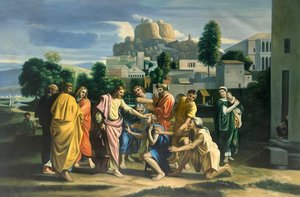
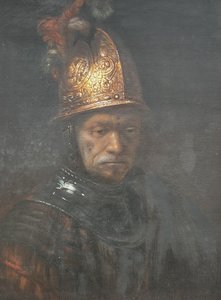
Artist Biography
Early Life and Artistic Awakening in the Tyrolean Landscape
Franz von Defregger emerged from the rugged beauty of Tyrol, Austria, born on April 30, 1835, in the small hamlet of Strohn. His beginnings were steeped in the realities of rural life; his parents, Michael and Maria Defregger, were farmers who instilled in him a deep connection to the land. However, hardship marked his early years—a typhoid epidemic tragically claimed the lives of his mother and two sisters when he was young, casting a long shadow over his childhood. Despite these sorrows, a spark of creativity ignited within him. He displayed an aptitude for music, finding solace and expression in playing the flugelhorn in local bands. Simultaneously, a natural talent for drawing and woodcarving began to blossom as he worked alongside his father on the farm. These early artistic endeavors were self-taught, born from observation and a desire to capture the world around him. The decision to pursue art professionally came after his father’s death in 1858, when Defregger bravely sold the family farm, sacrificing security for the uncertain path of an artist. This act signaled not merely a career change but a profound commitment to his burgeoning passion.Formal Training and the Embrace of Munich
Defregger’s artistic journey led him first to Innsbruck, where he apprenticed with sculptor Michael Stolz, honing his skills in woodcarving. However, Stolz quickly recognized that Defregger's true calling lay in painting, facilitating an introduction to the influential Karl von Piloty at the Academy of Fine Arts in Munich. This marked a pivotal moment. From 1860 to 1861, he attended preparatory classes under Hermann Dyck, laying the groundwork for his formal artistic education. A period of study at the École des Beaux-Arts in Paris followed (1863-1865), where he encountered the Barbizon school and participated in the Salon des Refusés—a testament to his willingness to engage with avant-garde movements. The landscapes and naturalism of the Barbizon painters left an indelible mark on his style, influencing his later depictions of the Tyrolean countryside. Upon returning to Munich, Defregger formally became a pupil of Karl von Piloty, immersing himself in genre art and history painting—the dominant styles of the Munich School. This period solidified his technical skills and shaped his artistic vision, blending realism with narrative storytelling.A Style Rooted in Tyrolean Life and Historical Narrative
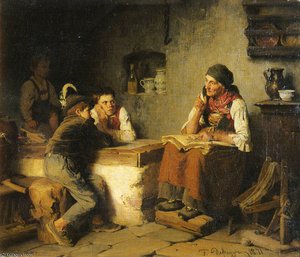
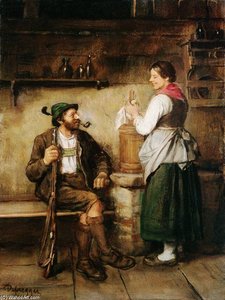
Franz von Defregger’s style is instantly recognizable for its realistic depictions of Tyrolean peasant life and significant historical events. His paintings are imbued with a sentimentality and nostalgia that resonated deeply with audiences of his time, and continues to captivate viewers today. He became closely associated with the Munich School, known for its detailed realism and narrative focus. The influence of the Barbizon school is evident in his landscape paintings, which capture the atmospheric beauty of the Tyrolean mountains and valleys. However, Defregger’s true mastery lay in his ability to portray the lives and stories of ordinary people—farmers, storytellers, musicians—with dignity and empathy. Mother’s Pride (1872) exemplifies this talent, offering a touching glimpse into domestic life, while The Storyteller (1876) beautifully captures the warmth of family connection. He frequently returned to scenes from the Tyrolean national uprising of 1809, particularly focusing on the heroic figure of Andreas Hofer—a subject that allowed him to explore themes of patriotism, resistance, and cultural identity. Andreas Hofer mit seinen Beratern in der Hofburg in Innsbruck (1879) stands as a powerful depiction of this pivotal moment in Tyrolean history. Other notable works like Beauty of the Tyrol (1880) and Der Zitherspieler (1876) further showcase his ability to celebrate the beauty of his homeland and capture the essence of traditional Tyrolean culture.Recognition, Legacy, and Enduring Appeal
Defregger’s talent did not go unnoticed. In 1878, he achieved a significant milestone by becoming a professor of history painting at the Munich Art Academy, a position he held until 1910, influencing generations of aspiring artists. He received numerous accolades throughout his career, including the Order of Merit of Bavaria (1883) and the Prussian Order of Merit for Science and the Arts, solidifying his reputation as one of Austria’s leading painters. His work was prominently displayed at the Century of German Art exhibition in Berlin (1906), further enhancing his national recognition. Among his notable students were Josef Moroder Lusenberg, Hans Perathoner, Lovis Corinth, Walter Thor and Hugo Engl—artists who would go on to make their own contributions to the art world. Beyond his artistic achievements, Defregger demonstrated a deep connection to his homeland by building both a private home in Munich (the Defregger House) and a residence in Bolzano (Villa Defregger). Streets were even named in his honor in Vienna, Bolzano, and Gries am Brenner—a testament to the esteem in which he was held. Franz von Defregger passed away on January 2, 1921, in Munich at the age of 85, leaving behind a rich artistic legacy. He is remembered as a master of genre painting and historical narrative, whose sentimental depictions of Tyrolean life continue to offer a valuable glimpse into 19th-century Austrian culture and identity. His works remain cherished for their realism, emotional depth, and enduring celebration of the Tyrolean spirit.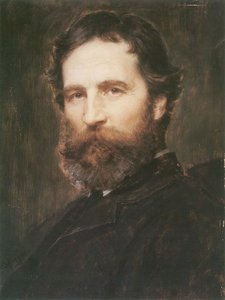
Franz von Defregger
1835 - 1921 , Austria
Quick Facts
- Artistic Movement Or Style: Munich School, Genre painting
- Artists Or Movements Influenced By This Artist:
- Josef Moroder Lusenberg
- Hans Perathoner
- Lovis Corinth
- Artists Who Influenced This Artist:
- Karl von Piloty
- Barbizon school
- Date Of Birth: April 30, 1835
- Date Of Death: January 2, 1921
- Full Name: Franz von Defregger
- Nationality: Austrian
- Notable Artworks:
- Mother’s Pride
- The Storyteller
- A Tyrolean Peasant
- Andreas Hofer in Innsbruck
- Beauty of the Tyrol
- Der Zitherspieler
- Place Of Birth: Strohn, Austria
Related Articles
Acrylic Painting: A Comprehensive Exploration of Technique, History & Contemporary Applications
Explore the world of acrylic painting! Discover its rich history, essential techniques, contemporary applications & renowned artists. Expert guide for beginners to professionals.
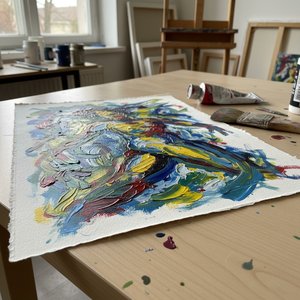
Acrylic on Paper: A Modern Canvas for Contemporary Expression
Explore the versatility of acrylic painting on paper! Discover expert techniques, artist insights & archival practices for creating stunning contemporary art. Learn more at ArtsDot.

The Dramatic Flourish: Exploring the Baroque Movement's Enduring Legacy in Art History
Explore the dramatic world of Baroque art! Discover iconic artists like Caravaggio & Rubens, defining techniques, and its lasting impact on art history. Expert insights for collectors & enthusiasts at ArtsDot.

Baroque Masterpieces: 10 Paintings That Defined an Era |
Journey through the drama & grandeur of Baroque art! Explore 10 masterpieces by Caravaggio, Rembrandt, Rubens & more. Discover stunning oil paintings, rich colors & timeless stories. Find museum-quality reproductions at .

Baroque Drama: Bringing Opulence & Emotion into Contemporary Interiors
Explore the opulent world of Baroque interior design! Discover key elements, modern applications & how to bring dramatic elegance into your home with 's authentic reproductions.