 Preview
 Send
Send Share
Share
 Details

 Download
 Similars
 X-Ray
X-Ray Diaporama
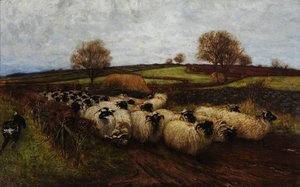
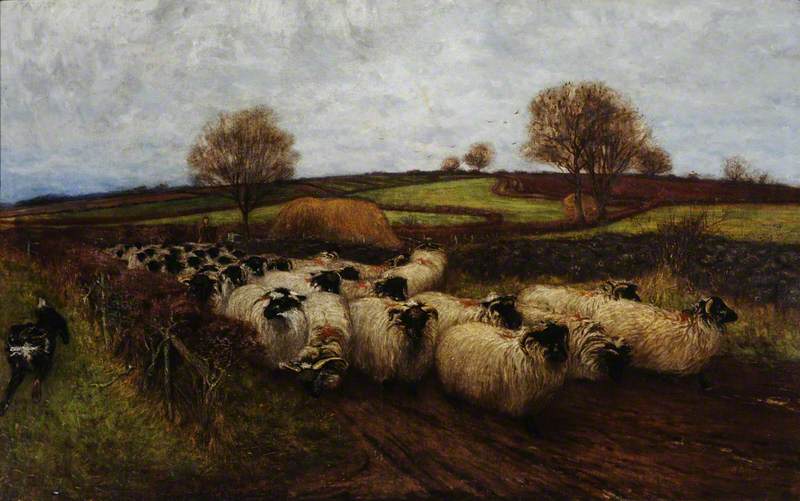
Landscape with Sheep and a Sheep Dog
 1906
1906 115.0 x 180.0 cm
 Read More
Hand Made Oil Reproduction
Hand-painted oil on canvas in your size and frame, made to order by our artists. ( Buy Print Buy Image)




































Pick from our preset sizes that match the artwork's original proportions.

You may enter your own dimensions to fit a specific frame or space. If your selected size does not match the original image's proportions, we will either crop the artwork or extend the painting with additional hand-painted elements. A digital mockup will be sent for your approval before production begins.
Please note that the on-screen preview does not reflect the actual cropping or extension. Only the mockup will accurately show the final composition.
While custom sizes are available, we recommend selecting a dimension from the predefined list to preserve the original proportions.
After order, ArtsDot.com team will email client for instructions and provide a mockup preview
Worldwide Delivery () in 3/4 weeks instead of standard 5 weeks. (23 August). No compromise on quality.

Free Worldwide Express Shipping

High-Quality Linen Canvas

Full Shipping Insurance

Customs Tax Refund Guarantee

True Color Matching Guarantee

60-Day Return Policy (Defects Only)

100% Money-Back Guarantee

Bulk Discount Offer
 Glass option is only available in size under 110 CM

Landscape with Sheep and a Sheep Dog
Reproduction Medium
Reproduction Size
-


Total Price
$ 263
Related Artworks









Artist Biography
Walter Bertram Potter: A Dreamer of the Scottish Moors
Walter Bertram Potter (1872-1918) remains a quietly compelling figure within the broader narrative of early 20th-century British art, particularly as a key associate and sibling to the globally renowned Beatrix Potter. Often overshadowed by his celebrated sister’s whimsical tales and charming illustrations, Potter nonetheless forged a distinctive artistic path—one deeply rooted in the evocative landscapes of Scotland and imbued with a haunting, almost dreamlike quality. His work represents a fascinating intersection of Symbolism, Impressionism, and a distinctly personal vision, revealing an artist who sought to capture not just the outward appearance of nature but its emotional resonance. Born in Kensington, London, into a family of artistic inclination—his father, Rupert Potter, was a barrister and accomplished photographer—Walter’s upbringing provided him with both privilege and a profound connection to the natural world. The Potters frequently embarked on extended holidays to Scotland and the Lake District, experiences that would indelibly shape his artistic sensibilities. These journeys weren't merely vacations; they were immersive explorations of rugged moorlands, shimmering lochs, and ancient woodlands—a landscape he would repeatedly return to in his paintings throughout his career. Unlike Beatrix, who meticulously documented her observations through detailed drawings, Walter’s approach leaned towards capturing the *feeling* of a place – its solitude, its wildness, and its subtle shifts in light and atmosphere.A Style Forged in Memory and Emotion
Potter's artistic style is immediately recognizable for its atmospheric depth and muted color palette. He rarely employed bright, vibrant hues, instead favoring a restrained range of browns, greys, blues, and greens to create a sense of melancholy and introspection. His brushwork is loose and expressive, often employing broken strokes and washes to suggest the movement of wind and water, or the texture of heather-covered hillsides. Influences on his work are diverse—the Symbolist painters like Gustave Moreau and Odilon Redon, with their exploration of myth and dream imagery, are evident in the ethereal quality of many of his landscapes; the Impressionists, particularly Turner and Constable, contributed to his focus on capturing fleeting moments of light and atmosphere. However, Potter’s work transcends simple imitation, developing a unique voice that is both deeply personal and profoundly evocative.Key Works and Recurring Themes
Among Potter's most notable works are paintings like “Moorland Landscape with Bare Trees,” a haunting depiction of a windswept moor rendered in somber tones and imbued with a palpable sense of loneliness. This piece, along with others such as "The Highland Stream" and various depictions of Scottish lochs, exemplifies his ability to convey the emotional weight of the landscape—it’s not merely a visual representation but an exploration of mood and memory. Recurring themes in his work include solitude, isolation, the passage of time, and the relationship between humanity and nature. He frequently depicted figures – often solitary shepherds or travelers – set against vast, dramatic landscapes, suggesting a sense of vulnerability and connection to something larger than oneself. His later works also explored the beauty of the Scottish Highlands, capturing their rugged grandeur with a sensitivity that belied his reserved demeanor.A Life Interrupted
Walter Bertram Potter’s life was tragically cut short at the age of 46 in 1918, succumbing to a stroke while working in his garden on his family's farm near Ancrum, Scotland. His marriage to Mary Welsh Scott, a woman from a vastly different social background than his own, proved difficult and ultimately led to estrangement from his family. Despite this personal turmoil, Potter continued to paint throughout his life, producing a significant body of work that offers a poignant glimpse into the soul of a sensitive and observant artist. His legacy is one of quiet beauty—a testament to the power of art to capture not just what we see but what we *feel* about the world around us.Historical Significance
While often relegated to the footnotes of Beatrix Potter’s story, Walter Bertram Potter deserves recognition as a significant figure in late 19th and early 20th-century British art. His work represents a subtle yet powerful counterpoint to his sister's more commercially successful illustrations—a testament to the enduring appeal of atmospheric landscapes and emotionally resonant imagery. His paintings provide valuable insight into the artistic sensibilities of the era, reflecting both the influence of Symbolism and Impressionism while forging a distinctly personal style. Further research continues to uncover details about his life and work, solidifying his place as an artist worthy of renewed appreciation.
walter bertram potter
1872 - 1918
Quick Facts
- Artistic Movement Or Style: Symbolist, Landscape
- Artists Or Movements Influenced By This Artist: ['Art Nouveau']
- Artists Who Influenced This Artist: ['Beatrix Potter']
- Date Of Birth: March 14, 1872
- Date Of Death: June 22, 1918
- Full Name: Walter Bertram Potter
- Nationality: British
- Notable Artworks:
- Moorland Landscape
- Various landscapes
- Place Of Birth: Kensington, London, UK