 Preview
 Send
Send Share
Share
 Details

 Download
 Similars
 X-Ray
X-Ray Diaporama
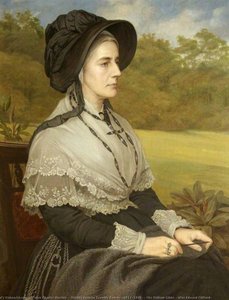
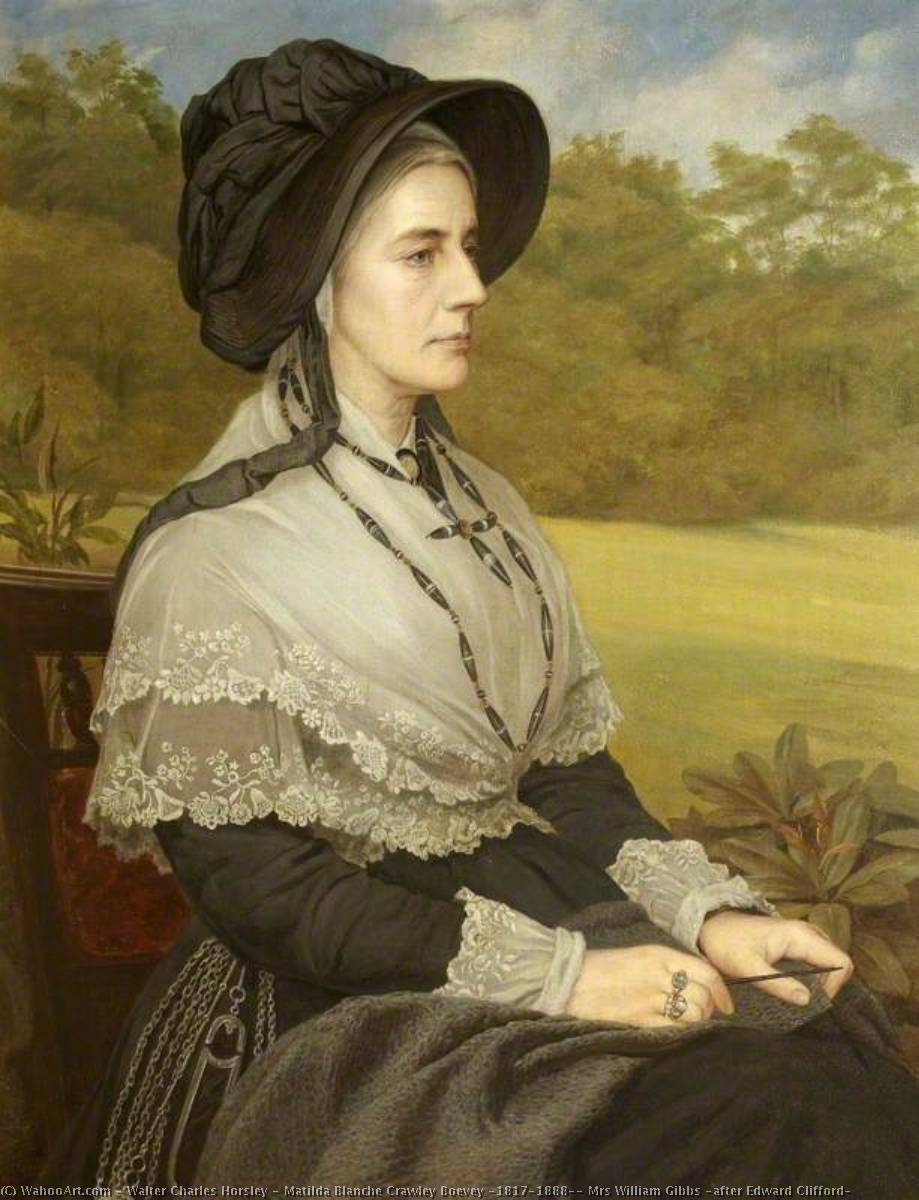
Matilda Blanche Crawley Boevey (1817–1888), Mrs William Gibbs (after Edward Clifford)
 1888
1888 89.0 x 69.0 cm
 National Trust
 Read More
Giclée / Art Print
Museum-quality giclée or canvas print with fast production and flexible finish options. ( Buy Hand Made Painting Buy Image)




































Pick from our preset sizes that match the artwork's original proportions.

You may enter your own dimensions to fit a specific frame or space. If your selected size does not match the original image's proportions, we will either crop the artwork or extend the image with a mirrored or solid-fill edge. A digital mockup will be sent for your approval before production begins.
Please note that the on-screen preview does not reflect the actual cropping or extension. Only the mockup will accurately show the final composition.
While custom sizes are available, we recommend selecting a dimension from the predefined list to preserve the original proportions.
Worldwide Delivery () in 2 weeks instead of standard 4/5 weeks. (28 August)

Free Worldwide Express Shipping

High-Quality Linen Canvas

Full Shipping Insurance

Customs Tax Refund Guarantee

True Color Matching Guarantee

60-Day Return Policy (Defects Only)

100% Money-Back Guarantee

Bulk Discount Offer
 Glass option is only available in size under 110 CM

Matilda Blanche Crawley Boevey (1817–1888), Mrs William Gibbs (after Edward Clifford)
Giclée / Art Print
Reproduction Size
-


Total Price
$ 63
Related Artworks










Artist Biography
The Visionary of Victorian Cairo: The Life and Art of Walter Charles Horsley
In the golden age of British Orientalism, few artists possessed the ability to weave a tapestry of light and culture as intimately as Walter Charles Horsley. Born in 1848 in the leafy enclave of Dulwich Village, Surrey, Horsley was destined for a life shaped by the brush and the canvas. He was born into a lineage of profound artistic significance; his father, the celebrated John Callcott Horsley, was a master of landscapes and theatrical illustration. This early immersion in a world of fine detail and creative storytelling provided the foundation upon which Walter would build his own unique aesthetic language—one that would eventually transcend the borders of England to capture the vibrant, sun-drenched soul of Egypt.
Horsley’s intellectual journey was as diverse as his subject matter. After receiving formal training at the Dulwich College Art School, he pursued a distinguished academic path at Oxford University. There, he immersed himself in the study of Classics and Philosophy, an endeavor that would later imbue his paintings with a profound sense of historical weight and cultural reverence. This rare combination of rigorous classical education and technical artistic training allowed him to approach his subjects not merely as a traveler observing a foreign land, but as a scholar reconstructing a living history. When he turned his gaze toward the Orient, he did so with an eye for the nuances of tradition, architecture, and the quiet dignity of daily existence.
A Master of Orientalist Realism
While many of his contemporaries sought to romanticize the East through dramatic, often exaggerated narratives or sweeping, idealized landscapes, Horsley chose a more intimate path. He became a chronicler of the ordinary, finding extraordinary beauty in the rhythmic pulse of 19th-century Cairo. His canvases serve as immersive windows into a bygone era, meticulously recreating the bustling street life of Egypt with astonishing accuracy. Through his work, one can almost hear the bargaining of a water seller or witness the playful laughter of children navigating narrow, sun-lit alleys.
His dedication to realism was fueled by an exhaustive research process. Horsley did not merely paint what he saw; he painted what he understood. He studied Egyptian customs and architectural details with the precision of an archaeologist, ensuring that every texture and shadow contributed to a truthful portrayal of society. This commitment to authenticity transformed his paintings into much more than mere art; they became historical documents that capture the essence of Victorian-era Cairo. His focus on the mundane—the artisan at work, the merchant in trade—offered a nuanced and humanizing perspective on a culture often viewed through a lens of exotic mystery by the Western world.
Technique, Light, and Lasting Legacy
The magic of a Horsley masterpiece lies in its remarkable luminosity and tactile depth. To achieve this, he employed a sophisticated technique involving the layering of thin, translucent glazes over toned canvases. This method allowed light to penetrate the paint layers and reflect back, creating a glowing effect that mimicked the intense, shimmering heat of the Egyptian sun. He was also a master of texture, frequently utilizing a palette knife to apply thicker surfaces that added a physical dimension to his works, making the stone walls of Cairo or the heavy fabrics of local attire feel palpably real to the viewer.
The historical significance of Walter Charles Horsley resides in his ability to bridge the gap between the academic traditions of Britain and the vibrant realities of the Orient. His work remains a vital part of the Orientalist canon, celebrated for its refusal to succumb to mere caricature. Instead, he left behind a legacy of respect and meticulous observation. Today, his paintings continue to enchant collectors and historians alike, serving as evocative reminders of a time when art was used to explore the profound connections between different worlds, captured through the steady, loving hand of a true master.
Quick Facts
- Artistic Movement Or Style: Orientalist Art
- Artists Who Influenced This Artist: John Callcott Horsley
- Full Name: Walter Charles Horsley
- Nationality: British
- Notable Artworks:
- The Water Seller (A Cairo Street)
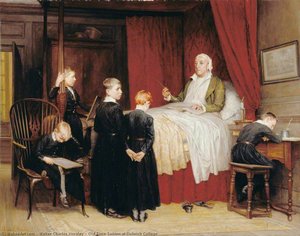
- Old Time Tuition at Dulwich College
- Place Of Birth: England