 Preview
 Send
Send Share
Share
 Details

 Download
 Similars
 X-Ray
X-Ray Diaporama
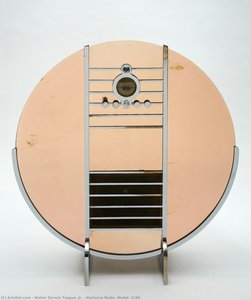
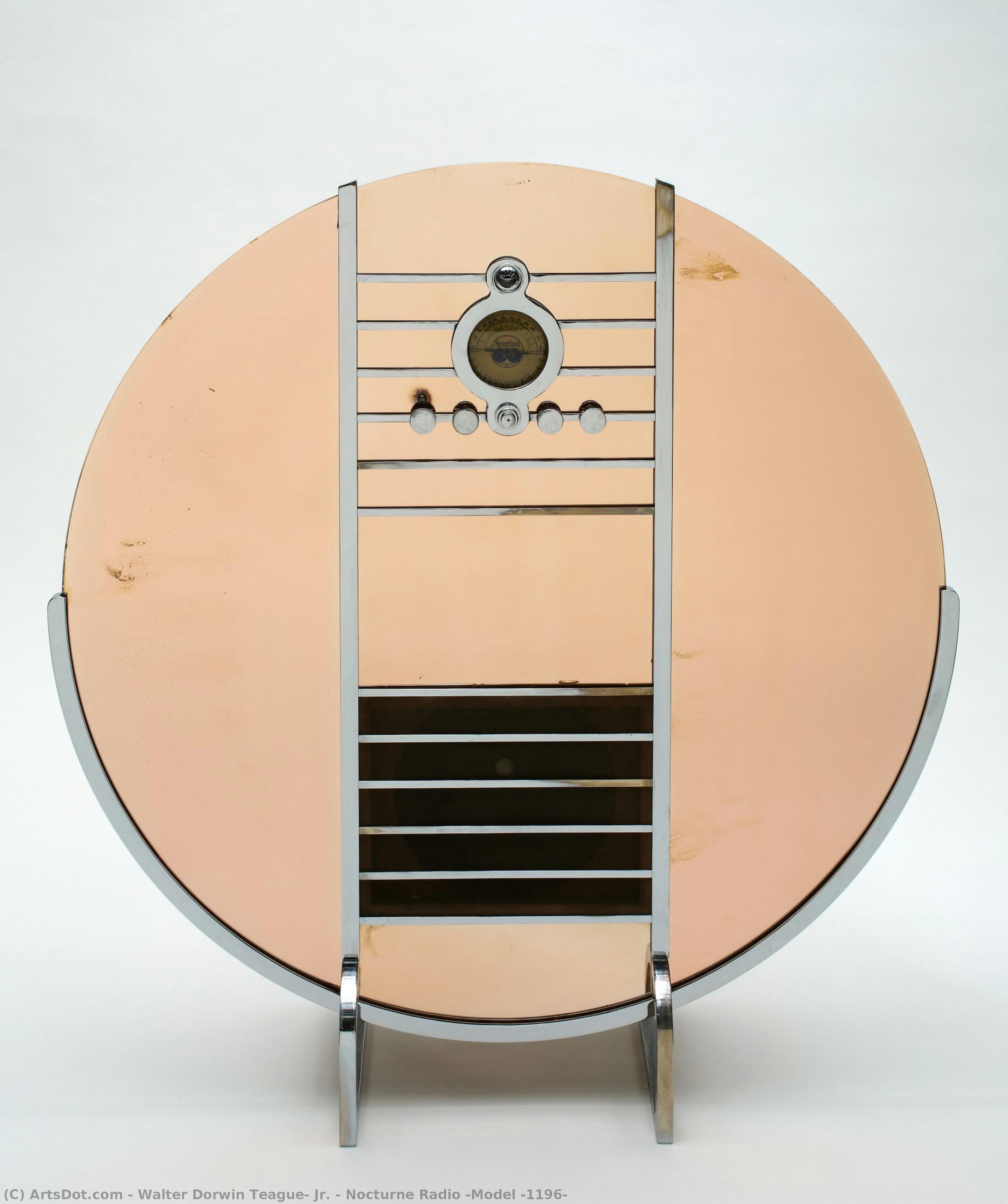
Nocturne Radio (Model #1196)
 1935
1935 116.0 x 109.0 cm
 Read More
Giclée / Art Print
Museum-quality giclée or canvas print with fast production and flexible finish options. ( Buy Hand Made Painting Buy Image)




































Pick from our preset sizes that match the artwork's original proportions.

You may enter your own dimensions to fit a specific frame or space. If your selected size does not match the original image's proportions, we will either crop the artwork or extend the image with a mirrored or solid-fill edge. A digital mockup will be sent for your approval before production begins.
Please note that the on-screen preview does not reflect the actual cropping or extension. Only the mockup will accurately show the final composition.
While custom sizes are available, we recommend selecting a dimension from the predefined list to preserve the original proportions.
Worldwide Delivery () in 2 weeks instead of standard 4/5 weeks. (24 August)

Free Worldwide Express Shipping

High-Quality Linen Canvas

Full Shipping Insurance

Customs Tax Refund Guarantee

True Color Matching Guarantee

60-Day Return Policy (Defects Only)

100% Money-Back Guarantee

Bulk Discount Offer
 Glass option is only available in size under 110 CM

Nocturne Radio (Model #1196)
Giclée / Art Print
Reproduction Size
-


Total Price
$ 63
Related Artworks









Artist Biography
Early Life and Artistic Foundations
Walter Dorwin Teague, Jr., born December 18, 1883, in the quiet Indiana town of Pendleton, emerged from a background steeped in both practicality and artistic sensibility. His parents, Rev. M.A. Teague and Hettie Towell Teague, instilled in him a strong work ethic rooted in their Quaker community and his father’s life as a circuit-riding Methodist minister. This upbringing fostered an appreciation for simplicity and honest craftsmanship—values that would profoundly shape Teague's design philosophy later in life. Even amidst the modest circumstances of a household with five siblings, a love for learning flourished, nurtured by a home filled with books. From a young age, Teague demonstrated a natural aptitude for art, finding early opportunities to hone his skills as a handyman at the local newspaper. This experience wasn’t merely about practical work; it was an immersion in visual communication, where he learned the intricacies of typography and illustration—skills that would become foundational to his career.The New York Years and Transition to Industrial Design
In 1903, driven by a desire to refine his artistic talents, Teague ventured to New York City, enrolling at the Art Students League. For four formative years, he immersed himself in painting and drawing, developing a strong technical foundation. However, it was upon entering the professional world that Teague’s path began to diverge from traditional fine art. He secured a position with Calkins and Holden, an advertising firm, where his artistic skills were quickly recognized for their ability to capture attention and convey messages effectively. This marked a crucial turning point—a shift towards applying artistry to commercial ends. As the 1920s progressed, Teague found himself increasingly sought after not just for his aesthetic sensibilities but also for his insights into how products *should* be designed. Clients began requesting his advice on product form and function, signaling a growing demand for what would soon become known as industrial design. This burgeoning field resonated with Teague’s belief in the power of thoughtful design to improve everyday life.Establishing a Legacy: Teague Designs
A pivotal moment arrived in 1926 when, at the age of 43, Walter Dorwin Teague established his own industrial design consultancy, initially known as Walter Dorwin Teague Associates. This wasn’t simply starting a business; it was an act of defining and legitimizing a profession that was still in its infancy. He recognized the need for designers to be involved not just in the aesthetics of products but also in their functionality, usability, and manufacturing processes. A landmark contract with Eastman Kodak in 1928 proved instrumental to the firm’s success. Teague designed numerous popular cameras for Kodak, fostering a long-lasting relationship built on innovation and aesthetic appeal. This collaboration demonstrated his ability to blend artistic vision with engineering realities—a hallmark of his approach. Beyond Kodak, Teague's portfolio rapidly expanded to encompass diverse projects: the sleek lines of the Marmon 16 automobile (1930), captivating exhibits for the 1939-40 New York World’s Fair (including the iconic Ford Building), and designs for industry giants like Boeing, Texaco, and Steuben Glass.A Philosophy of “Visible Rightness”
Teague's design philosophy was deeply rooted in a belief that well-designed objects should be both beautiful and functional—what he termed "heirlooms out of mass-produced objects." He sought to create designs that were not merely stylish but also possessed an inherent sense of *rightness*, where form followed function seamlessly. This aesthetic sensibility was heavily influenced by the Art Deco movement, characterized by sleek lines, geometric shapes, and bold colors—elements prominently featured in his work, such as the celebrated Nocturne Radio (Model #1196). However, Teague wasn’t simply mimicking a style; he was adapting it to serve a larger purpose: to elevate the quality of life through thoughtful design. His designs for Boeing's Stratocruiser aircraft, Steinway pianos with steel legs, and office machines all exemplify this commitment to blending aesthetics with practicality. He believed that beauty wasn’t superficial but rather an inherent quality arising from intelligent design solutions.Pioneering a Profession and Lasting Influence
Walter Dorwin Teague is rightfully regarded as a pioneer in establishing industrial design as a legitimate profession in the United States, alongside contemporaries like Norman Bel Geddes and Raymond Loewy. He didn’t just practice design; he actively worked to define it, advocating for its recognition and standardization. In 1944, he played a key role in founding The Society of Industrial Designers (SID), serving as its first president—an organization dedicated to elevating the profession's status and fostering collaboration among designers. Furthermore, Teague was instrumental in securing legal recognition for industrial design through a landmark court case in 1941, solidifying its distinct identity from both engineering and art. His legacy extends far beyond his individual designs; it lies in the foundation he laid for an entire field. The firm he founded, Teague, continues to thrive today as a leading global design consultancy, carrying on his tradition of innovation and user-centered design. Examples of his work are held in prominent museum collections like the Tula Regional Art Museum and the Nemo Science Museum, demonstrating his enduring contribution to art and design history. His influence resonates even within contemporary artistic circles, with connections noted to figures like Lucian Freud, Jaime Hayon, and Inventum (Wim Rietveld), proving that Teague’s vision continues to inspire generations of creators.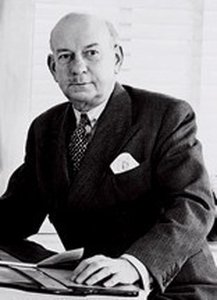
walter dorwin teague, jr.
1883 - 1960 , United States of America
Quick Facts
- Artistic Movement Or Style: Art Deco, Industrial Design
- Artists Or Movements Influenced By This Artist:
- Lucian Freud
- Jaime Hayon
- Inventum
- Date Of Birth: December 18, 1883
- Date Of Death: December 5, 1960
- Full Name: Walter Dorwin Teague Jr.
- Nationality: American
- Notable Artworks:
- Nocturne Radio (Model #1196)
- Marmon 16 automobile
- Steinway piano
- Place Of Birth: Pendleton, USA