 Preview
 Send
Send Share
Share
 Details

 Download
 Similars
 X-Ray
X-Ray Diaporama
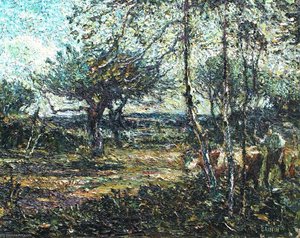
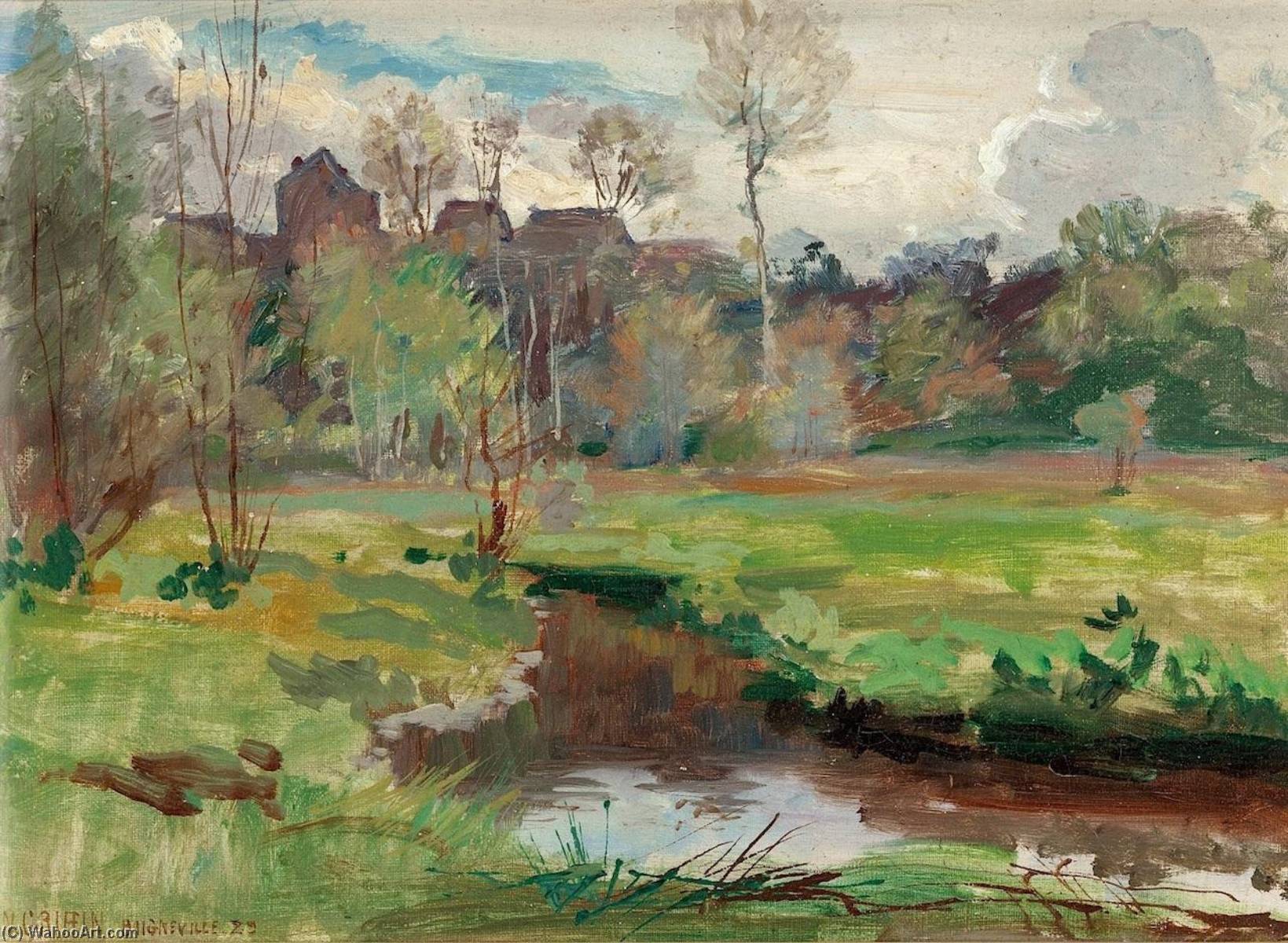
Landscape Boigneville, France,

 Read More
Hand Made Oil Reproduction
Hand-painted oil on canvas in your size and frame, made to order by our artists. ( Buy Print Buy Image)




































Pick from our preset sizes that match the artwork's original proportions.

You may enter your own dimensions to fit a specific frame or space. If your selected size does not match the original image's proportions, we will either crop the artwork or extend the painting with additional hand-painted elements. A digital mockup will be sent for your approval before production begins.
Please note that the on-screen preview does not reflect the actual cropping or extension. Only the mockup will accurately show the final composition.
While custom sizes are available, we recommend selecting a dimension from the predefined list to preserve the original proportions.
After order, ArtsDot.com team will email client for instructions and provide a mockup preview
Worldwide Delivery () in 3/4 weeks instead of standard 5 weeks. (27 August). No compromise on quality.

Free Worldwide Express Shipping

High-Quality Linen Canvas

Full Shipping Insurance

Customs Tax Refund Guarantee

True Color Matching Guarantee

60-Day Return Policy (Defects Only)

100% Money-Back Guarantee

Bulk Discount Offer
 Glass option is only available in size under 110 CM

Landscape Boigneville, France,
Reproduction Medium
Reproduction Size
-


Total Price
$ 263
Related Artworks









Artist Biography
The Atmospheric Legacy of Walter Parsons Shaw Griffin
In the grand tapestry of American art history, few threads weave together the somber, tonal depths of the Barbizon School and the luminous, fleeting brilliance of Impressionism as gracefully as Walter Parsons Shaw Griffin. Born in 1861, Griffin’s life was a journey through the most transformative landscapes of the late nineteenth and early twentieth centuries. His artistic soul was shaped by a unique lineage; though often associated with the vibrant art colonies of America, his roots reached back to the rugged coastlines of Maine, where his father carved ship figureheads. This early exposure to craftsmanship and the raw textures of nature provided a foundational reverence for form and substance that would later define his mastery of the landscape.
Griffin’s formal education was a rigorous pursuit of excellence, beginning with scholarship studies at the School of the Museum of Fine Arts in Boston and continuing through the prestigious Academy school in New York City. However, it was his migration to France in 1887 that truly ignited his creative spirit. Immersed in the atmosphere of Paris and studying at the École des Beaux-Arts, Griffin found himself at the epicenter of an artistic revolution. Settling in Fleury, he wandered the Barbizon forests, absorbing the profound lessons of Jean-François Millet and Frédéric Bazaltzki. From these masters, he learned the art of the "luminist" ideal—the ability to capture the weight of shadows and the quiet, spiritual resonance of a landscape through careful tonal harmony.
A Synthesis of Light and Shadow
As his career matured, Griffin demonstrated a remarkable ability to evolve without abandoning his classical foundations. While his heart remained tethered to the earthy, grounded palettes of the Barbizon tradition, he could not resist the shimmering allure of Impressionism. The works of Claude Monet and Camille Pissarro offered him a new vocabulary of light—one composed of broken brushstrokes and vibrant, complementary colors. This stylistic synthesis became his hallmark. In his paintings, one might find the structural integrity and moody atmosphere of a traditional landscape suddenly interrupted by a sudden burst of sunlight or the prismatic flicker of light dancing upon water.
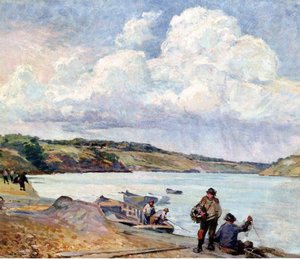
This duality is perhaps most beautifully realized in his depictions of various locales across North America and Europe. Whether capturing the rugged, rural life in Fishermen, Quebec, Canada or the serene, sun-drenched moments of Morning Sunlight, Summer, Grey, Maine, Griffin’s technique remained deeply personal. He utilized layering to create depth, allowing light to appear as if it were emanating from within the canvas itself. His ability to blend the heavy, emotive textures of his early training with the airy, perceptual freedom of Impressionism allowed him to document not just a place, but a feeling—a fleeting moment of atmospheric truth.
The Educator and the Old Lyme Legacy
Beyond the solitary act of painting, Griffin played a vital role in nurturing the next generation of American talent. His influence extended far beyond his own easel through his leadership in prominent art communities. In the late 1890s, he established his own summer painting school in Quebec City, and later, he became a cornerstone of the legendary Old Lyme Art Colony in Connecticut. As an instructor, he passed on his sophisticated understanding of light and color, helping to solidify the American Impressionist movement as a distinct and powerful force.
His personal life was also intertwined with the artistic circles of his time; he was married to the notable British-born American journalist and photographer Lillian Baynes Griffin, a partnership that reflected the cosmopolitan nature of his existence. Despite the shifts in his residence—moving between the United States, France, and various coastal retreats—his commitment to the observation of nature remained unshakable. Today, the significance of Walter Griffin lies in this very bridge he built: a connection between the old world's reverence for tradition and the new world's celebration of light, leaving behind a body of work that remains as luminous and evocative as a summer morning.
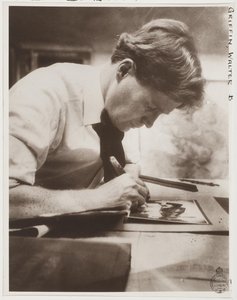
walter griffin
1861 - 1935
Quick Facts
- Artistic Movement Or Style: Barbizon School & Impressionism
- Artists Or Movements Influenced By This Artist: ['Impressionists']
- Artists Who Influenced This Artist: ['Jean-Baptiste Camille Corot']
- Date Of Birth: 1861
- Date Of Death: 1935
- Full Name: Walter Parsons Shaw Griffin
- Nationality: American
- Notable Artworks: ['Liliana Baynes']
- Place Of Birth: New York City, USA