 Preview
 Send
Send Share
Share
 Details

 Download
 Similars
 X-Ray
X-Ray Diaporama
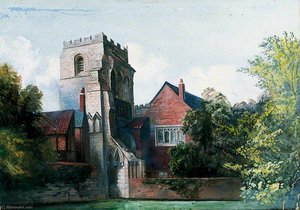
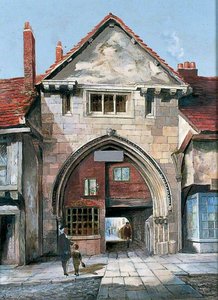
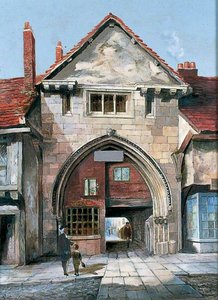
The Gatehouse, Holy Trinity Priory, York
 1898
1898 56.0 x 41.0 cm
 Read More
Hand Made Oil Reproduction
Hand-painted oil on canvas in your size and frame, made to order by our artists. ( Buy Print Buy Image)




































Pick from our preset sizes that match the artwork's original proportions.

You may enter your own dimensions to fit a specific frame or space. If your selected size does not match the original image's proportions, we will either crop the artwork or extend the painting with additional hand-painted elements. A digital mockup will be sent for your approval before production begins.
Please note that the on-screen preview does not reflect the actual cropping or extension. Only the mockup will accurately show the final composition.
While custom sizes are available, we recommend selecting a dimension from the predefined list to preserve the original proportions.
After order, ArtsDot.com team will email client for instructions and provide a mockup preview
Worldwide Delivery () in 3/4 weeks instead of standard 5 weeks. (22 August). No compromise on quality.

Free Worldwide Express Shipping

High-Quality Linen Canvas

Full Shipping Insurance

Customs Tax Refund Guarantee

True Color Matching Guarantee

60-Day Return Policy (Defects Only)

100% Money-Back Guarantee

Bulk Discount Offer
 Glass option is only available in size under 110 CM

The Gatehouse, Holy Trinity Priory, York
Reproduction Medium
Reproduction Size
-


Total Price
$ 263
Related Artworks








Artist Biography
The Chronicler of Stone: The Life and Legacy of Walter Harvey Brook
In the quiet, shadowed corners of medieval York, where the weight of history is felt in every weathered stone and arched gateway, the spirit of Walter Harvey Brook lives on through his meticulous artistry. Born in 1863 in Salford, Lancashire, Brook was a man whose soul was deeply tethered to the past. His early life was shaped by the antiquarian fervor of his father, an influence that planted the seeds of a lifelong devotion to the preservation of heritage. While his formal education began with the structured discipline of architectural studies in London, his heart was never truly captured by modern blueprints alone; rather, it sought the romantic, crumbling grandeur of antiquity.
Brook’s journey was not one of stationary observation but of global exploration. His travels took him across vast distances—from the vibrant landscapes of Australia and New Zealand to the exotic reaches of Colombo and Aden. These expeditions provided him with a diverse palette of light and scenery, yet they ultimately served to deepen his appreciation for the architectural soul of England. Upon returning to York, he found his true calling. He did not merely paint the city; he documented its very bones, becoming an essential visual historian for the Holy Trinity Priory and the surrounding medieval structures that define the Yorkshire landscape.
A Technique of Devotion and Detail
To look upon a work by Brook is to witness a masterclass in patience. Eschewing the dramatic, sweeping gestures of the Impressionists, Brook embraced a deliberate and painstaking technique. He favored the delicate medium of watercolor, utilizing it to capture the subtle, almost imperceptible tonal shifts found in ancient masonry. His brushwork was never flamboyant; instead, it was an act of reverence, designed to mirror the permanence of the stone he depicted. Through his eyes, a simple window or a heavy archway became a study in light and shadow, often bathed in a diffused, soft glow that evoked a sense of profound, solemn contemplation.
His artistic development was inextricably linked to his architectural training, allowing him to render structural elements with an accuracy that satisfied both the artist and the scholar. Every texture of moss-covered flint or weathered limestone was rendered with such fidelity that his paintings serve as much as archaeological records as they do works of fine art. This commitment to truth in representation ensured that his canvases captured not just the appearance, but the very atmosphere of a bygone era.
The Curator of Memory and Heritage
Beyond the easel, Brook’s impact on the historical landscape of York was monumental. His role as the honorary curator of Medieval Archaeology at the Yorkshire Museum allowed him to merge his artistic vision with scientific preservation. He was not merely a spectator of history but an active participant in its survival. His contributions were multifaceted, ranging from:
- Architectural Documentation: Creating detailed sketches and paintings that preserved the visual state of York’s monuments before the ravages of time or modern intervention.
- Archaeological Stewardship: Assisting with vital excavations and contributing to the scholarly understanding of the region's medieval past.
- Landscape Design: Playing a significant role in the design and preservation of the Museum Gardens, ensuring the aesthetic harmony of the city’s green spaces.
- Restoration Efforts: Spearheading ambitious projects, such as the reconstruction of Jacob's Well, which sought to breathe life back into forgotten landmarks.
When Walter Harvey Brook passed away in 1943, he left behind more than just a collection of beautiful paintings; he left a legacy of stewardship. His works, many of which are now cherished within the collections of the York Museums Trust, remain vital windows into the medieval heart of England. Through his disciplined hand and observant eye, Brook ensured that the grandeur of York’s architectural heritage would never truly fade into the shadows of obscurity.
Walter Harvey Brook
1863 - 1943 , United Kingdom
Quick Facts
- Artistic Movement Or Style: Romanticism
- Artists Or Movements Influenced By This Artist: ['Edwardian Art']
- Artists Who Influenced This Artist: ['Gustave Dore']
- Date Of Birth: 1863 Salford, United Kingdom
- Date Of Death: 1943
- Full Name: Walter Harvey Brook
- Nationality: British
- Notable Artworks: ['The Gatehouse, Holy Trinity Priory']
- Place Of Birth: Yorkshire