 Preview
 Send
Send Share
Share
 Details

 Download
 Similars
 X-Ray
X-Ray Diaporama
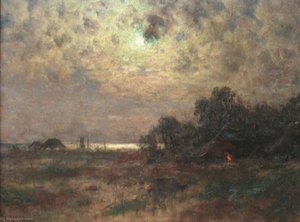
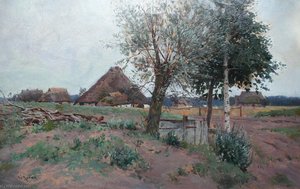
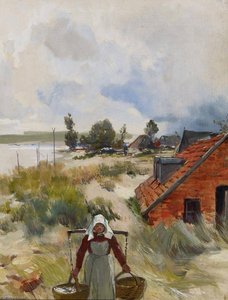
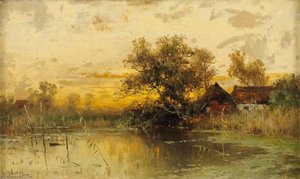
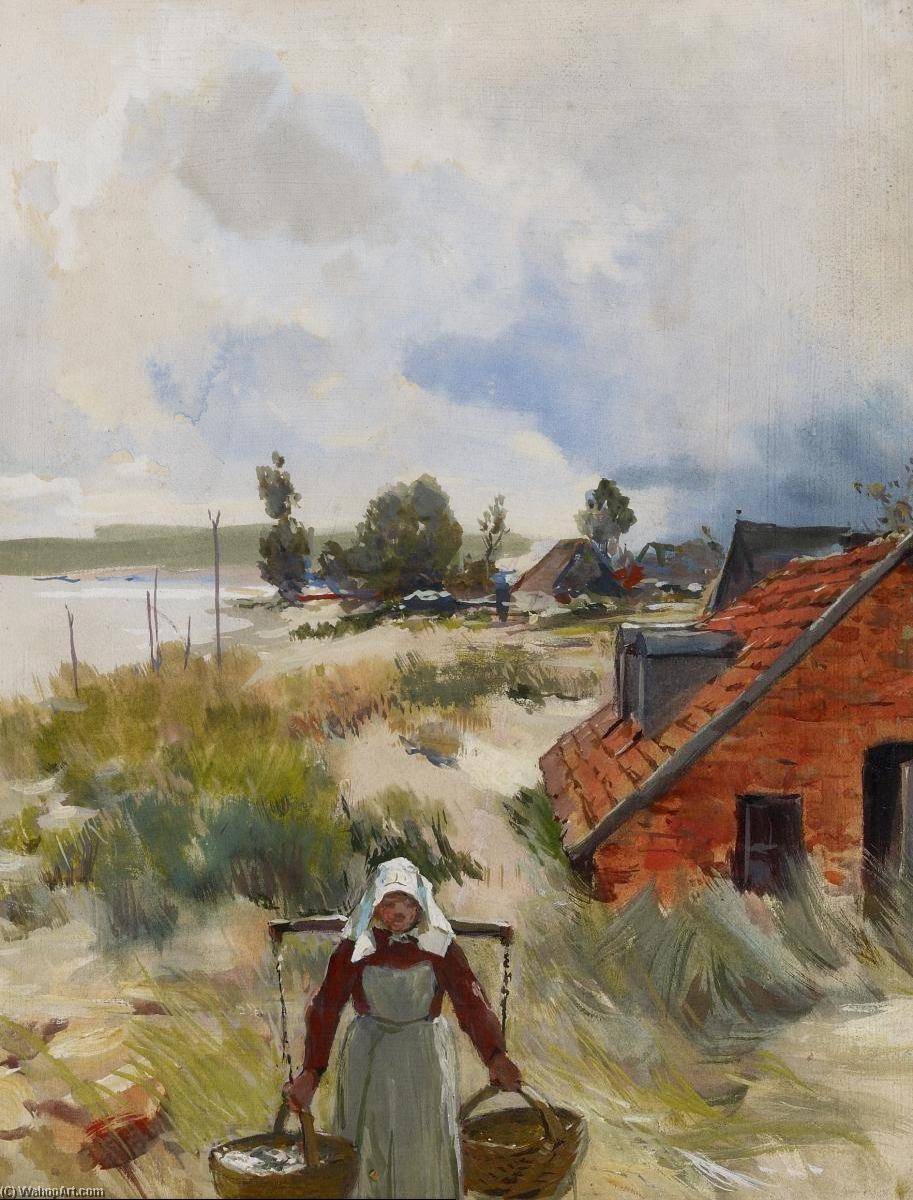
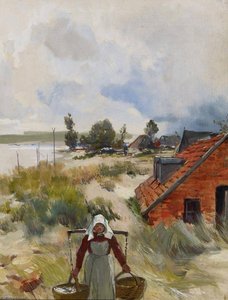
Fishing village on the Baltic Sea
 Read More
Giclée / Art Print
Museum-quality giclée or canvas print with fast production and flexible finish options. ( Buy Hand Made Painting Buy Image)




































Pick from our preset sizes that match the artwork's original proportions.

You may enter your own dimensions to fit a specific frame or space. If your selected size does not match the original image's proportions, we will either crop the artwork or extend the image with a mirrored or solid-fill edge. A digital mockup will be sent for your approval before production begins.
Please note that the on-screen preview does not reflect the actual cropping or extension. Only the mockup will accurately show the final composition.
While custom sizes are available, we recommend selecting a dimension from the predefined list to preserve the original proportions.
Worldwide Delivery () in 2 weeks instead of standard 4/5 weeks. (2 September)

Free Worldwide Express Shipping

High-Quality Linen Canvas

Full Shipping Insurance

Customs Tax Refund Guarantee

True Color Matching Guarantee

60-Day Return Policy (Defects Only)

100% Money-Back Guarantee

Bulk Discount Offer
 Glass option is only available in size under 110 CM

Fishing village on the Baltic Sea
Giclée / Art Print
Reproduction Size
-


Total Price
$ 63
Related Artworks









Artist Biography
The Luminous Legacy of Walter Moras
Born in Berlin on January 20, 1856, Walter Moras emerged as a master of the landscape, a painter whose brush possessed the rare ability to translate the quietest whispers of nature into enduring visual poetry. While often associated with the vibrant art scenes of Germany, his spirit wandered far beyond the city limits, finding its true home in the serene vistas of the Baltic coast and the frost-kissed reaches of winter landscapes. His artistic journey began under the watchful eye of the esteemed marine and landscape painter Hermann Eschke, whose mentorship provided Moras with a foundational mastery of light and atmosphere. This early training in Berlin’s prestigious studios allowed him to stage his debut at the Prussian Academy of Arts in 1876, marking the arrival of a talent that would soon captivate audiences from Munich to Bremen.
The evolution of Moras’s style is a testament to his deep connection with the changing seasons and the subtle shifts in natural light. Though his roots were firmly planted in the German tradition, his work breathed with an Impressionistic vitality that sought to capture more than just a static scene; he sought to capture a feeling. In his early years, his focus often rested on the meticulous detail of the world around him, yet as his career matured, he became renowned for large-format autumnal scenes that glowed with warm, radiant hues. These canvases, bathed in the golden light of falling leaves, showcased a sophisticated use of color theory that brought a palpable warmth to the viewer. Conversely, his winter landscapes offered a different kind of magic—a delicate balance of cool, crisp tones punctuated by unexpected warmth, reflecting a soul deeply attuned to the melancholic beauty of the natural cycle.
A Wanderer Through Light and Landscape
Moras was never a painter confined to a single studio or a singular view. His wanderlust served as his greatest inspiration, leading him through the craggy, breathtaking landscapes of the German island of Rügen and into the lush, watery corridors of the Spreewald. He sought out the quietude of rural Brandenburg, finding beauty in the simplicity of village life and the stillness of lakes at dusk. His travels even took him beyond German borders to the rugged terrains of Norway, the lowlands of the Netherlands, and the sun-drenched landscapes of Italy. Each location left an indelible mark on his palette, contributing to a body of work that feels both intimately personal and universally evocative.
The technical brilliance of Moras lies in his ability to blend Realism with a touch of poetic abstraction. While his compositions are grounded in a precise observation of the physical world—the way light hits a frozen stream or how shadows stretch across a meadow—there is an underlying sense of emotion that transcends mere documentation. His work often carries a gentle, refined melancholia, a quality that invites the viewer to linger within the frame and contemplate the fleeting nature of time. Through his deliberate use of tone and luminosity, he transformed ordinary landscapes into extraordinary experiences of light and atmosphere.
Historical Significance and Artistic Enduring Spirit
Though Walter Moras passed away on March 6, 1925, his contribution to the landscape genre remains a vital chapter in the history of European art. He stood at a pivotal intersection of movements, bridging the gap between the disciplined realism of his mentors and the emotive, light-driven explorations of the Impressionists. His ability to find grandeur in the small, quiet moments of nature—a moonrise over a tranquil lake or the first snow settling on a woodland path—ensured his place as a significant voice in 19th and early 20th-century painting.
Today, the works of Moras continue to resonate with those who find solace in the natural world. His legacy is found in:
- The mastery of seasonal atmosphere: His unique ability to evoke the specific warmth of autumn and the biting clarity of winter.
- The expansion of landscape boundaries: Moving beyond the urban confines of Berlin to celebrate the rural and coastal beauty of Northern Europe.
- A refined emotional depth: Infusing realistic landscapes with a sense of peace, nostalgia, and quiet wonder.
Quick Facts
- Artistic Movement Or Style: Impressionism
- Artists Or Movements Influenced By This Artist: ['Post-Impressionism']
- Artists Who Influenced This Artist: ['Claude Monet']
- Full Name: Walter Moras
- Nationality: Latvian
- Notable Artworks:
- Moonrise
- Landscape with a Lake
- Place Of Birth: Riga, Latvia