

 Preview
 Send
Send Share
Share
 Details

 Download
 Similars
 X-Ray
X-Ray Diaporama
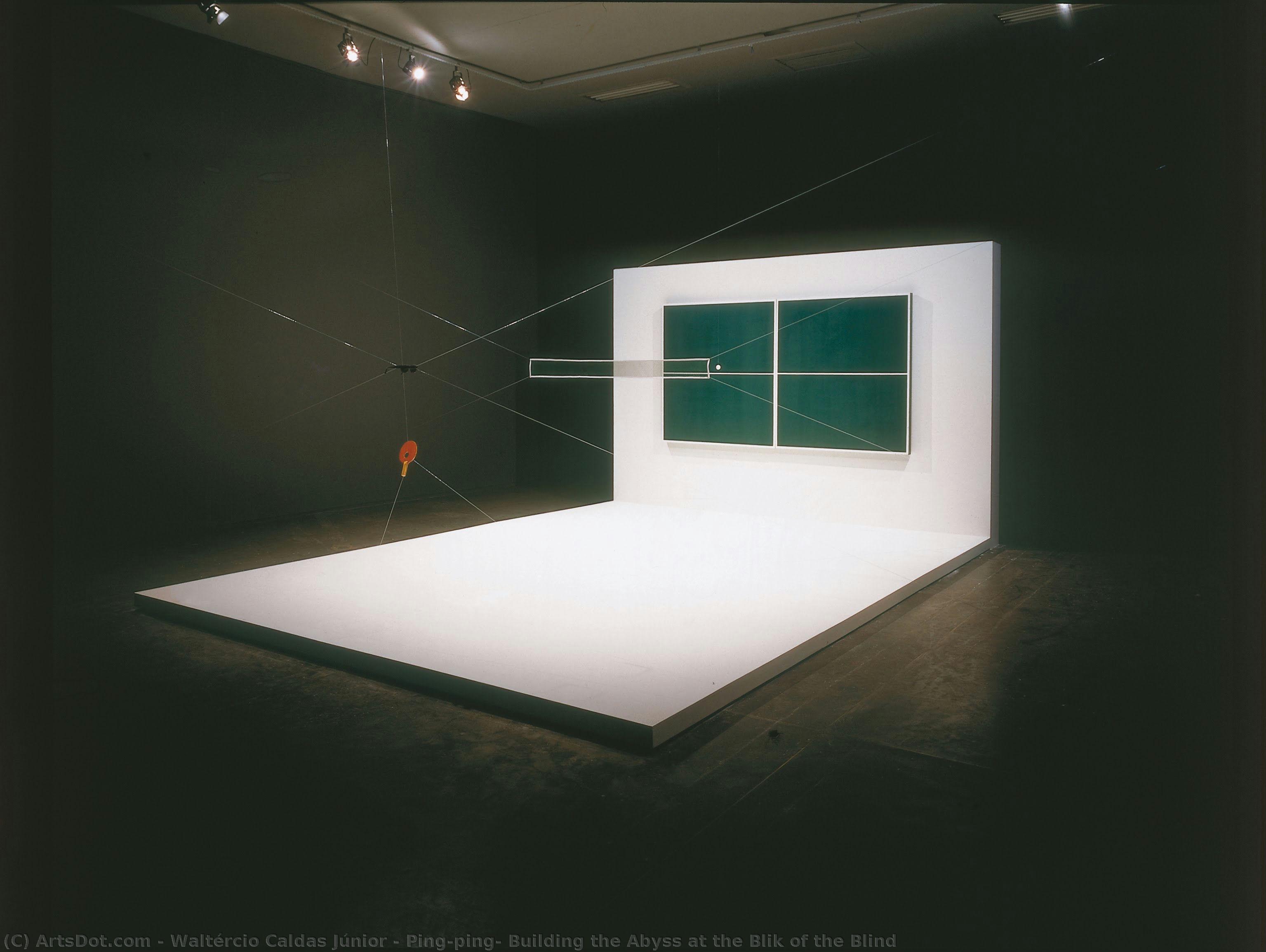
Ping-ping, Building the Abyss at the Blik of the Blind


 Read More
Purchase a high-resolution, enhanced digital image, far superior to the online preview.
Each file is meticulously prepared by our in-house specialists using advanced tools and expert manual retouching. We ensure every image has exceptional clarity, precise color accuracy, and fine detail.
The final file is delivered via email within 72 hours, optimized for immediate use in professional, editorial, and print environments. This is the same quality trusted by top-tier design studios, publishers, and galleries.
Digital Image
Download a high-resolution file for personal display, printing, and creative projects. ( Buy Print Buy Hand Made Painting)
Included in Every Digital Image Order
Expert Digital Delivery, Guaranteed
When you choose ArtsDot.com, you're not just getting an image - you're receiving a professionally enhanced digital artwork, crafted with precision and backed by a satisfaction guarantee. Here's everything that comes with your order, automatically:

Fast Email Delivery
Your high-resolution digital image file will be emailed to you within 72 hours of ordering - ready for immediate use.

AI-Enhanced Digital File
Your artwork is professionally optimized using advanced AI tools and manual editing, ensuring maximum detail, clarity, and color accuracy.

Free Lifetime Re-Delivery
Accidentally deleted or lost your file? No worries - we'll resend it to you anytime, free of charge.

No Import Fees - Ever
Enjoy your artwork instantly with zero customs, duties, or delivery fees - digital downloads are always tax-free.

Color Accuracy Guarantee
We ensure your digital image reflects the original colors as closely as possible using professional tools and color management.

60-Day Satisfaction Guarantee
If you're not satisfied with your digital image, we'll revise it or refund 100% within 60 days - no questions asked.

100% Money-Back Guarantee
Not satisfied? Get a full refund within 60 days of receiving your digital file - no questions asked.

Bulk Order Discounts
Buy 3 images, save 10% - Buy 5, save 15% - Buy 10+, save 20%. Great for creative projects, galleries, and agencies.
Related Artworks








Artist Biography
Waltércio Caldas Júnior: Architect of Absence
Waltércio Caldas Júnior (born November 6, 1946), a name synonymous with Brazilian neo-concretism, is an artist whose work defies easy categorization. More than simply creating sculptures, he crafts experiences—moments of perceptual disruption that challenge our assumptions about space, presence, and the very nature of seeing. Born in Rio de Janeiro, his artistic journey was profoundly shaped by his father’s profession as a civil engineer, exposing him to the meticulous world of blueprints and scale models from an early age – a foundation that would later inform Caldas' own deliberate manipulation of form and perspective. His career, spanning decades and continents, is marked by a relentless pursuit of paradox: a fascination with both what *is* visible and what remains tantalizingly absent.Early Influences and the Neo-Concrete Movement
Caldas’s artistic trajectory was inextricably linked to the rise of neo-concretism in Brazil during the 1960s. This movement, a direct response to the prevailing dominance of figurative art, sought to strip away extraneous elements and focus on the essential qualities of form and material. Influenced by figures like Ivan Serpa, with whom he studied at the Museum of Modern Art in Rio de Janeiro, Caldas embraced this minimalist aesthetic, rejecting representational imagery in favor of geometric abstraction and a heightened awareness of spatial relationships. Crucially, however, neo-concretism wasn’t simply about reduction; it was an exploration of perception itself – how we actively construct meaning through our interaction with the artwork. This emphasis on the viewer's role became a defining characteristic of Caldas’s work throughout his career.The Act of Destruction and Rebirth
A pivotal moment in Caldas’s artistic development occurred in 1967, when at the age of twenty-one, he made the radical decision to destroy every drawing he had ever created. This act, recounted with profound significance by Caldas himself, wasn't a rejection of art but rather a deliberate attempt to initiate a new beginning—a “psychic cleansing” that freed him from the constraints of past experiences and allowed him to approach each subsequent work as an entirely fresh creation. He described this decision as "fundamental," shaping his ongoing commitment to novelty and continuous artistic evolution. This willingness to dismantle previous efforts, to embrace the idea of starting over with each piece, is a core tenet of his practice and informs the inherent dynamism within his oeuvre.Materiality and Paradoxical Forms
Caldas’s sculptures are renowned for their eclectic use of materials – stainless steel, wire, granite, glass, ice, and even blank sheets of paper all find a place in his work. He doesn't simply employ these materials; he actively investigates their inherent qualities—their reflectivity, transparency, solidity, and ephemerality. This careful consideration of materiality is often combined with deliberately ambiguous forms that seem to defy conventional spatial understanding. His pieces frequently incorporate mirrors, not as simple reflective surfaces but as tools for disrupting our perception of depth and creating a sense of layered reality. Works like *Mirror of Light* (1974) exemplify this strategy, presenting a seemingly straightforward reflection that simultaneously exposes the mechanics of illusion and challenges our assumptions about visual truth.Legacy and Recognition
Throughout his career, Caldas has garnered significant recognition within both Brazil and internationally. He represented Brazil at the Venice Biennale in 1997 and 2007, solidifying his position as a leading figure in contemporary art. His work is held in prestigious collections worldwide, including those of the Museum of Modern Art (New York), the National Gallery of Art (Washington D.C.), and the Centre Pompidou (Paris). Notably, he was awarded the Brasília Art Award in 1990 and the Johnnie Walker Award in 1998, further cementing his influence within the art world. His public installations, such as *Omkring* (Around) in Norway, continue to engage viewers with their subtle complexities and profound meditations on perception. Caldas’s legacy extends beyond individual artworks; he represents a vital thread in the history of Brazilian modernism—an artist who consistently pushed the boundaries of artistic expression while remaining deeply attuned to the perceptual experiences of those who encounter his work.
waltércio caldas júnior
1946 - , Brazil
Quick Facts
- Artistic Movement Or Style: Neo-Concretism
- Artists Or Movements Influenced By This Artist: ['Minimalism']
- Artists Who Influenced This Artist: ['Ivan Serpa']
- Date Of Birth: November 6, 1946
- Full Name: Waltércio Caldas Júnior
- Nationality: Brazilian
- Notable Artworks:
- End (Fim)
- Mirror of Light
- Painted Iron
- Place Of Birth: São Paulo, Brazil

