 Preview
 Send
Send Share
Share
 Details

 Download
 Similars
 X-Ray
X-Ray Diaporama
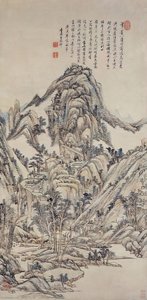
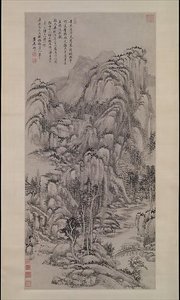
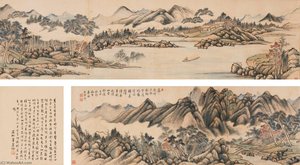
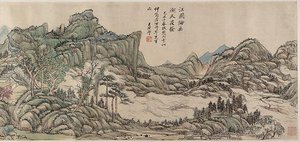
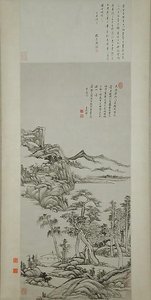
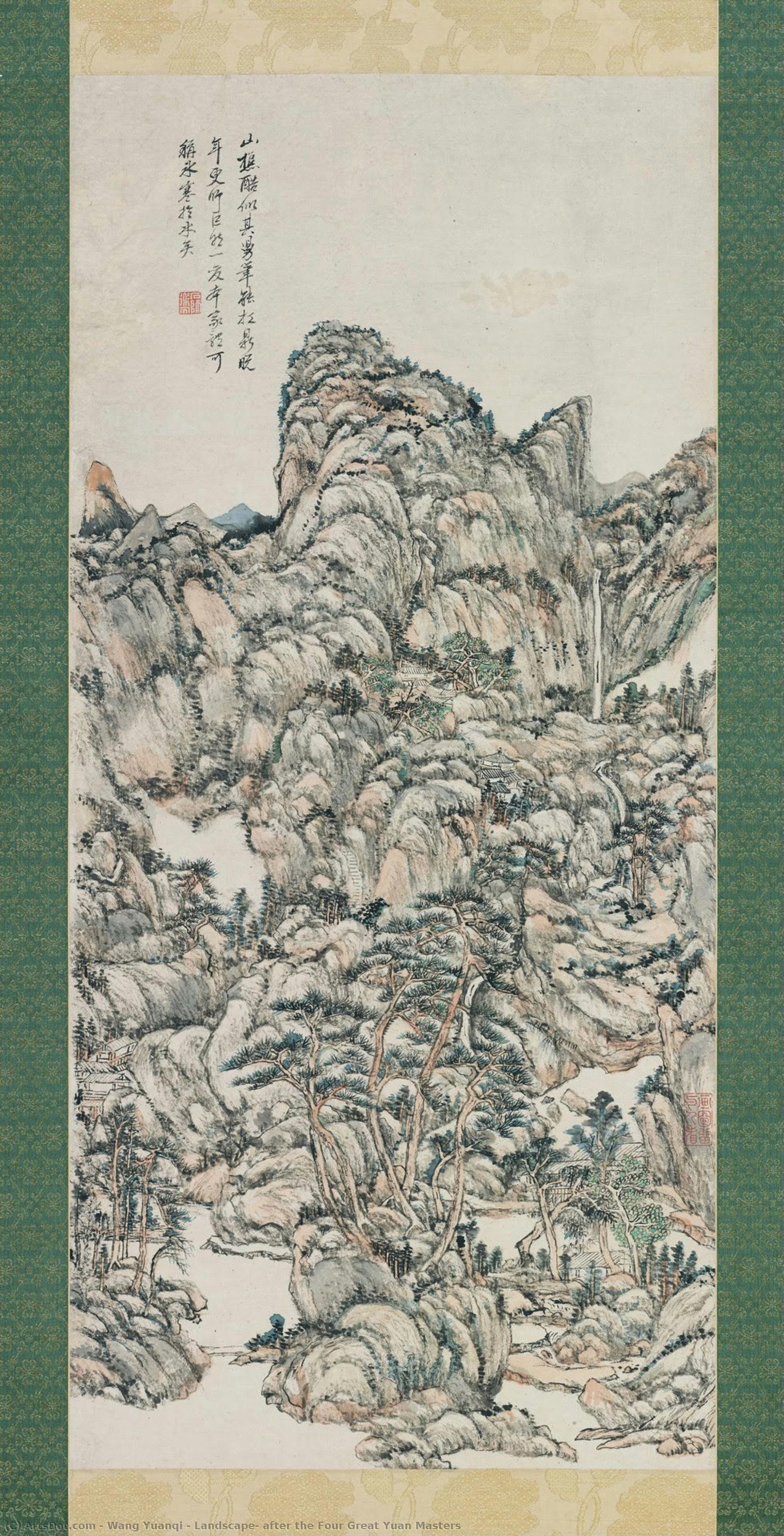
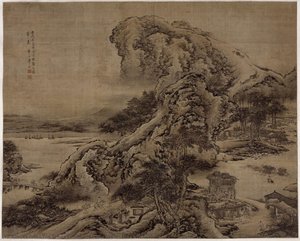
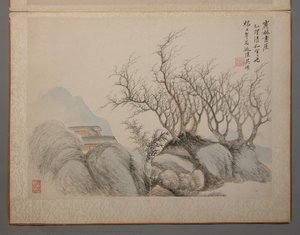
Landscape, after the Four Great Yuan Masters

 Read More
Hand Made Oil Reproduction
Hand-painted oil on canvas in your size and frame, made to order by our artists. ( Buy Print Buy Image)




































Pick from our preset sizes that match the artwork's original proportions.

You may enter your own dimensions to fit a specific frame or space. If your selected size does not match the original image's proportions, we will either crop the artwork or extend the painting with additional hand-painted elements. A digital mockup will be sent for your approval before production begins.
Please note that the on-screen preview does not reflect the actual cropping or extension. Only the mockup will accurately show the final composition.
While custom sizes are available, we recommend selecting a dimension from the predefined list to preserve the original proportions.
After order, ArtsDot.com team will email client for instructions and provide a mockup preview
Worldwide Delivery () in 3/4 weeks instead of standard 5 weeks. (22 August). No compromise on quality.

Free Worldwide Express Shipping

High-Quality Linen Canvas

Full Shipping Insurance

Customs Tax Refund Guarantee

True Color Matching Guarantee

60-Day Return Policy (Defects Only)

100% Money-Back Guarantee

Bulk Discount Offer
 Glass option is only available in size under 110 CM

Landscape, after the Four Great Yuan Masters
Reproduction Medium
Reproduction Size
-


Total Price
$ 263
Artwork Description
A Glimpse into Qing Dynasty Landscape Tradition: Wang Yuanqi's Homage to the Masters
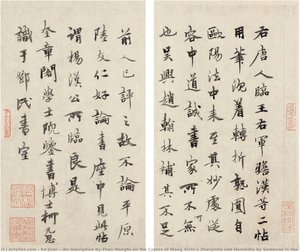
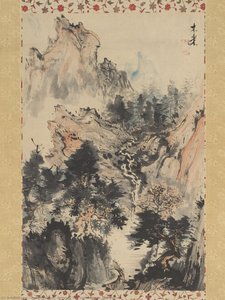
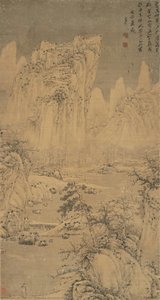
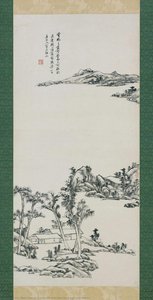
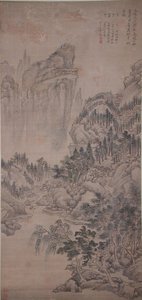
This exquisite artwork presents a captivating landscape scene meticulously crafted by Wang Yuanqi (1642–1715), a prominent figure of the Qing dynasty. More than just a scenic depiction, it’s a thoughtful homage to the "Four Great Yuan Masters" – Huang Gongwang, Wang Meng, Wu Zhen, and Ni Zan – influential literati painters whose styles profoundly shaped Chinese landscape art. Each of these four landscapes imitates the style of one of those masters, showcasing Wang Yuanqi's deep respect for artistic heritage and his skill in emulating their unique approaches. The painting reflects the aesthetic sensibilities of the early Qing dynasty’s "Siwang Wuyun" period, a time when artists sought to revive and reinterpret classical traditions.Style & Technique: Dry Brushwork and Evocative Ink
Wang Yuanqi's technique is characterized by a masterful use of dry brushstrokes, creating a distinctive texture and visual depth. He employed cracked lines achieved with a dry brush, a signature element that lends the landscape an aged, weathered quality. The artist’s deliberate application of minimal pale ink, pressed or rubbed onto the paper, further enhances this effect. Notice how the mountains are formed through the striking contrast between black shadows and white space, creating a sense of volume and atmospheric perspective. Two scrolls utilize both ink and subtle colors, while the others rely solely on ink washes, demonstrating a nuanced understanding of tonal variation and its impact on mood. This approach aligns with the Loudong school of painting that Wang Yuanqi established, diverging from the Yushan school founded by his contemporary, Wang Hui.Historical Context & Artistic Lineage
To fully appreciate this work, it's essential to understand its historical context. The "Four Great Yuan Masters" represent a pinnacle of Chinese landscape painting, known for their philosophical depth and poetic expression. By emulating them, Wang Yuanqi wasn’t merely copying; he was engaging in a dialogue with the past, demonstrating his mastery of traditional techniques while simultaneously forging his own artistic identity. Interestingly, the titles of two scrolls reference earlier masters – Dong Yuan and Juran from the Five Dynasties to Northern Song dynasty period – revealing Wang Yuanqi's ambition to connect with the very foundations of Chinese landscape art by working backward through the Yuan masters. His role as a court official, responsible for appraising paintings and compiling the *Peiwenzhai shuhuapu*, further underscores his deep knowledge and appreciation of artistic history.Emotional Impact & Symbolic Resonance
Beyond its technical brilliance, this landscape evokes a profound sense of tranquility and contemplation. The snow-capped peaks, the serene body of water, and the meticulously rendered details invite viewers to immerse themselves in the scene's peaceful atmosphere. Chinese landscape painting often carries symbolic weight; mountains represent stability and permanence, while water symbolizes fluidity and adaptability. Together, they suggest harmony between humanity and nature – a central theme in Chinese philosophy. Wang Yuanqi’s work isn’t just about depicting scenery; it’s about conveying an emotional response to the natural world and inviting viewers to share in that experience. This piece offers a window into the refined aesthetic sensibilities of the Qing dynasty, showcasing the enduring power of traditional Chinese landscape painting.Related Artworks
Artist Biography
Wang Yuanqi: A Master of Qing Dynasty Landscape
Early Life and Education
- Wang Yuanqi (王原祁) was born in 1642 in Taicang, Jiangsu province, China.
- He came from a family with a strong artistic tradition; his grandfather, Wang Shimin, was a renowned painter of the early Qing dynasty.
- Yuanqi received rigorous training in painting from his grandfather, laying the foundation for his future artistic endeavors.
- His style name was 'Mao-ching' and his sobriquet was 'Lu-t’ai'.
Career as a Court Official
- Wang Yuanqi rose to prominence as a court official during the Qing dynasty, beginning shortly after its establishment in 1644.
- He served with distinction and was eventually appointed curator of the imperial collection under the Kangxi Emperor.
- This position granted him access to a vast array of artworks, further enriching his artistic knowledge and influencing his style.
- He remained a court official throughout his long career, balancing administrative duties with his passion for painting until his death in 1715 at age 73.
Artistic Style and Influences
- Wang Yuanqi is considered one of the “Six Masters of the early Qing period,” also known as the ‘Four Wangs, a Wu and a Yun’.
- He was a leading figure in the 'Orthodox School' (正统派) of Chinese landscape painting.
- His landscapes drew inspiration from Yuan dynasty artists who moved away from the highly realistic depictions favored during the Northern Song period.
- A key influence on his work was Huang Gongwang, particularly in the use of dry brush strokes, ink washes, and a sophisticated approach to color.
- He skillfully integrated color patterns into his compositions, complementing abstract designs with rhythmic color flows.
Major Works and Achievements
- Notable works include Landscape in the Style of Huang Gongwang (1711), currently held in Singapore’s Asian Civilisations Museum.
- His rendition of Wang Wei's eighth-century hand scroll, The Wang River Villa, is housed in the Metropolitan Museum of Art, New York City.
- Other significant paintings include “The Fuchun Mountains”, “Landscape for Zhanting” and numerous landscapes after the Four Great Yuan Masters.
- He excelled at recreating the styles of earlier masters while imbuing his works with a unique personal touch.
Historical Significance
- Wang Yuanqi played a crucial role in shaping the development of Chinese landscape painting during the Qing dynasty.
- His adherence to and refinement of the Orthodox School established a standard for generations of artists.
- He helped preserve and promote traditional artistic values while also demonstrating innovative techniques in composition and color usage.
- His work continues to be celebrated for its technical mastery, aesthetic beauty, and historical importance within the context of Chinese art history.
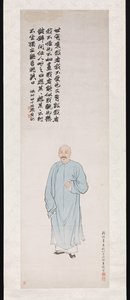
Wang Yuanqi
1642 - 1715 , China
Quick Facts
- Birth Date: 1642
- Birth Place: Taicang, China
- Death Date: 1715
- Influenced By: Wang Shimin, Huang Gongwang
- Movement: Orthodox School
- Name: Wang Yuanqi
- Nationality: Chinese
- Notable Works:
- Landscape in the Style of Huang Gongwang
- Wangchuan Villa
- The Fuchun Mountians
Related Articles

Romantic Landscapes: 10 Masterpieces for Your Home | ArtsDot
Journey through 10 Romantic landscape masterpieces by Friedrich, Turner & Cole. Explore emotional art, sublime nature scenes & iconic 19th-century paintings. Find museum-quality reproductions for your home at ArtsDot.com – discover the full collection online!

Evocations of Place: A Historical Journey Through Landscape Art
Explore the rich history of landscape art with ArtsDot. Discover renowned artists, movements like Impressionism & Romanticism, and expert guidance for collecting timeless pieces. Find your perfect serene escape today!

John Constable's Masterpieces: Explore 25 Iconic Landscapes for Your Home
Journey through John Constable's 25 most celebrated landscapes. Explore Romanticism, Dedham Vale & his masterful use of light in iconic paintings like 'Hay Wain'. Find museum-quality art reproductions and elevate your home decor on ArtsDot.com.
Evocations of Place: A Historical Journey Through Landscape Art
Explore the rich history of landscape art with ArtsDot. Discover renowned artists, movements like Impressionism & tonalism, and expert guidance for collecting timeless pieces. Find your perfect serene escape today!
Xie Zhiliu: A Legacy of Ink Wash Painting & Modern Chinese Literati Tradition
Explore the legacy of Xie Zhiliu, a master of Chinese ink wash painting & prominent figure in modern art. Discover his techniques, influences, and contributions to literati tradition. A guide for discerning collectors.