 Preview
 Send
Send Share
Share
 Details

 Download
 Similars
 X-Ray
X-Ray Diaporama
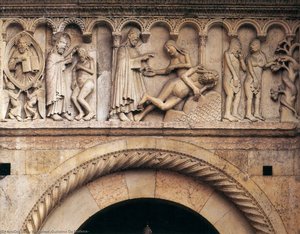
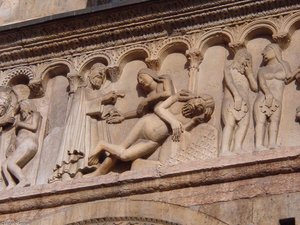
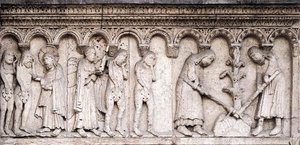
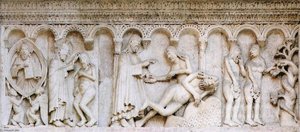
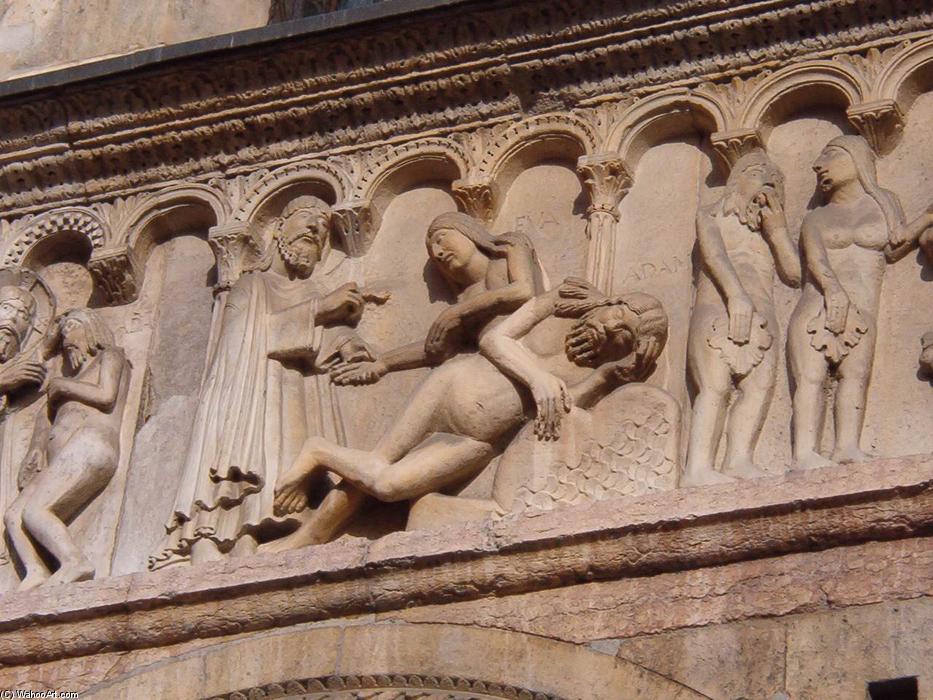
Creation of Adam and Eve


 Read More
Giclée / Art Print
Museum-quality giclée or canvas print with fast production and flexible finish options. ( Buy Hand Made Painting Buy Image)




































Pick from our preset sizes that match the artwork's original proportions.

You may enter your own dimensions to fit a specific frame or space. If your selected size does not match the original image's proportions, we will either crop the artwork or extend the image with a mirrored or solid-fill edge. A digital mockup will be sent for your approval before production begins.
Please note that the on-screen preview does not reflect the actual cropping or extension. Only the mockup will accurately show the final composition.
While custom sizes are available, we recommend selecting a dimension from the predefined list to preserve the original proportions.
Worldwide Delivery () in 2 weeks instead of standard 4/5 weeks. (28 August)

Free Worldwide Express Shipping

High-Quality Linen Canvas

Full Shipping Insurance

Customs Tax Refund Guarantee

True Color Matching Guarantee

60-Day Return Policy (Defects Only)

100% Money-Back Guarantee

Bulk Discount Offer
 Glass option is only available in size under 110 CM

Creation of Adam and Eve
Giclée / Art Print
Reproduction Size
-


Total Price
$ 63
Related Artworks
Artist Biography
The Stone Voice of the Romanesque: The Legacy of Wiligelmo
In the quiet, sun-drenched corridors of Italian history, few names resonate with the primal strength of Wiligelmo. A sculptor whose hands breathed life into cold marble during the dawn of the twelfth century, he stands as a monumental figure in the genesis of Romanesque art. Active primarily between c. 1099 and 1120, this master from Cremona did not merely decorate stone; he redefined the very language of architectural sculpture. At a time when European art was searching for a way to bridge the gap between the earthly and the divine, Wiligelmo provided a visual vocabulary of profound weight, texture, and narrative power that would echo through the centuries.
While the biographical details of his early life remain shrouded in the mists of the Middle Ages, the traces of his training are etched into the very grain of his work. Scholars believe he may have been shaped by the workshop of Maestro Giovannino da Prato, a crucible of innovation that allowed for the transmission of complex stylistic ideas across the Lombardy region. This formative period instilled in him a mastery over medium and scale, preparing him for his most transformative undertaking: the sculptural program of the Modena Cathedral. Under the patronage of Bishop Guido da Montepulciano, Wiligelment embarked on a mission to turn the cathedral's west façade into a stone chronicle of human existence and divine providence.
A Narrative in Relief: The Genesis of Style
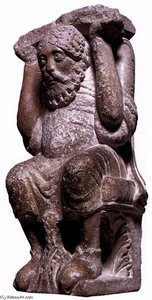
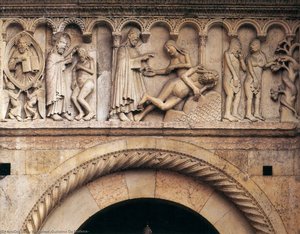
To stand before the works of Wiligelmo is to witness a revolution in form. Moving away from the flatter, more abstract traditions of earlier eras, he introduced a sense of monumental presence. His approach was characterized by large, stocky figures that possessed an almost tactile reality. In his celebrated reliefs depicting the Book of Genesis, one can observe a profound preoccupation with the drama of the human condition. The Creation of Adam and Eve and the subsequent Fall of Man are not merely religious icons; they are visceral explorations of movement, emotion, and the heavy burden of mortality.
His technique was uniquely suited to the rugged demands of Romanesque architecture. He utilized:
- Expressive Drapery: Deeply carved folds that create a play of light and shadow, lending weight to his figures.
- Architectural Integration: A seamless blending of sculpture and structure, where prophets and angels emerge naturally from the portals and capitals.
- Narrative Clarity: The use of clear, profile-oriented compositions that allowed even the illiterate faithful to read the sacred stories through stone.
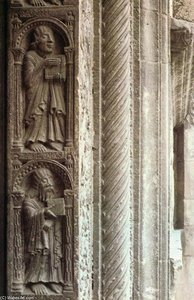
Beyond the famous Genesis cycle, his hand is felt in the Portale Maggiore, where twelve Prophets stand as silent sentinels, and in the intricate rinceaux of angelic figures that adorn the cathedral's surfaces. His ability to command large-format architectural sculpture was a feat of both artistic vision and physical endurance, marking him as one of the earliest masters in Italy to successfully marry narrative complexity with massive stone construction.
Historical Significance and Eternal Echoes
The influence of Wiligelmo extends far beyond the walls of Modena. His distinctive style—a blend of Lombard vigor and a burgeoning interest in naturalistic detail—became a blueprint for Romanesque sculpture across Italy and into France. He established a precedent for the sculptor as an essential architect of the church's spiritual identity, proving that stone could speak with the same eloquence as scripture. Even as later movements like the Gothic sought more ethereal and slender forms, the foundational strength and rhythmic power of Wiligelmo’s work remained a cornerstone of European aesthetic development.
Today, his legacy survives in the weathered surfaces of the Duomo di Modena, a UNESCO World Heritage site that continues to serve as a living museum of his genius. Through works like the Adam and Eve Labouring and his various biblical reliefs, Wiligelmo remains an eternal presence—a sculptor who captured the very essence of the human struggle and the divine hope within the enduring, unyielding embrace of marble.
Quick Facts
- Artistic Movement Or Style: Romanesque Sculpture
- Artists Or Movements Influenced By This Artist: ['Saint-Denis']
- Artists Who Influenced This Artist: ['']
- Full Name: Wiligelmo da Modena
- Nationality: Italian
- Notable Artworks:
- Daniel and Zacharias
- Duomo
- Place Of Birth: Modena, Italy