 Preview
 Send
Send Share
Share
 Details

 Download
 Similars
 X-Ray
X-Ray Diaporama
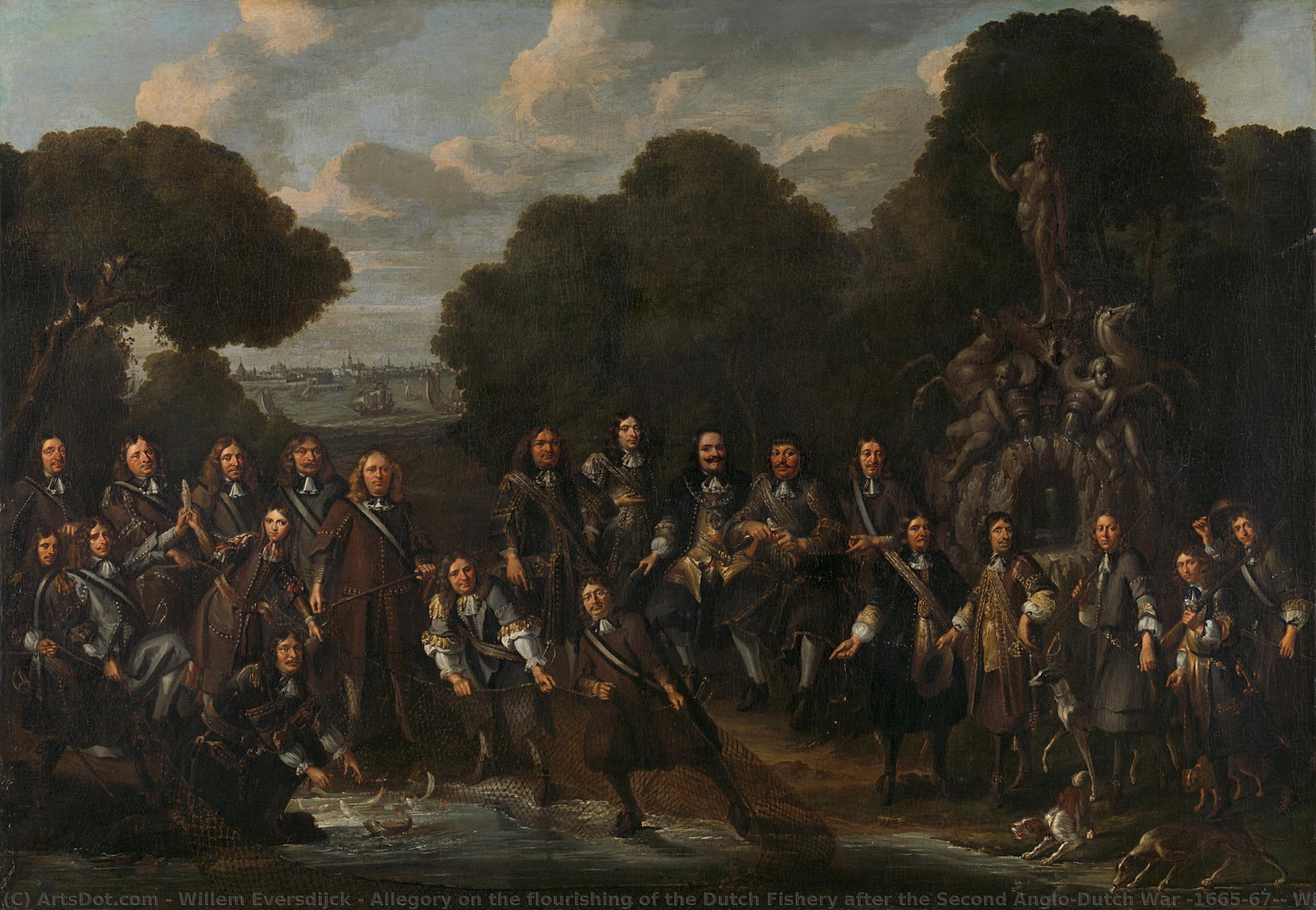
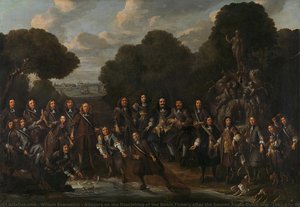
Allegory on the flourishing of the Dutch Fishery after the Second Anglo-Dutch War (1665-67), Willem Eversdijck (attributed to), 1667 - 1671
 1671
1671 114.0 x 162.0 cm
 Read More
Hand Made Oil Reproduction
Hand-painted oil on canvas in your size and frame, made to order by our artists. ( Buy Print Buy Image)




































Pick from our preset sizes that match the artwork's original proportions.

You may enter your own dimensions to fit a specific frame or space. If your selected size does not match the original image's proportions, we will either crop the artwork or extend the painting with additional hand-painted elements. A digital mockup will be sent for your approval before production begins.
Please note that the on-screen preview does not reflect the actual cropping or extension. Only the mockup will accurately show the final composition.
While custom sizes are available, we recommend selecting a dimension from the predefined list to preserve the original proportions.
After order, ArtsDot.com team will email client for instructions and provide a mockup preview
Worldwide Delivery () in 3/4 weeks instead of standard 5 weeks. (6 September). No compromise on quality.

Free Worldwide Express Shipping

High-Quality Linen Canvas

Full Shipping Insurance

Customs Tax Refund Guarantee

True Color Matching Guarantee

100-Day Return Policy (Defects Only)

100% Money-Back Guarantee

Bulk Discount Offer
 Glass option is only available in size under 110 CM

Allegory on the flourishing of the Dutch Fishery after the Second Anglo-Dutch War (1665-67), Willem Eversdijck (attributed to), 1667 - 1671
Reproduction Medium
Reproduction Size
-


Total Price
$ 263
Related Artworks







Artist Biography
The Quiet Observer of the Dutch Golden Age
Willem Cornelisz Eversdijck (1616–1671) remains one of the most poignant voices of the Dutch Golden Age, a master who found profound beauty in the unremarkable. While his contemporaries often sought the grandeur of mythological epics or the dramatic tension of religious upheaval, Eversdijck turned his gaze inward, toward the hearth and the home. He was a painter of the intimate, a chronicler of the quiet rhythms that defined the domestic life of a prosperous Netherlands. Through his brush, the mundane activities of the seventeenth-century household—a woman focused on her needlework, the soft light falling upon a musical gathering, or the simple arrangement of fruit on a table—were elevated to the status of high art.
Born in Leiden, Eversdijck’s artistic journey began under the tutelage of Hendrick Jacobsz van Balen I. This early apprenticeship was crucial; though Van Balen was celebrated for his allegorical and much more ornate compositions, he instilled in Eversdijck a rigorous discipline and a meticulous attention to detail. This foundation allowed the younger painter to develop a technique that balanced Baroque complexity with a burgeoning naturalism. As he matured, Eversdijck moved away from the heavy-handed symbolism of his mentor, instead embracing a style that favored verisimilitude—the pursuit of truth in appearance.
Mastery of Light and Texture
The true magic of an Eversdijck canvas lies in its tactile reality. He possessed an extraordinary ability to manipulate light and shadow, utilizing the technique of chiaroscuro not merely for dramatic effect, but to sculpt the very air within a room. His use of light is often subtle, creeping across a polished wooden floor or catching the rim of a ceramic jug, creating a palpable sense of atmosphere that draws the viewer into the scene. This interplay of light serves to anchor his figures within a tangible, three-dimensional space, making the domestic interiors feel lived-in and breathing.
Beyond the play of light, Eversdijck was a virtuoso of texture. To look closely at his work is to experience a sensory feast:
- The heavy, tactile weight of woven fabrics and fine linens.
- The cold, smooth surface of glazed ceramics and pewter.
- The delicate, organic softness of ripening fruit.
- The intricate, rhythmic patterns of lace and embroidery.
Legacy and Historical Significance
The significance of Willem Cornelisz Eversdijck lies in his contribution to the evolution of genre painting. He helped shift the artistic focus of the era from the celestial and the heroic toward the human and the everyday. His works, such as The Concert in the Mauritshuis Amsterdam and A Woman Sewing in the Kunsthistorisches Museum Vienna, demonstrate a remarkable psychological depth. Even when depicting figures engaged in solitary or repetitive tasks, he imbues them with a sense of interiority, suggesting a rich emotional life beneath the surface of their domestic duties.
In the broader context of art history, Eversdijck stands as a bridge between the dramatic Baroque movement and the refined naturalism that would characterize much of Dutch art in the late seventeenth century. He captured a specific moment in time—a period of unprecedented Dutch prosperity—and preserved it through a lens of profound respect for the ordinary. His legacy is found not in the depiction of kings or gods, but in the enduring, quiet dignity of the human spirit caught in the simple act of living.
willem cornelisz. eversdijck
1616 - 1671 , Netherlands
Quick Facts
- Artistic Movement Or Style: Dutch Realism
- Artists Or Movements Influenced By This Artist: ['Baroque']
- Artists Who Influenced This Artist:
- Rembrandt van Rijn
- Jan Steen
- Date Of Birth: Gezien, Netherlands (1616)
- Date Of Death: 1671
- Full Name: Willem Cornelisz Eversdijck
- Nationality: Dutch
- Notable Artworks:
- The Astronomer
- Portrait of Pieter van Leyden
- Place Of Birth: Gezien