 Preview
 Send
Send Share
Share
 Details

 Download
 Similars
 X-Ray
X-Ray Diaporama
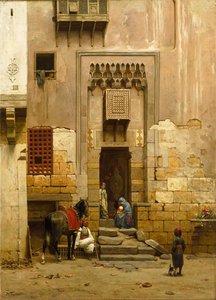
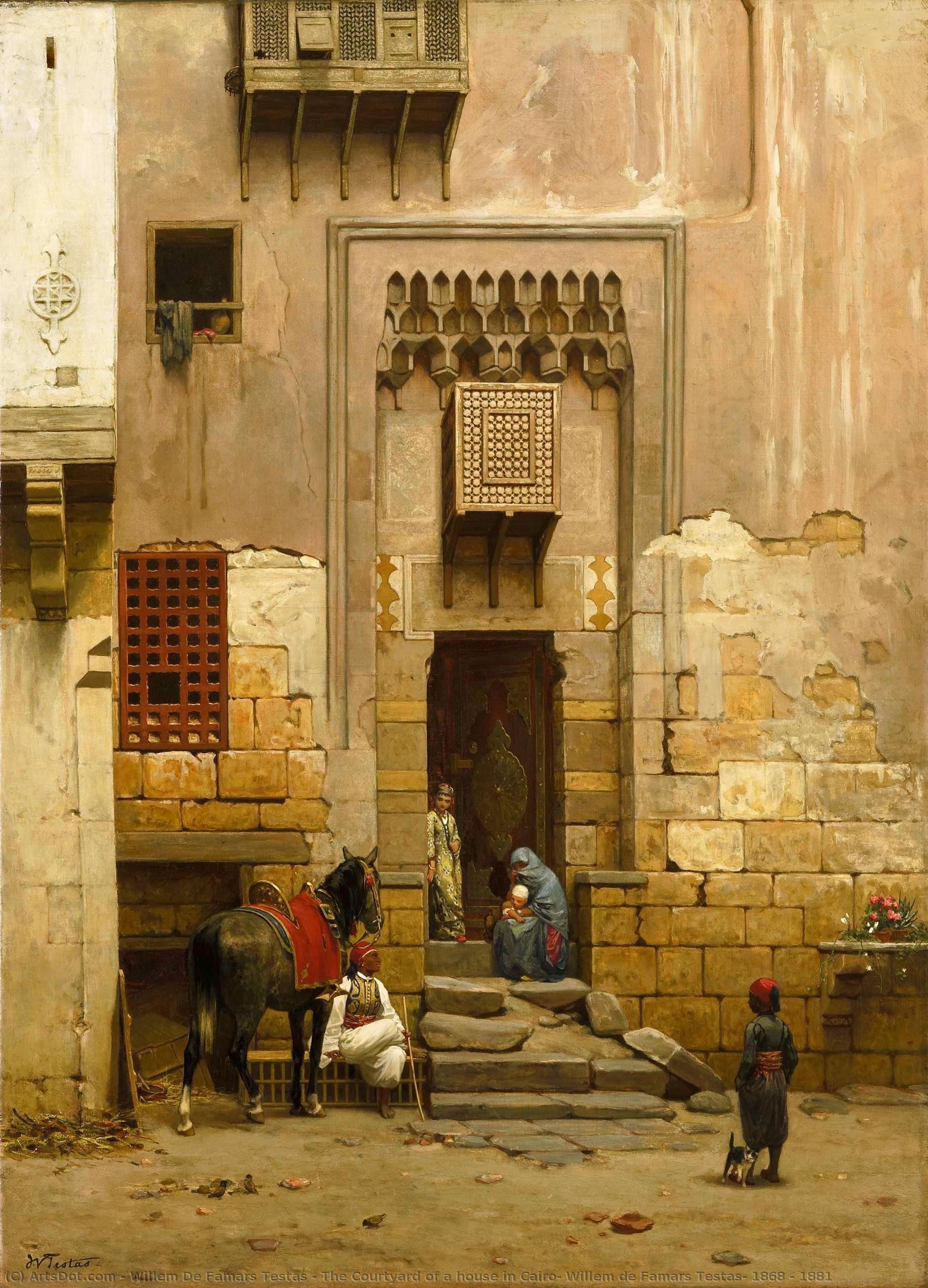
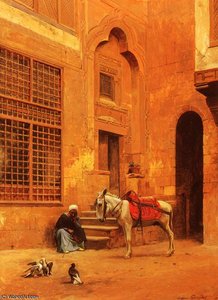
The Courtyard of a house in Cairo, Willem de Famars Testas, 1868 - 1881
 1881
1881 84.0 x 62.0 cm
 Read More
Hand Made Oil Reproduction
Hand-painted oil on canvas in your size and frame, made to order by our artists. ( Buy Print Buy Image)




































Pick from our preset sizes that match the artwork's original proportions.

You may enter your own dimensions to fit a specific frame or space. If your selected size does not match the original image's proportions, we will either crop the artwork or extend the painting with additional hand-painted elements. A digital mockup will be sent for your approval before production begins.
Please note that the on-screen preview does not reflect the actual cropping or extension. Only the mockup will accurately show the final composition.
While custom sizes are available, we recommend selecting a dimension from the predefined list to preserve the original proportions.
After order, ArtsDot.com team will email client for instructions and provide a mockup preview
Worldwide Delivery () in 3/4 weeks instead of standard 5 weeks. (5 September). No compromise on quality.

Free Worldwide Express Shipping

High-Quality Linen Canvas

Full Shipping Insurance

Customs Tax Refund Guarantee

True Color Matching Guarantee

60-Day Return Policy (Defects Only)

100% Money-Back Guarantee

Bulk Discount Offer
 Glass option is only available in size under 110 CM

The Courtyard of a house in Cairo, Willem de Famars Testas, 1868 - 1881
Reproduction Medium
Reproduction Size
-


Total Price
$ 263
Related Artworks

Artist Biography
The Visionary of the Orient: The Life and Art of Willem de Famars Testas
Willem de Famars Testas was a painter who possessed the rare ability to transport his audience across continents through nothing more than pigment and light. Born in 1834 in the historic city of Utrecht, his early artistic foundations were laid within the prestigious halls of the Akademie van beeldende kunsten in The Hague. Under the tutelage of masters like Jacobus Everhardus Josephus van den Berg, he honed a technical precision that would later serve as the bedrock for his expansive, atmospheric explorations of distant lands. While his early training rooted him firmly in the Dutch tradition, his spirit was destined for much warmer, more exotic horizons. The true turning point in his creative evolution arrived not in a studio, but amidst the sun-drenched landscapes of Egypt. In 1858, a serendipitous opportunity arose when he joined an expedition led by the archaeologist Emile Prisse d'Avennes. Originally intended to support the documentation of Arab monuments, Testas found himself thrust into the role of a primary observer of life along the Nile. For two years, he wandered through Egypt, absorbing the vibrant textures of local customs, the rhythmic movement of desert animals, and the stark, beautiful interplay of light and shadow against ancient architecture. This period was transformative; it shifted his focus from mere academic study to a profound, empathetic engagement with the Orientalist subject matter that would define his legacy.A Tapestry of Light and Culture
Upon returning to Europe, Testas did not leave the Orient behind; instead, he meticulously reconstructed its essence upon canvas. His work became a bridge between the familiar landscapes of the Netherlands and the evocative mysteries of the East. He was not merely a documentarian but a storyteller who utilized warm color palettes and intricate details to render the very flavor of Egyptian life. His oeuvre is characterized by a remarkable versatility, ranging from delicate etchings and precise drawings to sweeping oil paintings that capture the bustling energy of Cairo or the quiet solitude of an oasis. His artistic journey continued to expand through further travels, including a significant expedition through Palestine and Syria in 1868. This second encounter with the Levant deepened his repertoire, allowing him to weave even more complex narratives of landscape and humanity into his work. His reputation grew alongside his travels, eventually leading to an invitation from the renowned French Orientalist Jean-Léon Gérôme, a moment that solidified his standing within the international art community. Whether depicting the bustling courtyard of a Cairene house or the serene beauty of a desert well, Testas imbued every scene with a sense of lived reality and atmospheric depth.Legacy and Artistic Significance
The historical significance of Willem de Famars Testas lies in his ability to transcend the often-static tropes of 19th-century Orientalism. While many of his contemporaries focused on the theatrical or the exoticized, Testas brought a sense of ethnographic intimacy to his subjects. His work serves as a vital visual record of a period of intense cultural encounter, capturing the dignity of local dress, the vitality of regional fauna, and the enduring majesty of ancient monuments. His influence extended beyond his own brushstrokes, as seen in the artistic path of his daughter, Marie Madelaine de Famars Testas, who also pursued a career in painting. Today, his works reside in esteemed collections such as the Rijksmuseum and the Teylers Museum, standing as enduring testaments to a life spent chasing the light of distant suns. To view a piece by Testas is to embark on a journey through time and space, experiencing the world through the eyes of a master who found his true voice in the heart of the Orient.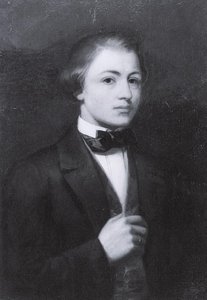
willem de famars testas
1834 - 1896 , Netherlands
Quick Facts
- Artistic Movement Or Style: Orientalism
- Artists Or Movements Influenced By This Artist: ['Marie de Famars Testas']
- Artists Who Influenced This Artist: ['Jacobus van den Berg']
- Date Of Birth: 1834
- Date Of Death: 1896
- Full Name: Willem de Famars Testas
- Nationality: Dutch
- Notable Artworks:
- The Well in Ezbekieh Square
- Egyptian relief sculpture
- Courtyard in Cairo
- Place Of Birth: Utrecht, Netherlands