

 Preview
 Send
Send Share
Share
 Details

 Download
 Similars
 X-Ray
X-Ray Diaporama
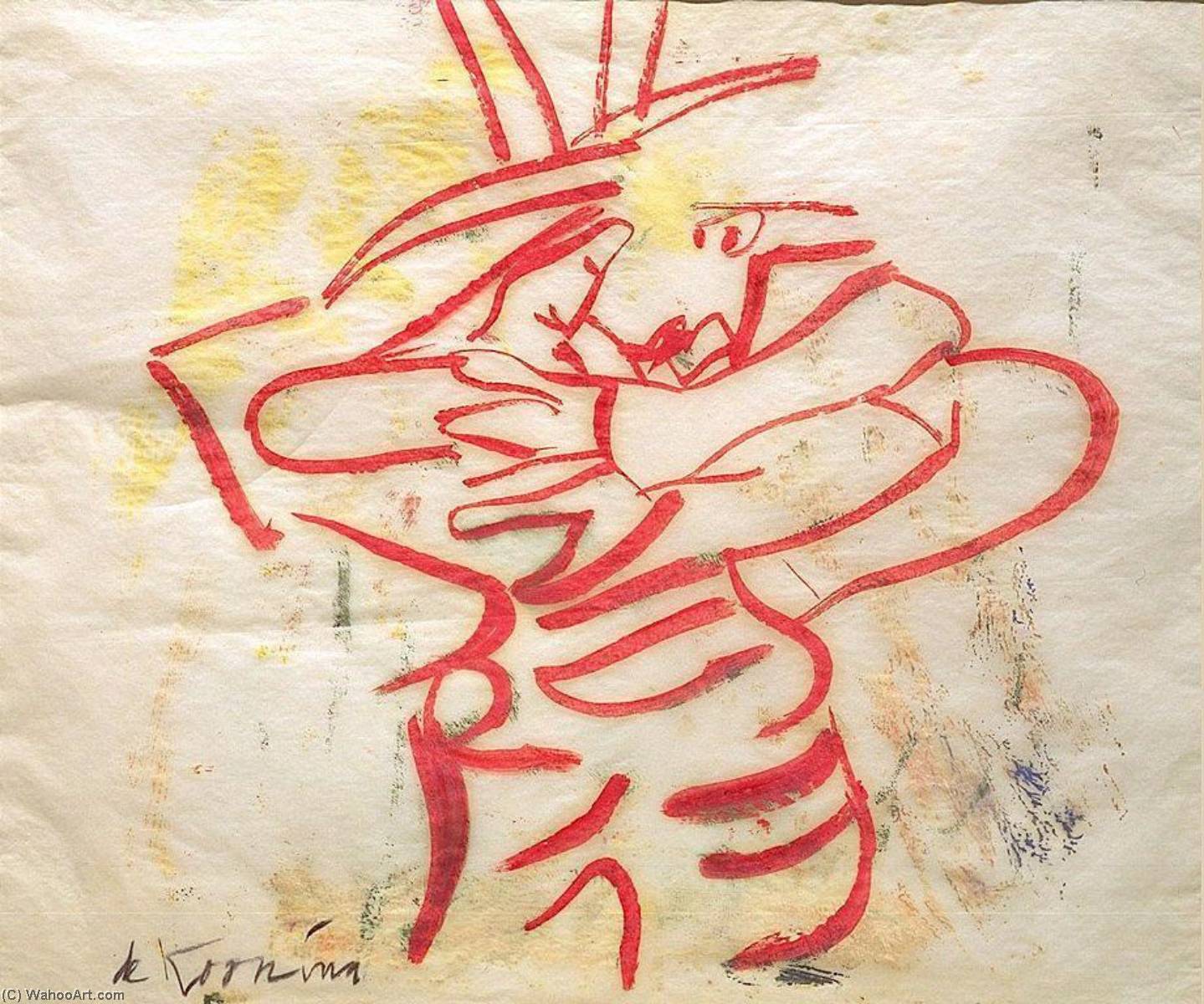
Lobster Woman
 Acrylic
- WallArt
- Abstract Expressionism
 1965
1965 48.0 x 61.0 cm
 Read More
Purchase a high-resolution, enhanced digital image, far superior to the online preview.
Each file is meticulously prepared by our in-house specialists using advanced tools and expert manual retouching. We ensure every image has exceptional clarity, precise color accuracy, and fine detail.
The final file is delivered via email within 72 hours, optimized for immediate use in professional, editorial, and print environments. This is the same quality trusted by top-tier design studios, publishers, and galleries.
Digital Image
Download a high-resolution file for personal display, printing, and creative projects. ( Buy Print Buy Hand Made Painting)
Included in Every Digital Image Order
Expert Digital Delivery, Guaranteed
When you choose ArtsDot.com, you're not just getting an image - you're receiving a professionally enhanced digital artwork, crafted with precision and backed by a satisfaction guarantee. Here's everything that comes with your order, automatically:

Fast Email Delivery
Your high-resolution digital image file will be emailed to you within 72 hours of ordering - ready for immediate use.

AI-Enhanced Digital File
Your artwork is professionally optimized using advanced AI tools and manual editing, ensuring maximum detail, clarity, and color accuracy.

Free Lifetime Re-Delivery
Accidentally deleted or lost your file? No worries - we'll resend it to you anytime, free of charge.

No Import Fees - Ever
Enjoy your artwork instantly with zero customs, duties, or delivery fees - digital downloads are always tax-free.

Color Accuracy Guarantee
We ensure your digital image reflects the original colors as closely as possible using professional tools and color management.

60-Day Satisfaction Guarantee
If you're not satisfied with your digital image, we'll revise it or refund 100% within 60 days - no questions asked.

100% Money-Back Guarantee
Not satisfied? Get a full refund within 60 days of receiving your digital file - no questions asked.

Bulk Order Discounts
Buy 3 images, save 10% - Buy 5, save 15% - Buy 10+, save 20%. Great for creative projects, galleries, and agencies.
Collectible Description
A Surreal Encounter: Willem de Kooning’s Lobster Woman
The painting “Lobster Woman,” created in 1965 by Willem de Kooning, stands as a quintessential emblem of Abstract Expressionism—a movement that irrevocably altered the landscape of twentieth-century art. More than just a visual spectacle, it's an exploration of primal emotion and subconscious imagery, capturing a moment frozen in time with audacious brushstrokes and vibrant color palettes. This artwork isn’t merely depicting a woman; it’s conveying a profound psychological drama rendered in bold abstraction.- Subject Matter: The central figure is a woman—a stylized representation rather than a portrait—positioned prominently on the canvas, cradling what appears to be a lobster perched upon her shoulder. This juxtaposition of organic and inorganic elements immediately establishes an unsettling tension, inviting contemplation about themes of vulnerability, dominance, and perhaps even metamorphosis.
- Style: De Kooning’s signature style is undeniably expressive—characterized by energetic gestural marks that prioritize feeling over precise representation. The painting abandons traditional perspective and anatomical accuracy in favor of a dynamic composition driven by impulse and intuition. It embodies the core tenets of Abstract Expressionism, rejecting illusionistic realism for an unfiltered portrayal of inner turmoil.
- Technique: De Kooning employed a thick impasto technique—applying paint thickly onto the canvas—creating palpable textural surfaces that amplify the painting’s emotional impact. Layers upon layers of pigment build up to form swirling masses of color, conveying movement and instability. The artist utilized primarily reds and yellows, colors often associated with passion, aggression, and vitality, further intensifying the artwork's dramatic atmosphere.
Historical Context: The Rise of Abstract Expressionism
“Lobster Woman” emerged during a period of significant artistic upheaval in America—the mid-1960s witnessed the burgeoning influence of movements like Surrealism and Dada, which challenged conventional artistic norms. De Kooning’s work aligns closely with the broader ethos of Abstract Expressionism, reacting against postwar austerity and embracing spontaneity as a means of confronting existential anxieties. The movement sought to liberate art from representational constraints, prioritizing psychological exploration and conveying raw emotion through non-figurative forms. Artists like Pollock, Rothko, and Kline similarly championed gesture and color as vehicles for expressing inner states—creating artworks that resonated deeply with audiences grappling with the complexities of the Cold War era.Symbolism and Interpretation
The lobster itself is a potent symbol—often associated with sexuality, primal instinct, and transformation. Its presence on the woman’s shoulder suggests an intrusion of the subconscious into conscious awareness, hinting at repressed desires and anxieties. The woman's posture—embracing the lobster—could represent acceptance of these darker impulses or perhaps even a surrender to them. Furthermore, the color choices – reds and yellows – contribute significantly to the painting’s symbolic resonance. Red embodies passion and danger, while yellow signifies optimism mingled with unease; together they create an unsettling harmony that underscores the artwork's psychological depth.Emotional Impact
“Lobster Woman” succeeds in eliciting a visceral response from viewers—a feeling of disorientation and fascination simultaneously. The painting’s chaotic brushstrokes convey a sense of urgency and emotional intensity, mirroring the artist’s own turbulent inner life. It's not an artwork designed to soothe or reassure; rather, it confronts us with uncomfortable truths about human psychology and invites us to contemplate the hidden forces shaping our perceptions and behaviors. Its enduring appeal lies in its ability to tap into universal anxieties regarding identity, desire, and the precarious balance between control and surrender—making it a captivating piece for collectors and interior designers alike who appreciate art that transcends mere visual beauty.Related Artworks
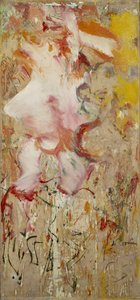
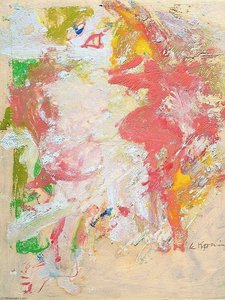
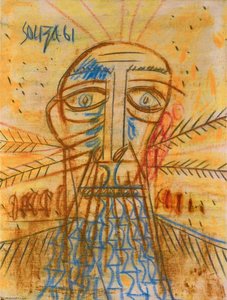
Artist Biography
A Life Forged in Abstraction
Willem de Kooning, a name synonymous with the raw energy and emotional depth of Abstract Expressionism, was born in Rotterdam, Netherlands, in 1904. His early life was marked by a familial split – his parents divorced when he was young – which perhaps instilled within him a sense of restless searching that would permeate his artistic journey. Leaving formal schooling at twelve, de Kooning apprenticed with a commercial art firm, laying the groundwork for his technical skill while simultaneously fueling a desire to break free from conventional constraints. Evening classes at the Academie van Beeldende Kunsten en Technische Wetenschappen in Rotterdam provided further foundational training, but it was a yearning for something more – a bolder, more expressive language – that ultimately propelled him towards America in 1926. His arrival wasn’t straightforward; he famously stowed away on a ship, embodying the spirit of an outsider seeking new horizons. New York City became his adopted home, and its vibrant, often gritty energy profoundly shaped his evolving style. He navigated various jobs – house painter, carpenter – all while relentlessly pursuing his artistic vision, absorbing the city’s pulse into his work.From Urban Scenes to Abstract Fury
De Kooning's early paintings reflected his immediate surroundings: urban landscapes and portraits that captured the dynamism of New York life. However, these were merely stepping stones towards a more profound exploration of form and emotion. A pivotal moment came with his connection to Arshile Gorky, whose influence proved transformative. Gorky encouraged de Kooning’s experimentation with abstraction, fostering a willingness to dismantle traditional representation in pursuit of something deeper. The 1930s saw de Kooning engage with social realism and mural projects through the Works Progress Administration (WPA), a period that honed his skills but also highlighted the limitations of purely representational art. He found himself drawn towards the work of Stuart Davis and John Graham, artists who were pushing boundaries in their own right. This confluence of influences gradually steered him away from literal depiction and toward an increasingly abstract vocabulary. It wasn’t a sudden shift, but rather a slow burn – a deliberate dismantling of established norms fueled by intellectual curiosity and a relentless pursuit of artistic truth.The Woman Series: A Landmark Achievement
Following World War II, de Kooning emerged as a central figure in the burgeoning Abstract Expressionist movement. This period marked a turning point, culminating in his iconic “Woman” series (1950-1953). These paintings – including the monumental *Woman I* – are not merely depictions of female figures; they are visceral explorations of femininity, sexuality, and the complexities of human emotion. Characterized by aggressive brushstrokes, fragmented forms, and a jarring juxtaposition of colors, the “Woman” series challenged conventional notions of beauty and representation. They were controversial, even shocking to some, but their power lay precisely in their refusal to conform. De Kooning wasn’t interested in creating idealized images; he sought to capture the raw, untamed essence of his subjects. Beyond the "Woman" series, works like *The Glazier* and *Excavation* further demonstrated his dynamic approach to painting, showcasing a masterful command of texture, color, and composition. He didn't shy away from chaos or ambiguity; instead, he embraced them as integral components of his artistic language.Evolving Landscapes and Enduring Legacy
In the 1960s, de Kooning’s style underwent another significant evolution. While abstraction remained central to his work, landscape elements began to play a more prominent role, often rendered with a brighter palette and a looser, more fluid brushstroke. He continued to experiment relentlessly throughout his life, exploring different techniques and materials, never content to rest on his laurels. His later works demonstrate a remarkable ability to reinvent himself while remaining true to his core artistic principles. Willem de Kooning’s historical significance is undeniable. He helped establish New York City as a global center for art, challenging the dominance of European traditions and paving the way for future generations of artists. His work continues to inspire awe and provoke debate, reminding us of the power of abstraction to convey profound emotional truths. De Kooning passed away in 1997, leaving behind a vast and influential body of work that stands as a testament to his unwavering commitment to artistic innovation and his enduring legacy as one of the most important American artists of the 20th century. His impact resonates still.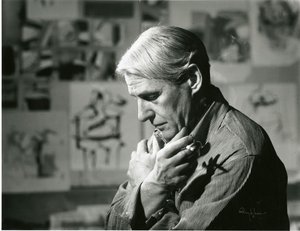
Willem de Kooning
1904 - 1997 , Netherlands
Quick Facts
- Artistic Movement Or Style: Abstract Expressionism
- Artists Or Movements Influenced By This Artist: New York School
- Artists Who Influenced This Artist:
- Arshile Gorky
- Stuart Davis
- John Graham
- Date Of Birth: April 24, 1904
- Date Of Death: March 19, 1997
- Full Name: Willem de Kooning
- Nationality: Dutch-American
- Notable Artworks:
- Woman I
- Marilyn Monroe
- Reclining Man (JFK)
- Excavation
- Place Of Birth: Rotterdam, Netherlands

