

 Preview
 Send
Send Share
Share
 Details

 Download
 Similars
 X-Ray
X-Ray Diaporama
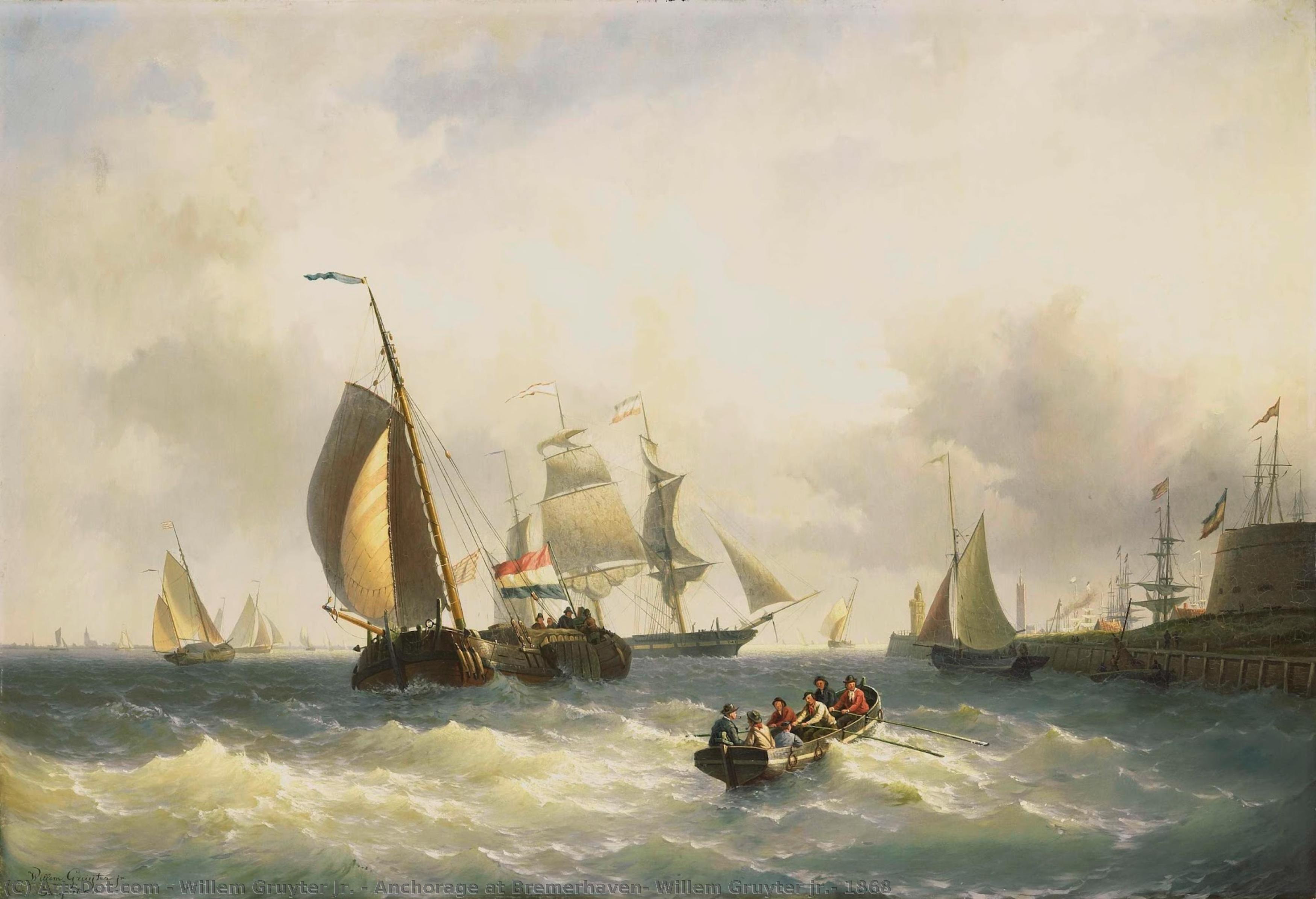
Anchorage at Bremerhaven, Willem Gruyter jr., 1868
 1868
1868 91.0 x 133.0 cm
 Read More
Purchase a high-resolution, enhanced digital image, far superior to the online preview.
Each file is meticulously prepared by our in-house specialists using advanced tools and expert manual retouching. We ensure every image has exceptional clarity, precise color accuracy, and fine detail.
The final file is delivered via email within 72 hours, optimized for immediate use in professional, editorial, and print environments. This is the same quality trusted by top-tier design studios, publishers, and galleries.
Digital Image
Download a high-resolution file for personal display, printing, and creative projects. ( Buy Print Buy Hand Made Painting)
Included in Every Digital Image Order
Expert Digital Delivery, Guaranteed
When you choose ArtsDot.com, you're not just getting an image - you're receiving a professionally enhanced digital artwork, crafted with precision and backed by a satisfaction guarantee. Here's everything that comes with your order, automatically:

Fast Email Delivery
Your high-resolution digital image file will be emailed to you within 72 hours of ordering - ready for immediate use.

AI-Enhanced Digital File
Your artwork is professionally optimized using advanced AI tools and manual editing, ensuring maximum detail, clarity, and color accuracy.

Free Lifetime Re-Delivery
Accidentally deleted or lost your file? No worries - we'll resend it to you anytime, free of charge.

No Import Fees - Ever
Enjoy your artwork instantly with zero customs, duties, or delivery fees - digital downloads are always tax-free.

Color Accuracy Guarantee
We ensure your digital image reflects the original colors as closely as possible using professional tools and color management.

60-Day Satisfaction Guarantee
If you're not satisfied with your digital image, we'll revise it or refund 100% within 60 days - no questions asked.

100% Money-Back Guarantee
Not satisfied? Get a full refund within 60 days of receiving your digital file - no questions asked.

Bulk Order Discounts
Buy 3 images, save 10% - Buy 5, save 15% - Buy 10+, save 20%. Great for creative projects, galleries, and agencies.
Related Artworks









Artist Biography
A Dutch Mariner’s Eye: Willem Gruyter Jr. and the Spirit of the North Sea
Willem Gruyter Jr., a name perhaps less familiar than some of his contemporaries, nevertheless holds a significant place within 19th-century Dutch art. Born in Amsterdam in 1817, Gruyter’s life was inextricably linked to the rhythms and moods of the North Sea, a connection that profoundly shaped his artistic vision. He spent his entire career capturing this vast expanse – its turbulent storms, its serene sunsets, and the subtle shifts in light upon its surface – primarily through the mediums of painting and etching. While he wasn’t a revolutionary figure, Gruyter possessed a remarkable ability to translate the elemental power of the sea onto canvas and plate, offering viewers an intimate glimpse into a world often perceived as distant and formidable.
Gruyter's early life remains somewhat shrouded in detail, though it is known he was the son of Willem Gruyter Sr., a prominent art dealer. This familial connection undoubtedly provided him with exposure to the artistic currents of Amsterdam during a period of burgeoning artistic development. He became associated with ‘Arti et Amicitiae,’ a key circle of Dutch artists and intellectuals dedicated to fostering creativity and promoting new ideas, in 1853. This association suggests an engagement with the broader intellectual landscape of his time, reflecting a desire to push beyond mere representation and explore deeper meanings within his work.
The Language of Light and Water
Gruyter’s artistic style is characterized by a meticulous attention to detail and a masterful command of light. He wasn't interested in dramatic, theatrical displays; rather, he sought to capture the subtle nuances of atmospheric conditions – the pearlescent sheen on water during dawn, the bruised purple hues of an approaching storm, or the hazy golden glow reflecting off distant ships. His paintings often depict scenes of coastal life, featuring fishing boats, harbors bustling with activity, and solitary figures contemplating the sea. These aren’t romanticized depictions; they are grounded in a realistic observation of everyday maritime existence.
His technique as an etcher was equally impressive. Gruyter possessed a remarkable ability to render textures – the rough surface of weathered wood, the foamy crests of waves, and the intricate details of rigging – with astonishing precision. He employed a drypoint method, allowing for rich tonal gradations and subtle variations in line weight, contributing significantly to the sense of depth and atmosphere within his prints. The interplay between light and shadow is particularly evident in his etchings, creating an illusion of three-dimensionality that draws the viewer into the scene.
Influences and Development
While Gruyter’s work doesn't immediately align with any single artistic movement, it’s clear he was influenced by the Romantic tradition, particularly its emphasis on the sublime power of nature. However, unlike many of his Romantic counterparts, Gruyter maintained a grounded realism in his approach. He also shows an affinity for Dutch Golden Age painters like Jacob van Ruisdael, evident in his careful observation of light and landscape. The influence of marine painting traditions from artists such as Jan van de Velde the Younger is also apparent in his compositions and attention to detail.
Gruyter’s artistic development appears to have been largely self-directed. He honed his skills through tireless practice, constantly refining his technique and experimenting with different approaches. His work evolved gradually over time, reflecting a deepening understanding of the sea and its complexities. He was a dedicated craftsman, prioritizing accuracy and realism above all else.
Legacy and Significance
Willem Gruyter Jr.’s contribution to Dutch art may not be immediately apparent in grand historical narratives, but his work holds considerable value for those who appreciate the quiet beauty of the North Sea. He offered a unique perspective on maritime life, capturing its inherent drama and serenity with remarkable skill. His paintings and etchings serve as valuable documents of 19th-century Dutch coastal culture, providing insights into the lives of fishermen, sailors, and shipbuilders. Gruyter’s legacy lies in his ability to translate the elemental power of the sea onto canvas and plate, offering viewers a timeless connection to this vital part of the Dutch landscape.
His work can be found in several collections, including the Rijksmuseum in Amsterdam, testament to its enduring appeal. Further research into his life and oeuvre continues to reveal new details about this often-overlooked master of the marine scene.
willem gruyter jr.
1817 - 1880 , Netherlands
Quick Facts
- Artistic Movement Or Style: Marine painting & etching
- Date Of Birth: 1817
- Date Of Death: 1880
- Full Name: Willem Gruyter Jr.
- Nationality: Dutch
- Place Of Birth: Amsterdam, Netherlands

