

 Preview
 Send
Send Share
Share
 Details

 Download
 Similars
 X-Ray
X-Ray Diaporama
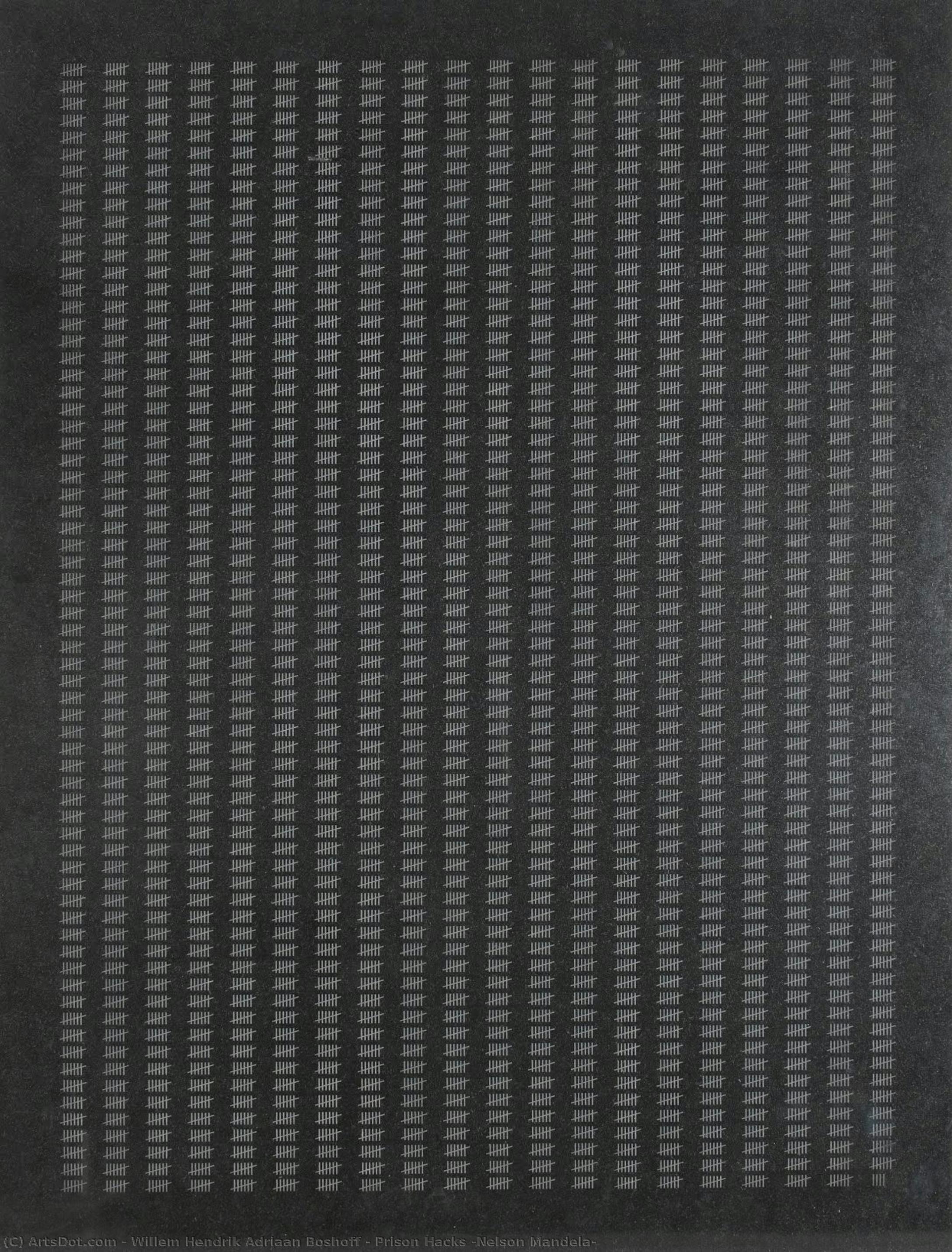
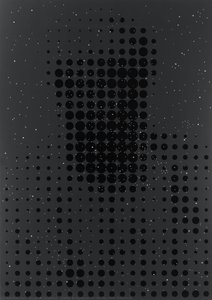
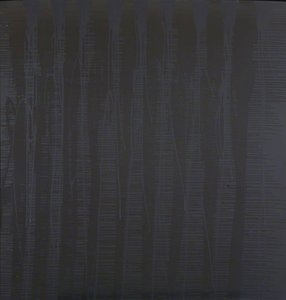
Prison Hacks (Nelson Mandela)

 Read More
Giclée / Art Print
Museum-quality giclée or canvas print with fast production and flexible finish options. ( Buy Hand Made Painting Buy Image)




































Pick from our preset sizes that match the artwork's original proportions.

You may enter your own dimensions to fit a specific frame or space. If your selected size does not match the original image's proportions, we will either crop the artwork or extend the image with a mirrored or solid-fill edge. A digital mockup will be sent for your approval before production begins.
Please note that the on-screen preview does not reflect the actual cropping or extension. Only the mockup will accurately show the final composition.
While custom sizes are available, we recommend selecting a dimension from the predefined list to preserve the original proportions.
Worldwide Delivery () in 2 weeks instead of standard 4/5 weeks. (24 August)

Free Worldwide Express Shipping

High-Quality Linen Canvas

Full Shipping Insurance

Customs Tax Refund Guarantee

True Color Matching Guarantee

60-Day Return Policy (Defects Only)

100% Money-Back Guarantee

Bulk Discount Offer
 Glass option is only available in size under 110 CM

Prison Hacks (Nelson Mandela)
Giclée / Art Print
Reproduction Size
-


Total Price
$ 63
Related Artworks
Artist Biography
The Tactile Roots of a Visionary
Willem Hendrik Adriaan Boshoff, born in 1951 in Johannesburg, South Africa, possesses an artistic lineage that is as much about the physical world as it is about the abstract. His journey into the heart of contemporary art began in the workshop of his father, a carpenter in Vereeniging. It was here, amidst the scent of sawdust and the rhythmic precision of manual labor, that Boshoff developed a profound intimacy with wood and its inherent materiality. This early exposure to craftsmanship did more than teach him technique; it instilled a foundational respect for the substance of art, a reverence for how raw matter can be shaped to hold meaning. This tactile beginning would later serve as the bedrock for his complex sculptural explorations, where the weight and texture of materials are never secondary to the concepts they inhabit.
His formal academic path further refined this intuitive connection to form and structure. Through a Diploma in Fine Art from the Johannesburg College of An Art and a Higher Diploma in Technology in Fine Art – Sculpture from Technikon Witwatersrand, Boshoff bridged the gap between artisanal skill and intellectual inquiry. His education was not confined to the studio walls; he expanded his horizons through the scientific study of dendrology, the study of trees. This unique intersection of art and science allowed him to approach nature not merely as a subject for depiction, but as a complex system of biological and linguistic patterns, eventually earning him an honorary doctorate from the University of Johannesburg in 2008.
Language as a Tool of Disruption
To encounter the work of Willem Boshoff is to enter a space where language ceases to be a mere medium for communication and becomes a physical, often disruptive, presence. He famously describes himself through the provocative lens of a linguistic terrorist, a term that captures his intent to use words as weapons against cultural hegemony and established artistic conventions. In his hands, language is stripped of its transparency; it is no longer a window through which we see the world, but an obstacle wall that forces us to confront the limits of our understanding.
This conceptual preoccupation reached a breathtaking zenith during the inaugural Johannesburg Biennale in 1995. His installation, The Blind Alphabet, remains a landmark achievement in contemporary South African art. By constructing ten massive obstacle walls adorned with 10,000 arcane words, Boshoff transformed the act of reading into a physical struggle. The viewer was forced to navigate a labyrinth of text, experiencing the frustration and the wonder of a dictionary that resists easy consumption. This work epitomized his ability to blend the monumental scale of sculpture with the intricate, often elusive, nuances of linguistics, challenging the audience to reconsider how much of our reality is constructed by the very words we use to describe it.
A Legacy of Interconnectedness
The enduring significance of Boshoff’s oeuvre lies in his ability to weave together seemingly disparate threads: the biological and the verbal, the physical and the cerebral, the natural and the man-made. His work serves as a poetic engagement with the world, where the study of plants and the architecture of sentences share a common rhythm. Through his conceptual installations, he invites us into a dialogue about memory, nature, and the structures of power that language can both uphold and dismantle.
As a figure in the international art landscape, Boshoff continues to challenge the boundaries of what an artist can be. His contributions are characterized by:
- Materiality and Memory: A deep-seated connection to the physical properties of wood and organic matter derived from his early life.
- Conceptual Rigor: The use of complex linguistic structures to disrupt societal and cultural narratives.
- Interdisciplinary Synthesis: The seamless integration of dendrology, sculpture, and semiotics into a unified artistic vision.
willem hendrik adriaan boshoff
1951 - , South Africa
Quick Facts
- Artistic Movement Or Style: Conceptual Installations
- Date Of Birth: 1951
- Full Name: Willem Hendrik Adriaan Boshoff
- Nationality: South African
- Notable Artworks:
- Prison Hacks (Nelson Mandela)
- willem hendrik adriaan boshoff
- Place Of Birth: Johannesburg, South Africa

