

 Preview
 Send
Send Share
Share
 Details

 Download
 Similars
 X-Ray
X-Ray Diaporama
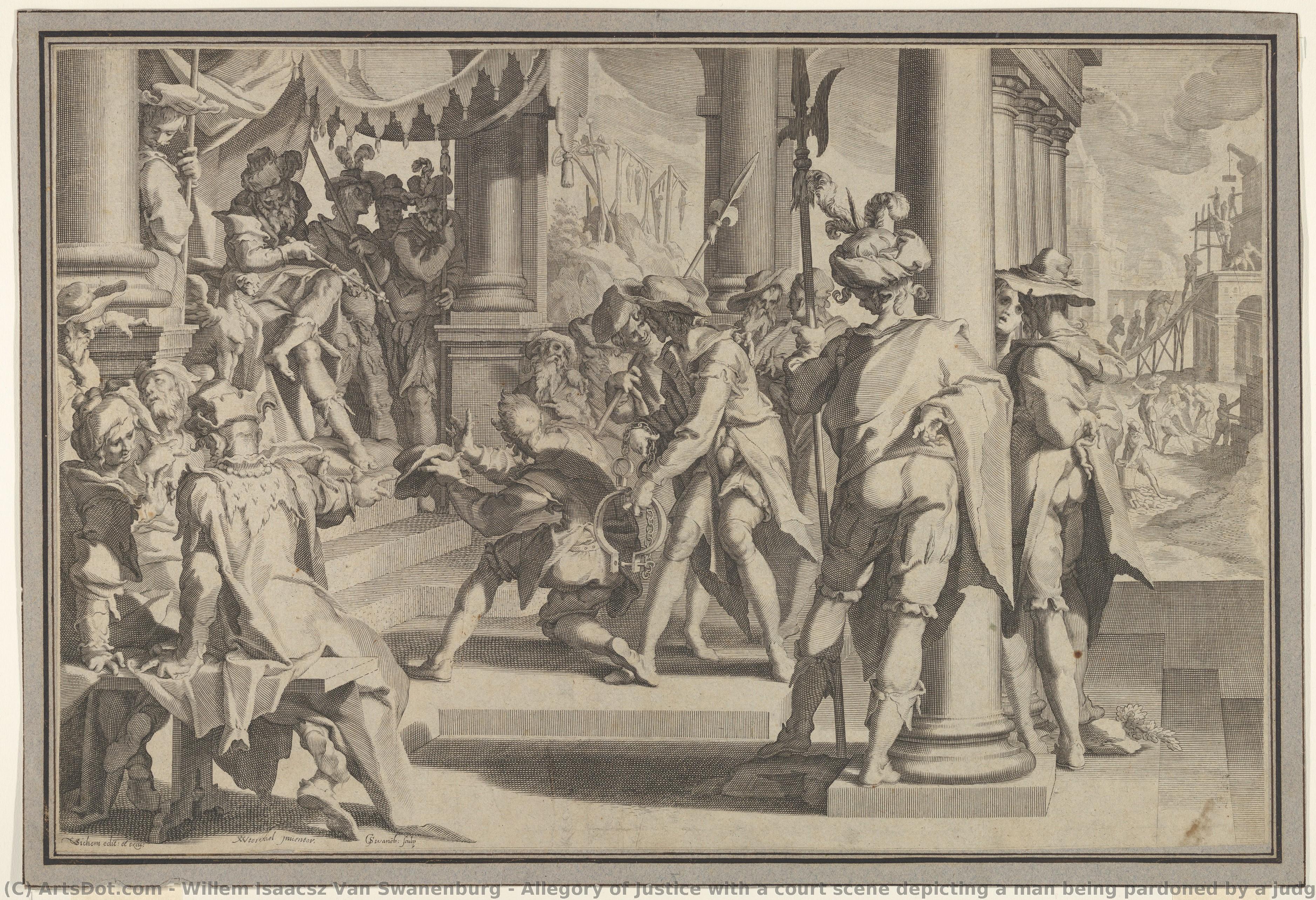
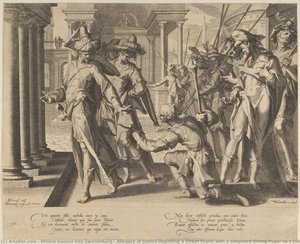
Allegory of Justice with a court scene depicting a man being pardoned by a judge
 Acrylic On Canvas
- WallArt
- Baroque
 1605
1605 29.0 x 43.0 cm
 Metropolitan Museum of Art
 Read More
Purchase a high-resolution, enhanced digital image, far superior to the online preview.
Each file is meticulously prepared by our in-house specialists using advanced tools and expert manual retouching. We ensure every image has exceptional clarity, precise color accuracy, and fine detail.
The final file is delivered via email within 72 hours, optimized for immediate use in professional, editorial, and print environments. This is the same quality trusted by top-tier design studios, publishers, and galleries.
Digital Image
Download a high-resolution file for personal display, printing, and creative projects. ( Buy Print Buy Hand Made Painting)
Included in Every Digital Image Order
Expert Digital Delivery, Guaranteed
When you choose ArtsDot.com, you're not just getting an image - you're receiving a professionally enhanced digital artwork, crafted with precision and backed by a satisfaction guarantee. Here's everything that comes with your order, automatically:

Fast Email Delivery
Your high-resolution digital image file will be emailed to you within 72 hours of ordering - ready for immediate use.

AI-Enhanced Digital File
Your artwork is professionally optimized using advanced AI tools and manual editing, ensuring maximum detail, clarity, and color accuracy.

Free Lifetime Re-Delivery
Accidentally deleted or lost your file? No worries - we'll resend it to you anytime, free of charge.

No Import Fees - Ever
Enjoy your artwork instantly with zero customs, duties, or delivery fees - digital downloads are always tax-free.

Color Accuracy Guarantee
We ensure your digital image reflects the original colors as closely as possible using professional tools and color management.

100-Day Satisfaction Guarantee
If you're not satisfied with your digital image, we'll revise it or refund 100% within 100 days - no questions asked.

100% Money-Back Guarantee
Not satisfied? Get a full refund within 100 days of receiving your digital file - no questions asked.

Bulk Order Discounts
Buy 3 images, save 10% - Buy 5, save 15% - Buy 10+, save 20%. Great for creative projects, galleries, and agencies.
A Window Into Justice: Willem van Swanenburg’s “Allegory of Justice”
Willem Isaacsz. van Swanenburg's "Allegory of Justice with a court scene depicting a man being pardoned by a judge," painted in 1605, is more than just a historical depiction; it’s a meticulously crafted visual argument about the very nature of law and mercy. Born in Leiden during a period of burgeoning artistic innovation, Swanenburg inherited a legacy of masterful design from his father, Isaac van Swanenburg, a renowned stained-glass artist and printmaker. This lineage instilled within him an appreciation for detail, composition, and the power of visual storytelling – qualities vividly realized in this remarkable engraving.
The scene unfolds within a richly detailed courtroom setting, rendered with astonishing precision for its time. The stark black and white palette immediately establishes a formal, almost austere atmosphere, reminiscent of early Baroque prints. Swanenburg’s skill lies not just in replicating the physical space – the raised dais, the stern-faced judge, the apprehensive onlookers – but also in conveying the palpable tension of the moment. Notice how he uses light and shadow to draw our eye to the central figure: a man awaiting judgment, his hand outstretched in supplication towards the benevolent gesture of the presiding magistrate.
The Symbolism of Law and Grace
At its core, “Allegory of Justice” operates as a complex symbolic representation. The courtroom itself embodies the formal structure of law – order, procedure, and impartial judgment. However, Swanenburg deliberately introduces elements that challenge this rigid framework. The man being pardoned isn’t a hardened criminal; he appears to be a figure of respect, perhaps a soldier or a citizen wrongly accused. This subtle shift immediately raises questions about the true purpose of justice: is it merely about punishment, or does it also encompass mercy and forgiveness?
The judge's hand extended represents grace and compassion, a deliberate counterpoint to the potential severity of the law. The swords present – one held aloft, symbolizing authority, and another resting on the table – serve as reminders of the power wielded by those who administer justice, but also suggest the inherent danger of unchecked force. The inclusion of books further reinforces the theme of knowledge and wisdom, implying that true justice requires careful consideration and a deep understanding of human circumstances.
A Masterpiece of Early Dutch Printmaking
Swanenburg’s technique is exemplary for the period. The engraving demonstrates an incredible level of detail achieved through meticulous line work – from the folds in the judge's robes to the expressions on the faces of the onlookers. He skillfully employs hatching and cross-hatching to create a sense of depth and texture, bringing the scene to life with remarkable realism. This attention to detail wasn’t merely aesthetic; it was crucial for conveying the gravity of the subject matter and ensuring that every element contributed to the overall narrative.
The print's dimensions – 29 x 43 cm – are thoughtfully chosen, allowing for a clear and intimate viewing experience. The date of 1605 places it firmly within the Dutch Golden Age, a period of unparalleled artistic flourishing. It’s a testament to Swanenburg’s talent that this work continues to resonate with viewers centuries later, prompting reflection on timeless themes of justice, mercy, and the human condition.
Restoring History: Reproductions and Legacy
Today, high-quality reproductions of “Allegory of Justice” are available through platforms like ArtsDot.com, offering art enthusiasts a chance to experience this powerful image in their own homes or offices. These meticulously crafted prints capture the essence of Swanenburg’s original engraving while ensuring its enduring beauty and historical significance. Consider it not just a decorative piece, but a window into a pivotal moment in history – a visual meditation on the complexities of law and the enduring value of compassion.
Related Artworks
Artist Biography
A Legacy Etched in Light and Line
The story of Willem Isaacsz. van Swanenburg is one of profound artistic lineage and the delicate interplay between Northern precision and Southern grandeur. Born into a family where the very air of Leiden breathed creativity, Willem was part of a distinguished dynasty of creators. His father, Isaac Claesz. van Swanengburg, was a master of design and monumental works, providing a foundation of technical excellence that would define Willem's early years. Growing up in an environment steeped in the Arminian faith and the intellectual fervor of the Dutch Golden Age, Willem’s development was not merely a matter of skill, but a spiritual and cultural immersion into the textures of his era.
While his brother Jacob achieved renown as a history painter, Willem carved his own niche within the intricate world of printmaking. His work serves as a vital bridge between the meticulous traditions of the Netherlands and the dramatic, emotive influences of the Italian Renaissance. Through his engravings, he captured the essence of an age caught between the structured devotion of the Reformation and the burgeoning theatricality of the Baroque movement.
The Italian Influence and Stylistic Evolution
The trajectory of Willem’s artistry was irrevocably altered by his exposure to the vibrant artistic currents flowing through Italy. The journey to Venice allowed him to witness firsthand the mastery of Venetian Mannerism, a style defined by its use of dramatic lighting and expressive, fluid brushstrokes. This encounter with the legacy of masters like Tintoretto infused his engravings with a sense of movement and atmospheric depth that was rare in the more rigid Northern traditions. As he moved toward Rome, the weight of classical antiquity and the monumental techniques of the Italian masters began to settle into his line work.
This synthesis of styles allowed him to approach subject matter with a unique duality. He possessed the Dutch capacity for minute, almost microscopic detail—essential for the scholarly and biblical themes of the time—yet he imbued these scenes with a sense of classical drama. His ability to manipulate light and shadow through the medium of engraving created a sense of volume and presence, making his black and white prints feel as though they possessed the weight of oil paintings.
Masterworks and Historical Significance
Willem’s oeuvre is characterized by its remarkable versatility, ranging from the scholarly to the mythological. His engravings often served as windows into the intellectual life of the 17th century, capturing both the grandeur of historical figures and the quiet dignity of academic institutions. Some of his most notable contributions include:
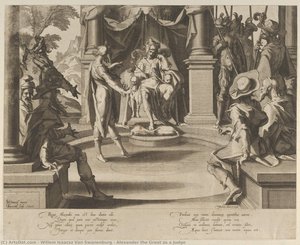
- Alexander the Great as a Judge: A breathtaking Baroque engraving that showcases his ability to depict historical gravity through intricate detail and a commanding composition.
- University Library Leiden: A stunning testament to his skill in architectural rendering, where his fine line work celebrates the scholarly pursuits and the structural beauty of one of Holland's most prestigious institutions.
- Janus Hautenus: A masterful example of classical portraiture, utilizing symbolic elements and precise engraving techniques to evoke the character and complexity of his subject.
Beyond his individual compositions, Willem van Swanenburg holds a unique place in art history due to his connection to the next generation of masters. His role as an early teacher to Rembrandt suggests that the seeds of the Dutch Golden Age's greatest light-master were sown within the technical rigor and atmospheric experimentation practiced by artists like Willem. Though his life was part of a broader family tapestry, his individual contribution remains a vital chapter in the evolution of European printmaking, preserving the fleeting shadows and enduring truths of the 17th century.
willem isaacsz van swanenburg
1571 - 1638 , Netherlands
Quick Facts
- Artistic Movement Or Style: Dutch Golden Age engraving
- Artists Or Movements Influenced By This Artist: ['Rembrandt']
- Artists Who Influenced This Artist: ['Frans Floris']
- Date Of Birth: January 29, 1580
- Full Name: Jacob Isaacsz. van Swanenburg
- Nationality: Dutch
- Notable Artworks:
- Anatomical Theatre Leiden
- Ernst Casimir of Nassau-Dietz
- Lot and His Daughters
- Place Of Birth: Leiden, Netherlands