 Preview
 Send
Send Share
Share
 Details

 Download
 Similars
 X-Ray
X-Ray Diaporama
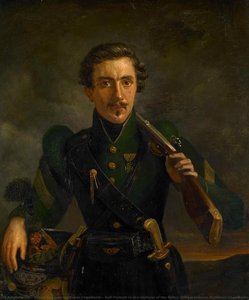
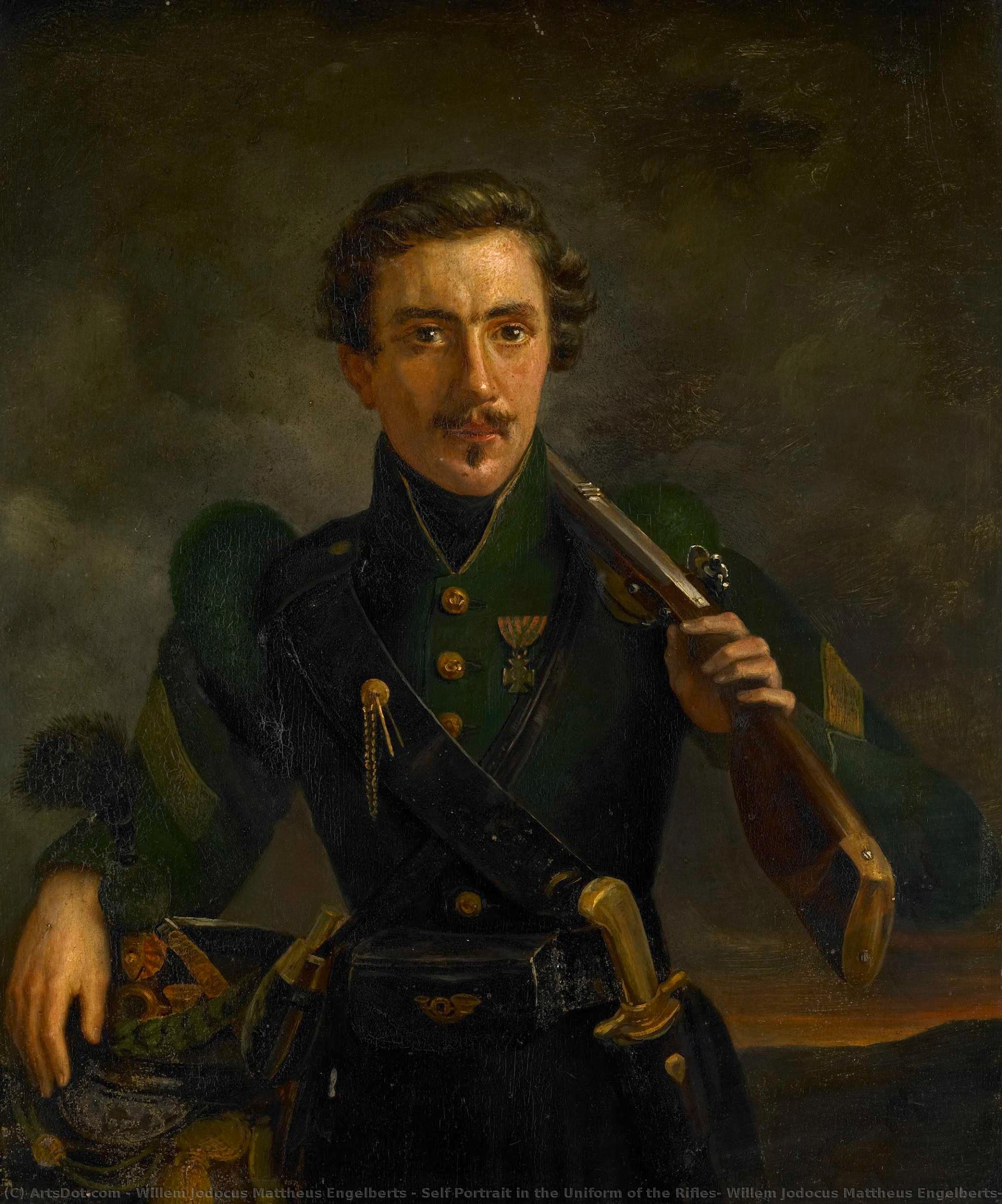
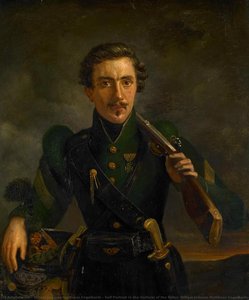
Self Portrait in the Uniform of the Rifles, Willem Jodocus Mattheus Engelberts, 1831
 1831
1831 32.0 x 27.0 cm
 Read More
Hand Made Oil Reproduction
Hand-painted oil on canvas in your size and frame, made to order by our artists. ( Buy Print Buy Image)




































Pick from our preset sizes that match the artwork's original proportions.

You may enter your own dimensions to fit a specific frame or space. If your selected size does not match the original image's proportions, we will either crop the artwork or extend the painting with additional hand-painted elements. A digital mockup will be sent for your approval before production begins.
Please note that the on-screen preview does not reflect the actual cropping or extension. Only the mockup will accurately show the final composition.
While custom sizes are available, we recommend selecting a dimension from the predefined list to preserve the original proportions.
After order, ArtsDot.com team will email client for instructions and provide a mockup preview
Worldwide Delivery () in 3/4 weeks instead of standard 5 weeks. (4 September). No compromise on quality.

Free Worldwide Express Shipping

High-Quality Linen Canvas

Full Shipping Insurance

Customs Tax Refund Guarantee

True Color Matching Guarantee

60-Day Return Policy (Defects Only)

100% Money-Back Guarantee

Bulk Discount Offer
 Glass option is only available in size under 110 CM

Self Portrait in the Uniform of the Rifles, Willem Jodocus Mattheus Engelberts, 1831
Reproduction Medium
Reproduction Size
-


Total Price
$ 263
Related Artworks






Artist Biography
Willem Jodocus Mattheus Engelberts: A Dutch Painter of the Romantic Era
The world of 19th-century European art is rich with figures who captured the spirit of their time, and among them stands Willem Jodocus Mattheus Engelberts – a Dutch painter and etcher whose work offers a poignant glimpse into the social fabric and emotional landscapes of his era. Born in Amsterdam in 1809, Engelberts’s life coincided with a period of significant artistic transition, marked by the waning influence of Neoclassicism and the burgeoning rise of Romanticism. His art reflects this shift, characterized by an emphasis on emotion, dramatic lighting, and often, scenes of everyday life imbued with a sense of melancholy and introspection.
Engelberts’s early training remains somewhat shrouded in obscurity, though it is believed he received instruction from various local artists in Amsterdam. This foundational period likely exposed him to the prevailing artistic trends of the time, including the influence of Dutch masters like Rembrandt and Vermeer – artists known for their masterful use of light and shadow and their ability to capture human emotion. However, Engelberts quickly distinguished himself through his unique style, which blended these influences with a distinctly Romantic sensibility.
The Palette of Emotion: Engelberts’s Artistic Style
Engelberts's artistic style is often described as melancholic and introspective, reflecting the prevalent mood of the Romantic era. He was particularly adept at portraying portraits, capturing not just physical likeness but also a sense of inner character and emotional state. His subjects frequently appear in dimly lit interiors or outdoors under stormy skies, creating an atmosphere of quiet contemplation and vulnerability. His use of color is notable – often muted tones punctuated by dramatic highlights—a technique that intensifies the emotional impact of his scenes.
Beyond portraiture, Engelberts produced a significant body of etching work. These prints, characterized by intricate detail and a masterful command of line, explored themes of rural life, historical events, and mythological subjects. The etchings demonstrate a remarkable technical skill and a keen eye for composition, showcasing his ability to translate complex scenes onto a two-dimensional surface.
Subjects and Influences: A Window into 19th Century Life
Engelberts’s oeuvre offers a fascinating window into the social and cultural life of 19th-century Netherlands. His portraits frequently depict members of the middle class – merchants, professionals, and their families—providing valuable insights into their attire, customs, and aspirations. He also depicted scenes of rural life, capturing the dignity and hardship of peasant communities. These depictions were not merely observational; they often carried a subtle critique of social inequalities and the challenges faced by ordinary people.
The influence of Romanticism is evident in Engelberts’s work, particularly in his emphasis on emotion, imagination, and the sublime. He was likely inspired by the works of artists like Eugène Delacroix and Caspar David Friedrich, who similarly explored themes of nature, spirituality, and human experience. However, Engelberts's style retained a distinctly Dutch sensibility, characterized by a quiet restraint and a subtle irony.
Legacy and Recognition
Despite not achieving widespread fame during his lifetime, Willem Jodocus Mattheus Engelberts’s work has been increasingly recognized for its artistic merit and historical significance in recent decades. His paintings and etchings are now housed in several museums throughout the Netherlands, including the Rijksmuseum in Amsterdam, where they serve as a testament to his skill and vision.
Engelberts's legacy lies not only in his individual works of art but also in his contribution to the development of Dutch Romanticism. He demonstrated a unique ability to capture the emotional complexities of human experience within the context of his time, leaving behind a body of work that continues to resonate with viewers today. His paintings and etchings offer a poignant reminder of the beauty and melancholy inherent in the everyday lives of 19th-century people.
willem jodocus mattheus engelberts
1809 - 1887 , Netherlands
Quick Facts
- Artistic Movement Or Style: Romanticism
- Date Of Birth: 1809-01-21
- Date Of Death: 1887-05-09
- Full Name: Willem Jodocus Mattheus Engelberts
- Nationality: Dutch
- Notable Artworks:
- Various portraits
- Scenes reflecting 19th century life
- Place Of Birth: Amsterdam, Netherlands