 Preview
 Send
Send Share
Share
 Details

 Download
 Similars
 X-Ray
X-Ray Diaporama
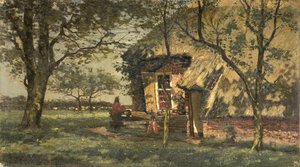
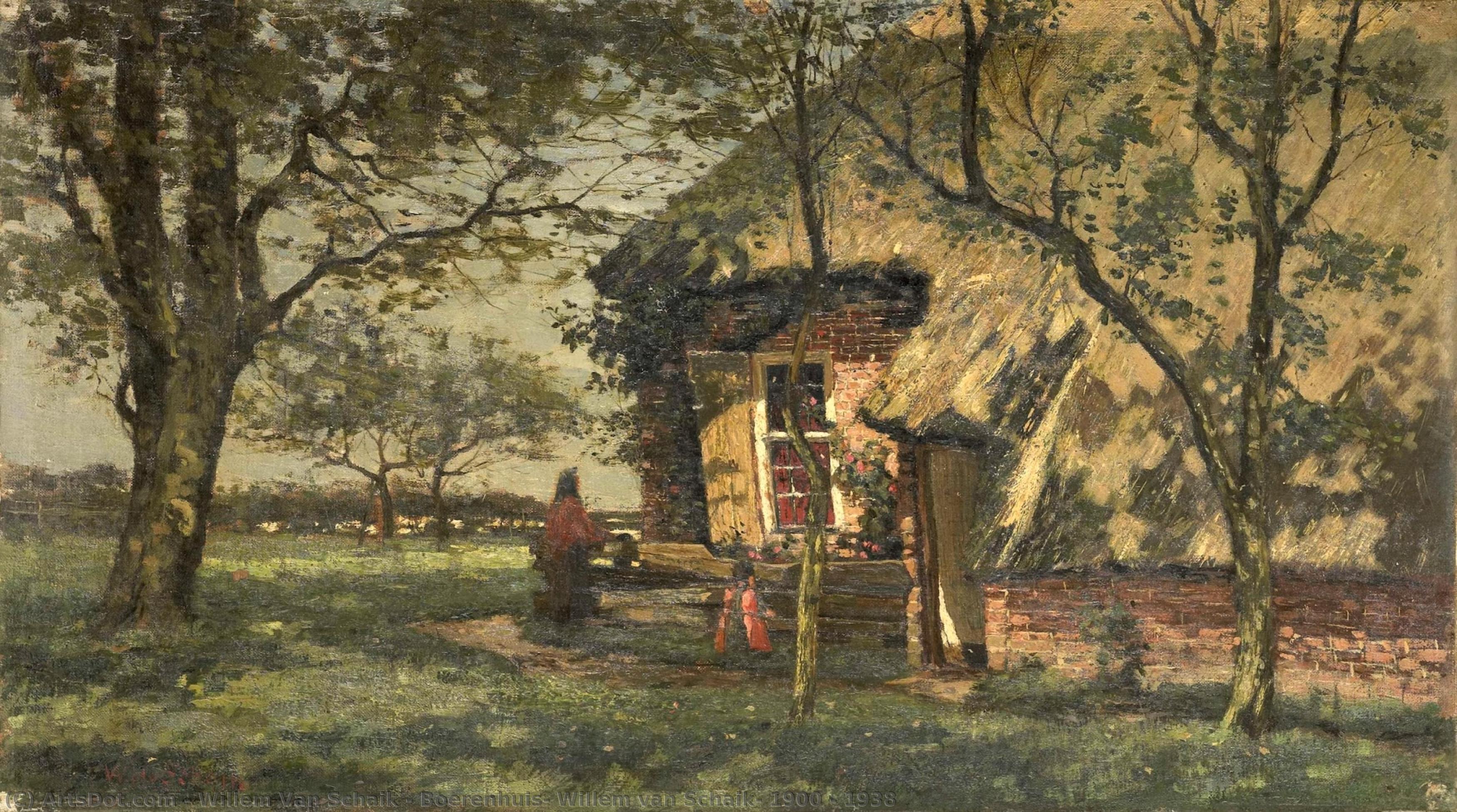
Boerenhuis, Willem van Schaik, 1900 - 1938
 1938
1938 30.0 x 53.0 cm
 Read More
Giclée / Art Print
Museum-quality giclée or canvas print with fast production and flexible finish options. ( Buy Hand Made Painting Buy Image)




































Pick from our preset sizes that match the artwork's original proportions.

You may enter your own dimensions to fit a specific frame or space. If your selected size does not match the original image's proportions, we will either crop the artwork or extend the image with a mirrored or solid-fill edge. A digital mockup will be sent for your approval before production begins.
Please note that the on-screen preview does not reflect the actual cropping or extension. Only the mockup will accurately show the final composition.
While custom sizes are available, we recommend selecting a dimension from the predefined list to preserve the original proportions.
Worldwide Delivery () in 2 weeks instead of standard 4/5 weeks. (27 August)

Free Worldwide Express Shipping

High-Quality Linen Canvas

Full Shipping Insurance

Customs Tax Refund Guarantee

True Color Matching Guarantee

60-Day Return Policy (Defects Only)

100% Money-Back Guarantee

Bulk Discount Offer
 Glass option is only available in size under 110 CM

Boerenhuis, Willem van Schaik, 1900 - 1938
Giclée / Art Print
Reproduction Size
-


Total Price
$ 63
Collectible Description
Related Artworks









Artist Biography
A Glimpse into the World of Willem van Schaik
Willem van Schaik remains a somewhat enigmatic figure in the landscape of early 20th-century Dutch art, his work offering a poignant reflection of rural life and intimate portraiture. Born sometime before 1900 and active until around 1938, Van Schaik’s career unfolded during a period of significant artistic transition, bridging the gap between traditional realism and emerging modern sensibilities. While biographical details are scarce, the surviving artworks provide compelling evidence of a skilled painter deeply attuned to the subtleties of light, character, and the quiet dignity of his subjects. His paintings aren't grand statements; rather, they whisper stories of everyday existence in the Dutch countryside, offering a glimpse into a world slowly fading with the march of progress.Rural Scenes and Intimate Portraits: The Core of Van Schaik’s Oeuvre
Van Schaik is best known for his depictions of farmhouses and rural interiors – scenes imbued with a sense of warmth and authenticity. Boerenhuis (Farmhouse), painted between 1900 and 1938, exemplifies this focus. The work isn’t merely a topographical rendering; it's an evocation of home, family, and the rhythms of agricultural life. The careful attention to detail – the texture of weathered wood, the soft glow emanating from windows, the implied presence of those who inhabit the space – speaks to Van Schaik’s observational skills and his desire to capture not just *what* he saw, but *how* it felt to be present in that moment. Alongside these pastoral scenes, Van Schaik also created a number of intimate portraits. These works reveal a sensitivity towards his sitters, capturing their individual personalities with remarkable nuance. Adèle van Meekren, de tweede echtgenote van Andries van Wezel, painted by Willem Witsen in 1912 but connected to Van Schaik through artistic circles, demonstrates the style and quality of portraiture prevalent during that era, hinting at a possible collaborative or influential relationship within the Dutch art community.Influences and Artistic Development
Pinpointing specific influences on Van Schaik’s work is challenging given the limited documentation surrounding his life. However, it's reasonable to suggest an affinity with the Hague School of painting, a movement known for its realistic depictions of Dutch landscapes and rural life. The Hague School artists emphasized atmospheric effects and a muted palette, qualities that resonate in Van Schaik’s own paintings. The influence of Impressionism, which was gaining traction across Europe during this period, may also be present, though filtered through a distinctly Dutch lens. Unlike the vibrant brushstrokes and focus on fleeting moments characteristic of French Impressionism, Van Schaik's work exhibits a more restrained approach, prioritizing clarity of form and a sense of enduring stillness. His development appears to have been one of gradual refinement – a deepening understanding of light and shadow, an increasing confidence in his ability to capture psychological depth, and a growing mastery of oil painting techniques.Historical Significance and Legacy
While Van Schaik may not be a household name, his work holds value as a testament to the artistic currents flowing through early 20th-century Netherlands. He represents a generation of artists who sought to document their world with honesty and sensitivity, capturing the essence of a way of life that was rapidly changing. His paintings offer a valuable counterpoint to more avant-garde movements, reminding us of the enduring power of realism and the importance of preserving cultural memory.- Van Schaik’s work provides insight into Dutch rural life during a period of transition.
- His intimate portraits reveal a sensitivity towards his subjects and a mastery of psychological nuance.
- He represents a link between the Hague School tradition and emerging modern sensibilities.
Quick Facts
- Date Of Death: Living
- Full Name: Willem Van Schaik
- Notable Artworks:
- Boerenhuis
- Adèle van Meekren