 Preview
 Send
Send Share
Share
 Details

 Download
 Similars
 X-Ray
X-Ray Diaporama
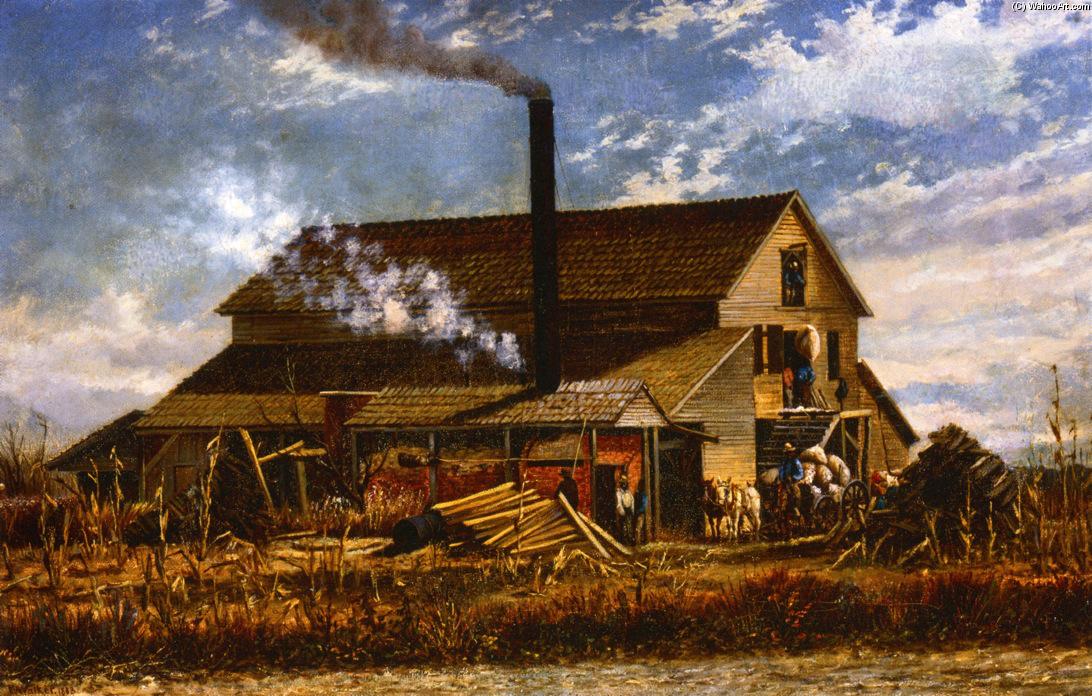
Cotton Gin, Adams County, Mississippi

 Read More
Hand Made Oil Reproduction
Hand-painted oil on canvas in your size and frame, made to order by our artists. ( Buy Print Buy Image)




































Pick from our preset sizes that match the artwork's original proportions.

You may enter your own dimensions to fit a specific frame or space. If your selected size does not match the original image's proportions, we will either crop the artwork or extend the painting with additional hand-painted elements. A digital mockup will be sent for your approval before production begins.
Please note that the on-screen preview does not reflect the actual cropping or extension. Only the mockup will accurately show the final composition.
While custom sizes are available, we recommend selecting a dimension from the predefined list to preserve the original proportions.
After order, ArtsDot.com team will email client for instructions and provide a mockup preview
Worldwide Delivery () in 3/4 weeks instead of standard 5 weeks. (20 August). No compromise on quality.

Free Worldwide Express Shipping

High-Quality Linen Canvas

Full Shipping Insurance

Customs Tax Refund Guarantee

True Color Matching Guarantee

60-Day Return Policy (Defects Only)

100% Money-Back Guarantee

Bulk Discount Offer
 Glass option is only available in size under 110 CM

Cotton Gin, Adams County, Mississippi
Reproduction Medium
Reproduction Size
-


Total Price
$ 263
Artwork Description
Artistic Significance
This painting is significant not only because of its historical context but also due to its artistic value. The use of colors and the composition of the scene are a testament to William Aiken Walker's skill as an artist. The large cotton gin in the center of the scene, surrounded by people engaged in various activities, creates a sense of movement and energy. Key Elements of the painting include:- The large cotton gin with its distinctive red roof
- A group of at least 12 people engaged in different activities related to the cotton gin operation
- A train visible in the background, adding an interesting element to the composition
- Two horses and a chair scattered throughout the scene, providing additional details about the daily life of the workers
Artist's Background
William Aiken Walker was known for his paintings that depicted everyday life in the Southern United States during the 19th century. His work often focused on the cotton industry and the people who worked in it. For more information on William Aiken Walker and his other works, such as "Cotton Plantation on the Mississippi", visit /art/list/?Filter=8DP9NC-William-Aiken-Walker-Cotton-Gin-Adams-County-Mississippi. Other notable artists whose work can be found at https://ArtsDot.com include Pierre-Auguste Renoir, known for his Impressionist paintings like "Nude in a landscape", and Clementine Hunter, a self-taught artist from rural Louisiana, famous for her "Chevron Quilt".For those interested in learning more about the art world, the Minneapolis Institute of Arts /art/list/?Filter=A@D3AW4H-The-Minneapolis-Institute-of-Arts-(Minneapolis-United-States)) is a valuable resource.
The captivating "Cotton Gin, Adams County, Mississippi" by William Aiken Walker is not only a beautiful piece of art but also an important historical document that provides insight into the lives of people working in the cotton industry during the 19th century.
Related Artworks

Artist Biography
William Aiken Walker: A Life in Paint
William Aiken Walker (March 11, 1839 – January 3, 1921) was an American artist renowned for his genre paintings, particularly those capturing the lives of African Americans in the post-Reconstruction South. His work offers a poignant glimpse into a pivotal period of American history.
Early Life and Influences
Born in Charleston, South Carolina, to an Irish Protestant father and a mother with deep roots in South Carolina society, Walker’s early life was marked by relocation following his father's death in 1842. The family moved to Baltimore, Maryland, before returning to Charleston in 1848. This exposure to different environments likely shaped his artistic perspective.
Artistic Development and Career
Walker’s artistic journey began with formal training, though details remain scarce. He is primarily self-taught. During the American Civil War, he enlisted in the Confederate Army, serving under General Wade Hampton. Wounded at the Battle of Seven Pines in 1862, his subsequent assignment to picket duty unexpectedly provided him with time to paint.
He became celebrated for his depictions of everyday life, focusing particularly on the experiences of Black sharecroppers and laborers. His paintings are characterized by a realistic style and an empathetic portrayal of his subjects. Two of his most recognized works – depicting scenes from rural Southern life – were reproduced as chromolithographs by Currier and Ives, significantly expanding their reach.
Notable Works
- Bombardment of Fort Sumter, Charleston Harbor, Charleston, South Carolina, 1863: A powerful depiction of a key event initiating the Civil War.
- St. Finebar's Church, Broad Street, Charleston: Showcasing Walker’s skill in architectural painting and capturing the essence of Charleston’s cityscape.
- Cotton Gin, Adams County, Mississippi: A representative example of his genre scenes focusing on agricultural labor.
- Cabin Scene 1: Illustrating the living conditions of sharecroppers with striking realism.
Themes and Style
Walker’s work is distinguished by its focus on genre painting, a style that depicts scenes from everyday life. He masterfully captured the dignity and resilience of his subjects, offering a nuanced perspective on post-Reconstruction Southern society. His paintings often portray the hardships faced by African Americans while also highlighting their strength and community spirit.
Historical Significance & Legacy
Walker’s art provides valuable historical documentation of a complex period in American history. He offers insights into the social, economic, and racial dynamics of the post-Civil War South that are often absent from more formal historical accounts. His paintings serve as visual testimonies to the lives of those who lived through this era.
He continued painting until his death on January 3, 1921, in Charleston, where he is buried in the family plot at Magnolia Cemetery. Today, his work can be found in museums such as the Gibbes Museum of Art in Charleston, South Carolina, ensuring that his legacy continues to inspire and inform future generations.
Influences
While specific artistic influences are not extensively documented, Walker’s realism suggests an awareness of contemporary American genre painters. His focus on social commentary aligns with a broader trend in 19th-century art towards addressing issues of class and inequality.
William Aiken Walker
1839 - 1921 , United States of America
Quick Facts
- Birth Date: March 11, 1839
- Birth Place: Charleston, South Carolina, United States
- Death Date: January 3, 1921
- Movement: Genre painting
- Name: William Aiken Walker
- Nationality: American
- Notable Works:
- Bombardment of Fort Sumter
- St. Finebar's Church, Broad Street, Charleston
- Cotton Gin, Adams County, Mississippi