 Preview
 Send
Send Share
Share
 Details

 Download
 Similars
 X-Ray
X-Ray Diaporama
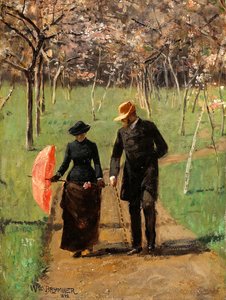
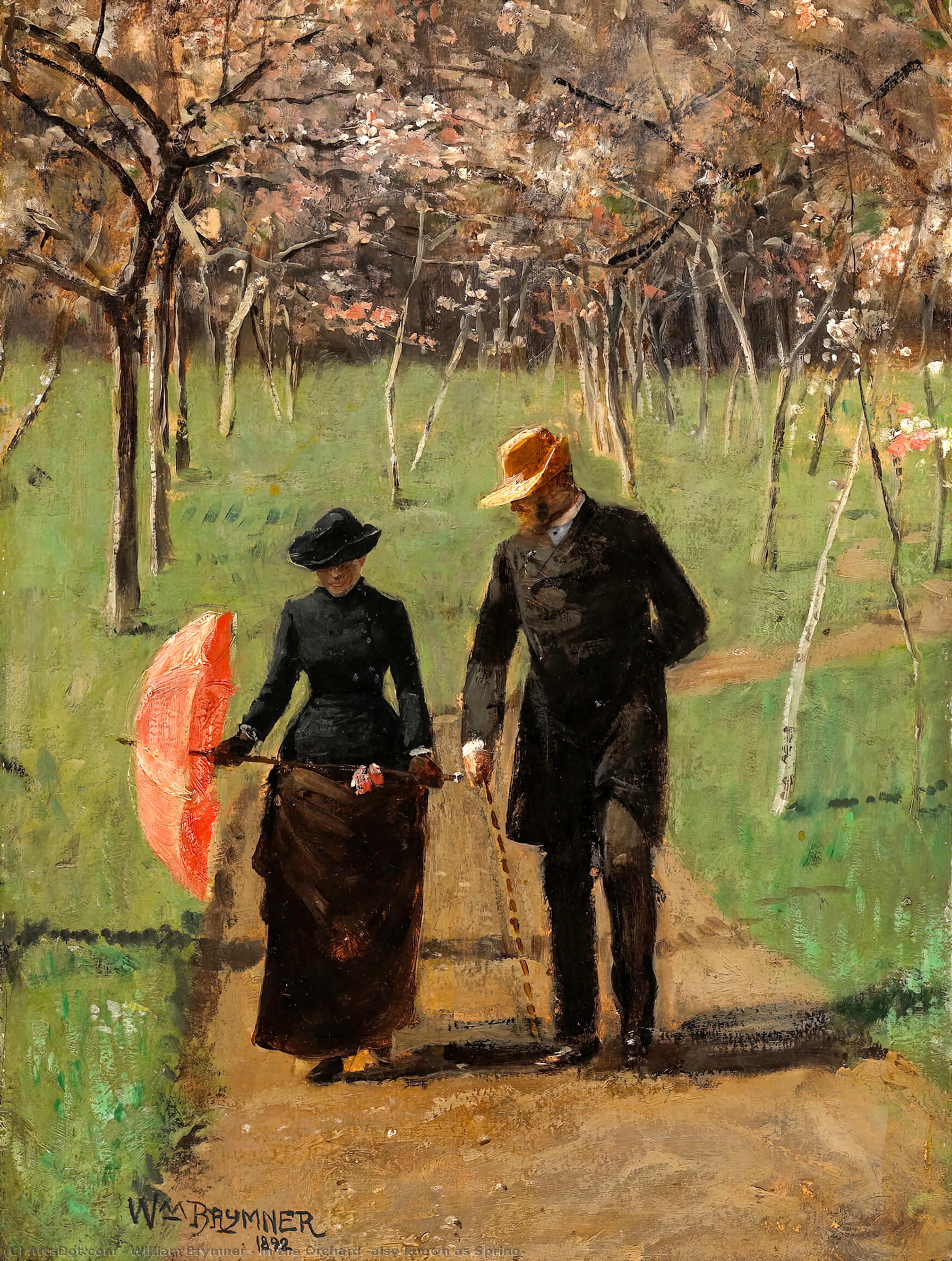
In the Orchard (also known as Spring)


 Read More
Hand Made Oil Reproduction
Hand-painted oil on canvas in your size and frame, made to order by our artists. ( Buy Print Buy Image)




P118B $10

P118H $10

P118W $10

P438Z $10

P508JH $12

P508YH $12

P805H $10

P805Z $10

P919BZ $10

P919G $10

P919XJ $10

P959ZH $10

P968JZ $12

W106C $8

W218G $10

W218JH $8

W218Y $10

W307PJ $10

W316G $10

W316PJ $8

W316Y $10

W398PJ $8

W4111J $10

W500HY $15

W500JH $15

W692G $12

W849H $8

W940BG $15

W953PJ $8




Pick from our preset sizes that match the artwork's original proportions.

You may enter your own dimensions to fit a specific frame or space. If your selected size does not match the original image's proportions, we will either crop the artwork or extend the painting with additional hand-painted elements. A digital mockup will be sent for your approval before production begins.
Please note that the on-screen preview does not reflect the actual cropping or extension. Only the mockup will accurately show the final composition.
While custom sizes are available, we recommend selecting a dimension from the predefined list to preserve the original proportions.
After order, ArtsDot.com team will email client for instructions and provide a mockup preview
Worldwide Delivery () in 3/4 weeks instead of standard 5 weeks. (17 August). No compromise on quality.

Free Worldwide Express Shipping

High-Quality Linen Canvas

Full Shipping Insurance

Customs Tax Refund Guarantee

True Color Matching Guarantee

60-Day Return Policy (Defects Only)

100% Money-Back Guarantee

Bulk Discount Offer
 Glass option is only available in size under 110 CM

In the Orchard (also known as Spring)
Reproduction Medium
Reproduction Size
-


Total Price
$ 263
Artwork Description
A Serene Encounter in the Heart of Spring
In the gentle embrace of 1892, William Brymner captured a moment of profound tranquility in his masterpiece, In the Orchard, also affectionately known as Spring. The canvas invites the viewer to step into a sun-dappled sanctuary, where a man and a woman stroll leisurely down a winding path. This is not merely a depiction of a walk in the countryside; it is an evocative window into a world of harmony and peace. As the couple wanders through the blossoming trees, their presence serves as the emotional anchor for a scene teeming with life. The orchard, lush and vibrant, acts as a living cathedral of nature, where the soft light filters through the canopy to illuminate a landscape that feels both intimate and expansive.
Beyond the central figures, Brymner masterfully populates his orchard with a subtle tapestry of human connection. Scattered throughout the midground and distance, other figures appear like gentle whispers of movement, suggesting a shared communal appreciation for the season's rebirth. A loyal dog, positioned near the heart of the composition, adds a touch of domestic warmth and grounded reality to the idyllic setting. This careful arrangement of subjects creates a remarkable sense of depth, drawing the eye from the immediate foreground into the soft, hazy reaches of the orchard, making the viewer feel as though they are an unobserved participant in this peaceful afternoon.
The Impressionist Touch and Technical Brilliance
Brymner’s technical execution in In the Orchard reveals his deep immersion in the European artistic currents of his time. Having refined his skills at the prestigious Académie Julian in Paris, he brought a sophisticated understanding of light and color to the Canadian landscape. The painting breathes with the spirit of Impressionism, utilizing delicate brushwork to capture the fleeting qualities of light as it dances across petals and leaves. Rather than relying on harsh outlines, Brymner uses a nuanced palette to suggest form and atmosphere, creating a sense of movement and immediacy that makes the air itself feel alive.
For the discerning collector or interior designer, this work offers more than just visual beauty; it provides an atmospheric anchor for any space. The painting’s ability to evoke a sense of calm and timelessness makes it an ideal centerpiece for rooms designed for relaxation and reflection. Whether placed in a sunlit morning room or a sophisticated study, the soft greens, warm earth tones, and delicate floral hues of the orchard provide a natural elegance that complements both classical and contemporary decor. A high-quality oil reproduction of this work allows the enduring legacy of Brymner’s vision to reside within your home, offering a permanent connection to the serene beauty of a Canadian spring.
Related Artworks

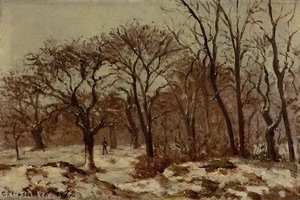
Artist Biography
A Pioneer Forging a Canadian Vision
William Brymner, born in Greenock, Scotland in 1855, stands as a pivotal figure in the development of Canadian art—a bridge between the established traditions of academic painting and the burgeoning currents of modernism. His life’s journey, marked by both rigorous training and an adventurous spirit, ultimately shaped a uniquely Canadian artistic identity. The Brymner family's emigration to Melbourne, Lower Canada (present-day Quebec) in 1857, and their subsequent move to Montreal in 1864, planted the seeds of his connection to the land that would become central to his artistic vision. Initially drawn to architecture, a practical pursuit reflecting his father’s stable career as Dominion Archivist, Brymner soon discovered his true calling lay within the realm of painting. This pivotal shift led him to Paris in 1878, where he enrolled at the prestigious Académie Julian, immersing himself in the world of fine art under the tutelage of William-Adolphe Bouguereau and Tony Robert-Fleury. These masters, renowned for their ‘grand manner’ naturalism, instilled in Brymner a foundation of technical skill and compositional understanding that would remain with him throughout his career.Parisian Influences and Artistic Development
The Parisian art scene proved transformative for the young artist. While mastering academic techniques, Brymner also became captivated by the detailed realism of Jean-Louis Ernest Meissonier, a fascination evident in his early works’ meticulous attention to detail. He deliberately eschewed grandiose historical or mythological subjects, instead focusing on intimate domestic scenes and evocative landscapes—a choice that signaled his desire to depict the world around him with honesty and sensitivity. This period saw Brymner carefully balancing the rigor of his academic training with the emerging Impressionistic tendencies sweeping through the art world. His style began to evolve, demonstrating a growing awareness of light’s subtle nuances and its power to shape perception. Pieces like “Two Girls Reading” (1898) exemplify this early mastery, showcasing his ability to capture fleeting moments and imbue them with quiet emotion. He wasn't merely replicating what he saw; he was interpreting it through a lens informed by both tradition and innovation.Returning to Canada: Teacher and Innovator
In 1886, Brymner returned to Montreal after nearly seven years of intermittent residence in Paris, establishing himself as a prominent art teacher and significantly impacting the next generation of Canadian artists. He became Director of the Art Association of Montreal school from 1886 to 1921, fostering an environment that encouraged experimentation and challenged conventional norms. His landscapes frequently depicted scenes around Quebec and the Maritimes, capturing the natural beauty of Canada with a growing Impressionistic flair. Works like “In the Orchard (Spring)” (1892) and his paintings of Ile aux Coudres demonstrate this evolving approach—a loosening of brushwork, a heightened sensitivity to color, and an emphasis on capturing the atmosphere of a place rather than simply its physical appearance. Brymner’s influence extended far beyond his individual canvases; he was shaping a movement.A Legacy of Modernism
Brymner played a crucial role in fostering modern art movements within Canada, and many members of the Beaver Hall Group—a collective of Montreal artists known for their modernist styles—studied under his guidance. He encouraged his students to push boundaries, explore new techniques, and develop their own unique artistic voices. This commitment to innovation earned him recognition from the Royal Canadian Academy of Arts (RCA), where he became vice-president in 1907 and president in 1909, and ultimately led to his receiving the Companion of the Order of St Michael and St George in 1916. He wasn’t simply a painter; he was an advocate for artistic freedom and a champion of Canadian talent. His legacy is not just found in his own paintings but also in the countless artists he inspired. Brymner's impact on Canadian art history is profound, bridging the gap between academic traditions and modern artistic movements. He helped establish a uniquely Canadian artistic identity—one that was both rooted in European influences and distinctly shaped by the landscapes and experiences of Canada itself. His works continue to be exhibited and celebrated as important examples of late 19th and early 20th-century Canadian art, reminding us of his enduring contribution to the nation’s cultural heritage. William Brymner remains a cornerstone of Canadian artistic identity.Major Works & Continued Influence
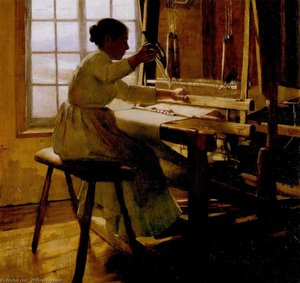
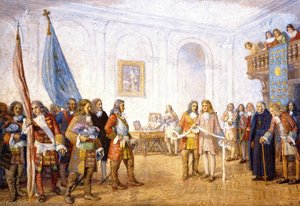
Beyond the frequently cited “In the Orchard (Spring)” and “Two Girls Reading”, works like "Frontenac Receiving Sir William Philip's Envoy" demonstrate his skill in historical scenes, while pieces such as “Summer Landscape” showcase his evolving Impressionistic style.- “The Weaver” exemplifies his focus on everyday life and meticulous detail.
- His landscapes of Quebec and the Maritimes are particularly celebrated for their atmospheric qualities.
- Brymner’s influence can be seen in the work of Emily Coonan, a student who embraced Impressionistic techniques.
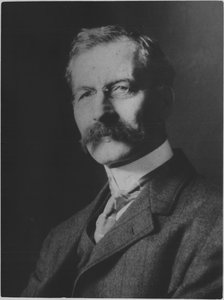
William Brymner
1855 - 1925 , United Kingdom
Quick Facts
- Artistic Movement Or Style: Impressionism & Naturalism
- Artists Or Movements Influenced By This Artist:
- Beaver Hall Group
- Emily Coonan
- Canadian Impressionism
- Artists Who Influenced This Artist:
- Bouguereau
- Robert-Fleury
- Meissonier
- Date Of Birth: 1855
- Date Of Death: 1925
- Full Name: William Brymner
- Nationality: Canadian
- Notable Artworks:
- Frontenac Receiving Envoy
- The Weaver
- Summer Landscape
- In the Orchard (Spring)
- Place Of Birth: Greenock, UK
Related Articles
Renoir's Masterpieces: Explore 25 Iconic Paintings & Bring Art Home | ArtsDot
Explore 25 iconic Pierre-Auguste Renoir paintings! Discover the stories behind Impressionist masterpieces like 'Dance at Le Moulin de la Galette' & 'Luncheon of the Boating Party'. Find museum-quality art reproductions and elevate your home decor with ArtsDot.com.

Impressionist Landscapes: 10 Masterpieces for Your Home | ArtsDot
Journey through 10 iconic Impressionist landscapes by Monet, Renoir & Degas. Explore the history, techniques & emotions behind these masterpieces. Find museum-quality reproductions for your home at ArtsDot.com – where art comes to life! Discover all masterpieces on ArtsDot.com
Monet's Masterpieces: 25 Iconic Artworks to Transform Your Home
Journey through 25 iconic Claude Monet masterpieces! Explore Impressionism’s beauty, from Water Lilies to Rouen Cathedral. Discover stunning art reproductions & curated decor ideas – explore the full collection online at ArtsDot.com.
Impressionistic Realism's Finest: 10 Masterpieces for Your Home | ArtsDot
Journey through Impressionistic Realism with 10 iconic masterpieces by Monet, Renoir & Van Gogh. Explore art history, techniques & find museum-quality reproductions for your home at ArtsDot.com. Discover all masterpieces online!

Impressionistic Landscapes: 10 Masterpieces That Changed Art & Decor
Journey into the heart of Impressionism! Explore 10 masterpieces by Monet, Renoir & Degas that revolutionized landscape art. Discover their stories, techniques & find museum-quality reproductions to elevate your home decor on ArtsDot.com.